Dobrynina, Viktorija;Stonis, Jonas R.;Diškus, Arūnas;Solis, M. Alma;Baryshnikova, Svetlana V.;Shin, Young-Min
Opostegidae
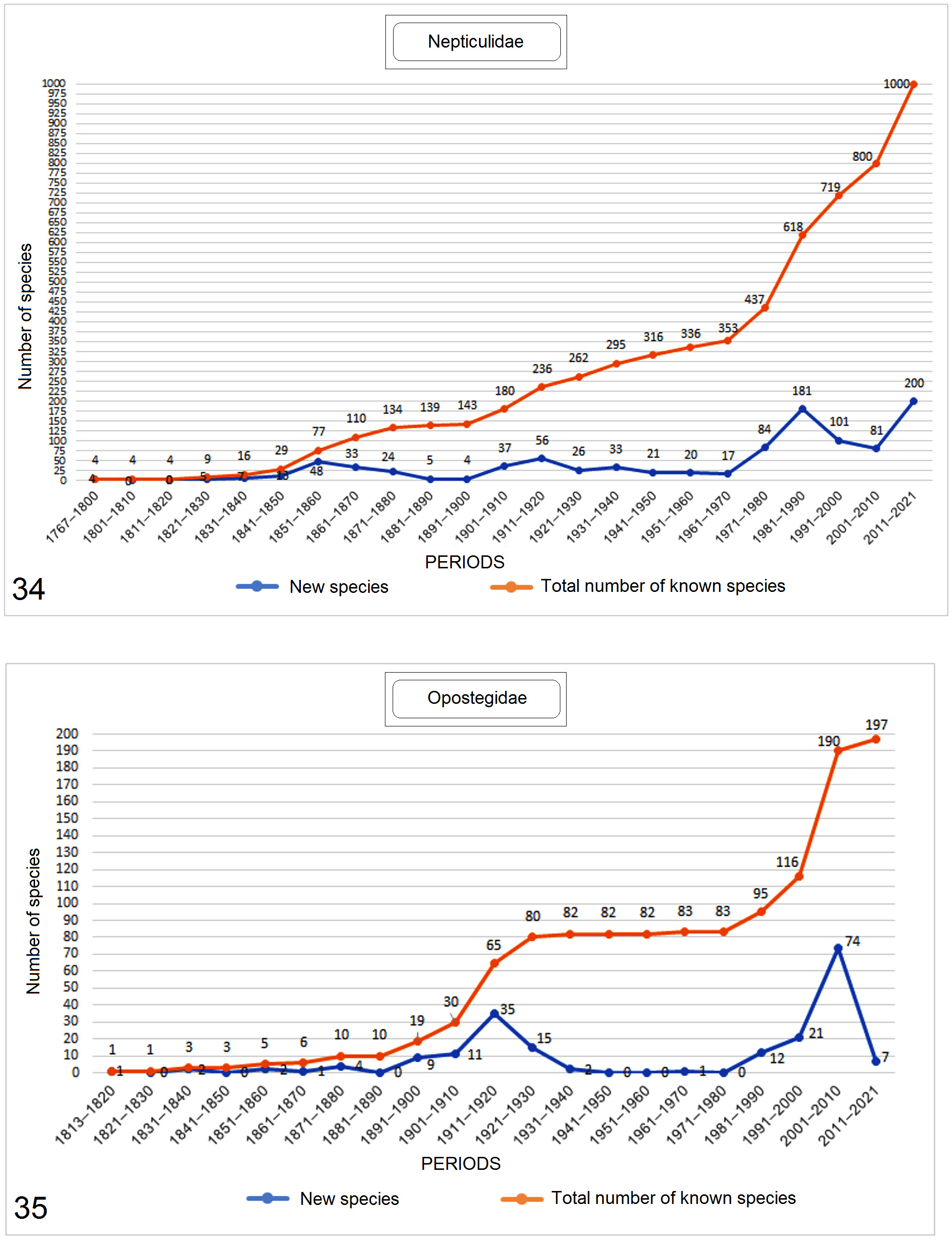
Sign in to saveOpostegidae or "white eyecap moths" is a family of insects in the order Lepidoptera that is characterised by particularly large eyecaps over the compound eyes (see also Nepticulidae, Bucculatricidae, Lyonetiidae). Opostegidae are most diverse in the New World tropics (83 described species, representing 42% of the world total).
Species
FAMILY
- KingdomAnimalia
- PhylumArthropoda
- ClassInsecta
- OrderLepidoptera
- FamilyOpostegidae
via GBIF
Museum specimens
- Specimen records
- 9
- Family
- Opostegidae
- Collections
- GMNH, MISSA, AM, CASC, USNM
- Recorded in
- United States, Australia
Wikidata facts
- Instance of
- taxon
- Parent taxon
- Nepticuloidea
- Image
- Opostega salaciella.jpg
Show 5 more facts
- Commons category
- Opostegidae
- taxon name
- Opostegidae
- taxon rank
- family
- topic's main category
- Category:Opostegidae
- taxon common name
- hvitmøll
Sources (1)
via Wikidata · CC0
~1 min read
Encyclopedic overview
2 sectionsContents
- References
- External links
Opostegidae or "white eyecap moths" is a family of insects in the order Lepidoptera that is characterised by particularly large eyecaps over the compound eyes (see also Nepticulidae, Bucculatricidae, Lyonetiidae). Opostegidae are most diverse in the New World tropics (83 described species, representing 42% of the world total).
These small, whitish moths are probably miners in plant stems. Examples of host plants used in Europe are Lycopus, Mentha and Rumex, but their biology is poorly known. The subfamily Oposteginae comprises 87 described species and Opostegoidinae includes 15 described species.
Excerpted from Wikipedia’s “Opostegidae” article, available under the CC BY-SA 4.0 licence.