File:Orinoco_Crocodile.jpg · Wikimedia Commons · See Wikimedia Commons
OverviewAI-generated
The Orinoco crocodile, scientifically named *Crocodylus intermedius*, is a species within the genus *Crocodylus*. It is classified under the class Reptilia. The species is listed on Appendix I of CITES and holds a Critically Endangered status on the IUCN Red List, a designation recorded in 2018.
In captivity, the maximum longevity for this species is 21.8 years. The Orinoco crocodile is also referred to by the common names Cocodrilo del Orinoco and Crocodile de l’Orénoque.
Synthesized by Vinony from 19 facts across 5 sources: Wikidata, iNaturalist, IUCN Red List, Encyclopedia of Life, Vinony graph. Generated from structured data (not the Wikipedia text) and checked against those facts — may still contain errors.
Species
Critically EndangeredOrinoco Crocodile
species
Maximum longevity: 21.8 years (captivity)
via IUCN
Wikidata facts
- Instance of
- taxon
- Parent taxon
- Crocodylus
- Image
- OrinocoCrocodile.jpg
Show 8 more facts
- taxon rank
- species
- IUCN conservation status
- Critically Endangered
- taxon name
- Crocodylus intermedius
- Commons category
- Crocodylus intermedius
- Commons gallery
- Crocodylus intermedius
- taxon common name
- Orinoco Crocodile
- CITES Appendix
- Appendix I of CITES
- short name
- C. intermedius
Sources (1)
via Wikidata · CC0
~13 min read
Encyclopedic overview
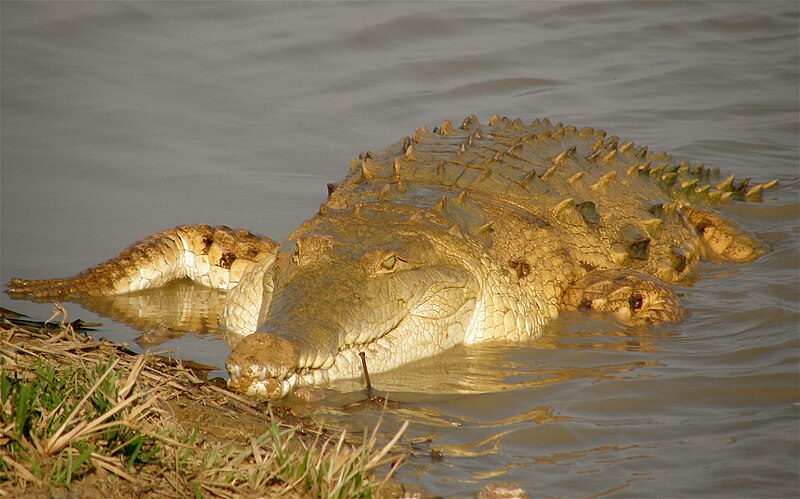
The Orinoco crocodile (Crocodylus intermedius) is a critically endangered crocodile. Its population is very small, and they can only be found in the Orinoco river basin in Venezuela and Colombia. Extensively hunted for their skins in the 19th and 20th centuries, it is one of the most endangered species of crocodiles. It is a very large species of crocodilian; males have been reported up to 6.8 m (22 ft 4 in) in the past, weighing over 900 kg (2,000 lb), but such sizes do not exist today, 5.2 m (17 ft 1 in) being a more widely accepted maximum size. A large male today may attain 4.2 m (13 ft 9 in) in length and can weigh up to 450 kg (1,000 lb), while females are substantially smaller with the largest likely to weigh around 225 kg (496 lb). Sexual dimorphism is not as profound as in other crocodilian species. The coloration is light even in adults.
The ecology of the Orinoco crocodile is poorly documented in the wild, mostly due to its small population. It is thought to have a more piscivorous diet with an opportunistic nature, resulting in generalist predatory behaviour. It is an apex predator and preys on a variety of birds, mammals and reptiles, including caimans on occasion. Its prey base is mostly large predatory fish, challenging the general view by locals complaining about crocodiles hunting local fish to very low numbers. Reproduction takes place in the dry season when the water level is low. It is a hole nester and digs holes in the sand for its clutch of eggs. The females guard the nests and young for several years.
Excerpted from Wikipedia’s “Orinoco crocodile” article, available under the CC BY-SA 4.0 licence.