Person · Open Library
- Born
- 1900
- Died
- 1996
- Works
- 34
Top works
- Music
- Music materials and the public library
- Die Bibel, oder Die ganze Heilige Schrift des Alten und Neuen Testaments
- Portrait Napoleons
- Music for electronic & older instruments
via Open Library + Wikidata
Music · MusicBrainz
- Type
- Person
- Gender
- Male
- Origin
- United States
- Active from
- 1900-06-15
- Active to
- 1996-09-02
Discography
- Tape Recorder Music1955
- A Poem in Cycles and Bells & Other Music for Tape Recorder1957
- Columbia-Princeton Electronic Music Center1961
- Riegger: Fantasy & Fugue / McPhee: Nocturne / Luening: Synthesis for Orchestra and Electronic Sound / Fantasia for Organ1967
- Tape Music An Historic Concert1968
- Orchestral Works 1917-19921994
via MusicBrainz · CC0
Listeners · Last.fm
- Listeners
- 14,946
- Total plays
- 49,101
Tags
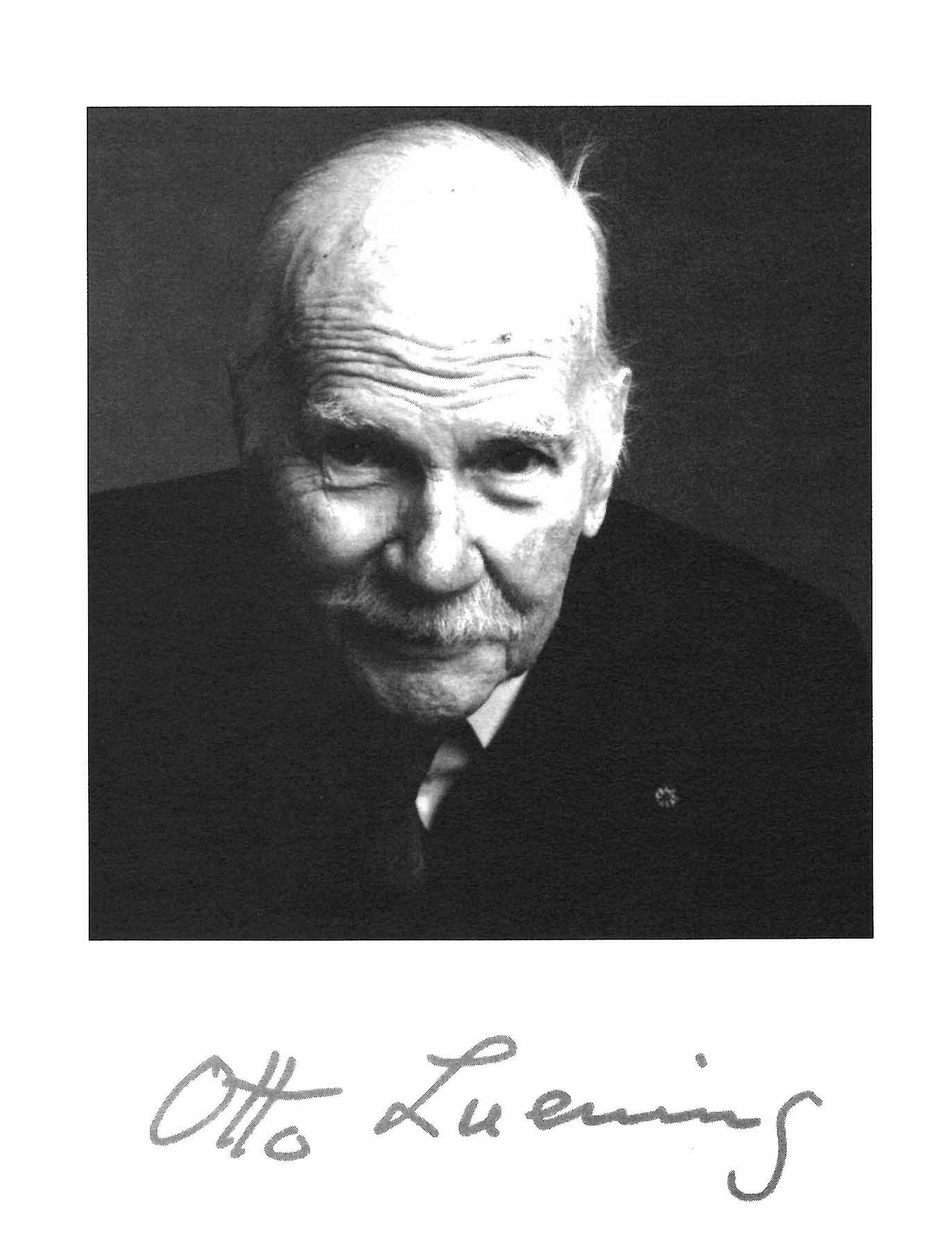
Otto Luening (b. Milwaukee WI, June 15, 1900 - d. New York NY, September 2, 1996) demonstrated an infectious musical catholicism both through his prolific output as a composer and as a tireless educator and advocate for new music. Although he is now most famous for his electronic work in the 1950s and early 1960s in collaboration with Vladimir Ussachevsky, Luening composed a vast body of music, much of it chamber music, characterized by its accessibility and its stylistic variety. <a href="htt
Described at
Luening, Otto – American Composers Alliance
Explore and purchase sheet music for musical works by composer Otto Luening.
composers.com →"In American music today there's a terrific amount of differentiation, a variety of styles and approaches. And that's the American story: this enormous, broad thing." - Otto Luening After retiring from Columbia in 1970, he taught briefly at the Juilliard School, and in 1980 he wrote a comprehensive autobiography, The Odyssey of an American Composer. In 1944 Luening became chairman of the music department at Barnard and music director of Columbia's Brander Matthews Theatre; in this capacity he conducted the premieres of Gian Carlo Menotti's The Medium (1946) and Virgil Thomson's The Mother of Us All (1947). In 1949 he was appointed professor of music at Columbia. Under his leadership, the University continued to present many important operatic works, among them the world premiere of Benjamin Britten and W. H. Auden's Paul Bunyan. Following years of experimentation with electronic, or electroacoustic, music—Fantasy in Space (1952) was an early effort—in 1959 Luening founded the Columbia-Princeton Electronic Music Center, now the Computer Music Center, along with Vladimir Ussachevsky. The center was the first in the United States devoted to the music described by Grove Music Online as that "in which electronic technology . . . is used to access, generate, explore, and configure sound materials," and provided a home for early electroacoustic composers. From the late 1940s until his retirement, Luening served as Columbia's principal instructor in musical composition; among his students were Marvin David Levy, Charles Dodge, Harvey Sollberger, and John Corigliano. In 1965, with Jack Beeson and then-provost Jacques Barzun, he inaugurated the University's doctoral program in composition. In recognition of his many achievements, Luening received an honorary degree from the University in 1981.
Excerpt from a page describing this subject · 16,652 chars · not written by Vinony
Wikidata facts
- Instance of
- human
- Given name
- Otto
- Gender
- male
- Citizenship
- United States
- Place of birth
- Milwaukee
- Place of death
- Manhattan
- Occupation
- conductor
- Employer
- Eastman School of Music
- Languages spoken
- English language
- Field of work
- chamber music
- Movement
- 20th-century classical music
- Instrument
- piano
Show 4 more facts
- member of
- American Academy of Arts and Letters
- date of birth
- 1900-06-15
- date of death
- 1996-09-02
- described at URL
- composers.com/otto-luening
Sources (9)
via Wikidata · CC0