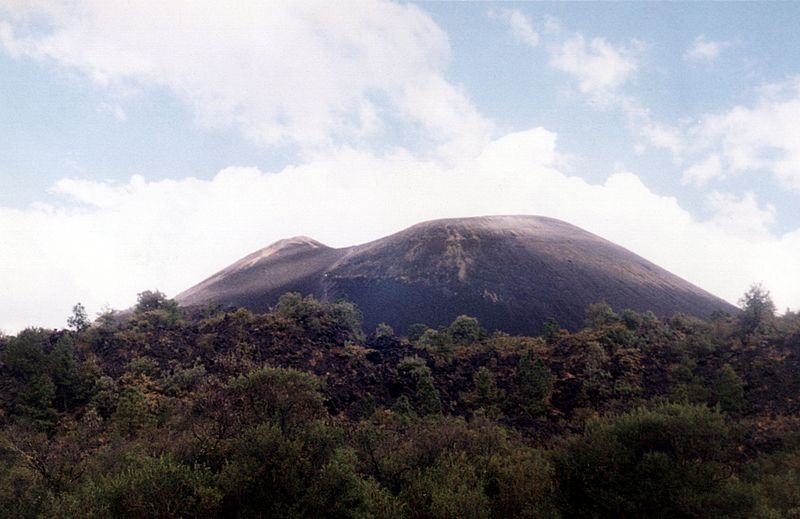
File:Paricutin.jpg · Wikimedia Commons · See Wikimedia Commons
Parícutin
Sign in to saveAlso known as Paricutin, Volcán de Parícutin
Parícutin (or Volcán de Parícutin, also accented Paricutín) is a cinder cone volcano located in the Mexican state of Michoacán, near the city of Uruapan and about west of Mexico City. The volcano surged suddenly from the cornfield of local farmer Dionisio Pulido in 1943, attracting both popular and scientific attention.
Parícutin is a cinder cone volcano in Michoacán, Mexico that erupted suddenly in 1943, emerging from a farmer's cornfield near the city of Uruapan. Its sudden appearance drew widespread public and scientific interest, making it a notable example of a volcano's dramatic arrival.
AI-generated from the Wikipedia summary — may contain errors.
Key facts
- Mountain.name
- Parícutin
- Mountain.photo
- paricutin.jpg
- Mountain.photo_caption
- Parícutin in 1994
- Mountain.elevation_m
- 2,800
- Mountain.prominence_m
- 208
- Mountain.location
- location of Parícutin in Mexico
- Mountain.map
- Mexico Michoacán#Mexico
- Mountain.country
- Mexico
- Mountain.state
- Michoacán
- Mountain.state_type
- State
- Mountain.type
- Cinder cone
- Mountain.age
- 1941–1952
- Mountain.volcanic_belt
- Trans-Mexican Volcanic Belt
- Mountain.last_eruption
- 1943 to 1952
- Mountain.first_ascent
- 1943
- Mountain.easiest_route
- Hike
via Wikipedia infobox
Described at
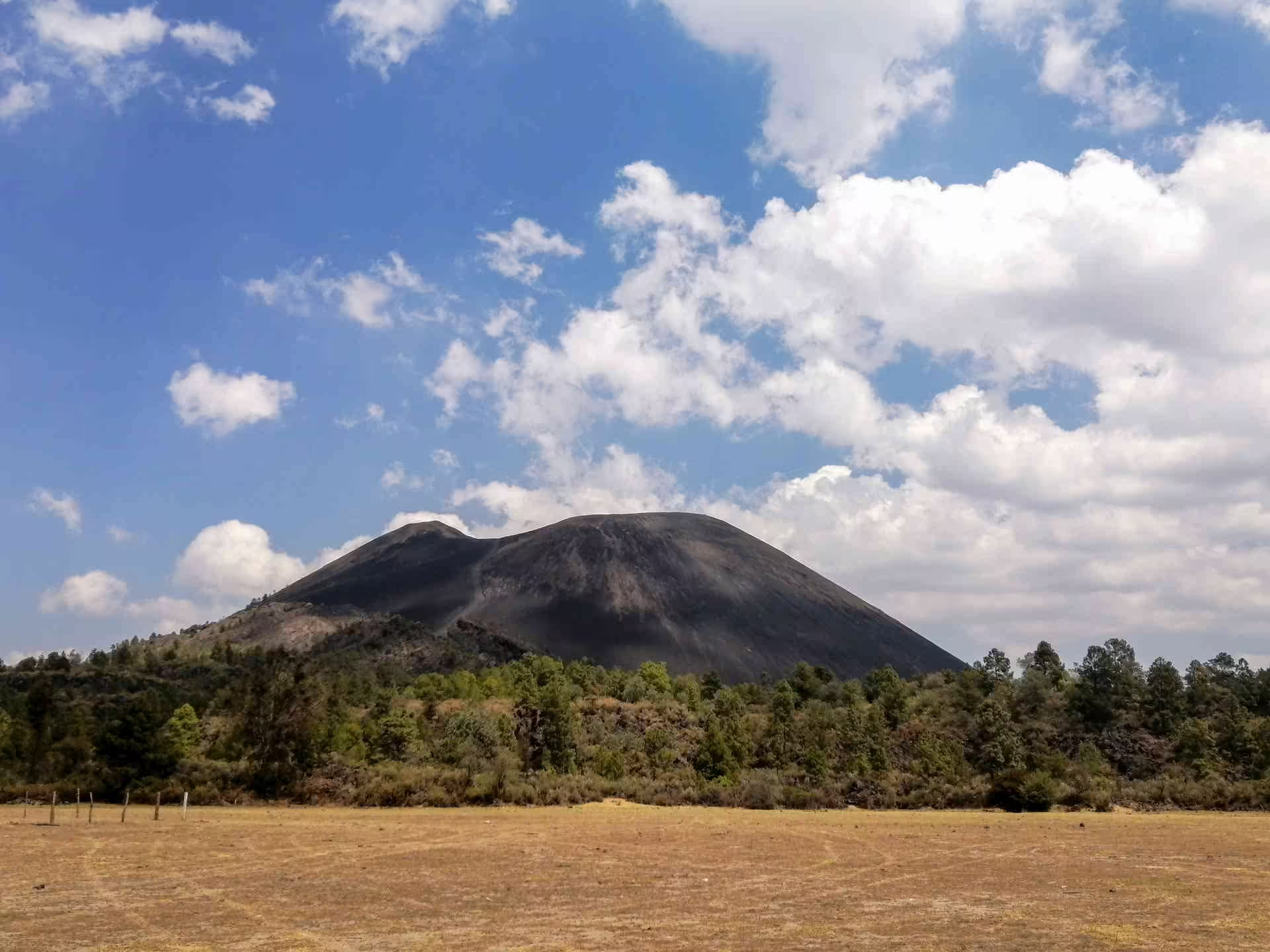
Vulkán Paricutin - Mexiko - PlaceMania
Vystúpte a prejdite sa do krátera jednej z najmladších sopiek na Zemi.
placemania.sk →Za súmraku stúpali do vzduchu plamene ako ohňostroj. Sopečné erupcie pokračovali ďalších deväť rokov na sopke Paricutin, ktorá sa stala jednou z najmladších sopiek na Zemi. Výstup na vulkanický kužeľ je zábavné dobrodružstvo, ktoré je najlepšie absolvovať skoro ráno. Na to, aby ste si vychutnali zážitok z obídenia okraja krátera a zostupu do jeho vnútra, kde horúca sírna para stále prestupuje cez pôdu, nie je potrebné žiadne špeciálne vybavenie. Po absolvovaní celého okruhu okolo kužeľa čaká turistov vzrušujúci zostup cez dymiaci čierny sopečný piesok smerom k stánkom s jedlom na úpätí sopky Paricutin. Zakladateľ projektu PlaceMania.sk a zodpovedá za jeho obsah, technické fungovanie a dlhodobý rozvoj. Cestovné zápisky na webe vychádzajú z vlastnej skúsenosti z ciest; faktografické záznamy o miestach vznikajú kombináciou verejných zdrojov, automatizovaného spracovania dát a redakčného overovania. Zameriava sa na netradičné lokality, ich historický a geografický kontext a menej známe súvislosti. Things to do near Vulkán Paricutin, Paricutín, 帕里库廷火山, Cono Parícutin, Paracutin, Parancutín, Paricutin Cone, Sopka, Prírodný útvar, Michoacán, Mexico, Méjico, Mexiko, MX, MEX, Paricutín, 60205 Michoacán, Mexiko. Find tours, guided tours, local activities, attractions, tickets, excursions, sightseeing, day trips and travel experiences nearby. Coordinates: 19.4933468, -102.2513976. Najmenší kostol v Mexico City, navrhnutý ako miniatúrna katedrála, ktorý navštevujú najmä zlodeji a prostitútky. Táto mozaika z kníh predstavuje jednu z najvýznamnejších literárnych osobností koloniálneho Mexika. Pozrite si ďalšie zaujímave miesta vo svete, ktoré stoja za naplánovanie ďalšej cesty. Na vrchole tejto nadpozemskej reťaze sopiek sa nachádzajú tri divoko sfarbené kaldery. Chcete vidieť ďalšie úchvatné miesta ako Vulkán Paricutin? Nájdeš ich u nás na mape. Objav s nami ďalšie úžasné miesta na zemi.
Excerpt from a page describing this subject · 16,035 chars · not written by Vinony
Wikidata facts
- Instance of
- cinder cone
- Country
- Mexico
- Located in
- Michoacán
- Elevation
- 2800
- Image
- Paricutín volcano.jpg
Show 5 more facts
- Commons category
- Paricutin
- topographic prominence
- 208
- mountain range
- Trans-Mexican Volcanic Belt
- inception
- 1943-02-20
- described at URL
- www.placemania.sk/svetova-zaujimavost/vulkan-paricutin
Sources (2)
via Wikidata · CC0
~15 min read
Encyclopedic overview
8 sectionsContents
- Description
- Formation
- Phases
- Scientific study
- Socioeconomic consequences
- See also
- References
- External links
Parícutin (or Volcán de Parícutin, also accented Paricutín) is a cinder cone volcano located in the Mexican state of Michoacán, near the city of Uruapan and about west of Mexico City. The volcano surged suddenly from the cornfield of local farmer Dionisio Pulido in 1943, attracting both popular and scientific attention.
Parícutin presented the first occasion for modern science to document the full life cycle of an eruption of this type. During the volcano's nine years of activity, scientists sketched and mapped it and took thousands of samples and photographs. By 1952, the eruption had left a cone and significantly damaged an area of more than with the ejection of stone, volcanic ash and lava. Three people were killed, two towns were completely evacuated and buried by lava, and three others were heavily affected. Hundreds of people had to permanently relocate, and two new towns were created to accommodate their migration. Although the larger region still remains highly active volcanically, Parícutin is now dormant and has become a tourist attraction, with people climbing the volcano and visiting the hardened lava-covered ruins of the San Juan Parangaricutiro Church.
Excerpted from Wikipedia’s “Parícutin” article, available under the CC BY-SA 4.0 licence.
Gallery (22)
On the map
3 mapped locations