File:70_patton.jpg · Wikimedia Commons · See Wikimedia Commons
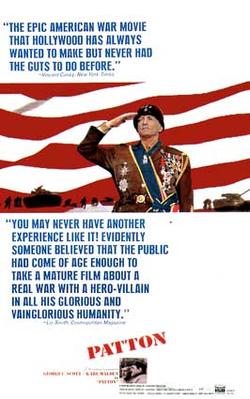
Patton, generale d'acciaio
Sign in to savefilm del 1970 diretto da Franklin J. Schaffner
OverviewAI-generated
Patton is a 1970 American biographical war drama film directed by Franklin J. Schaffner. The screenplay was written by Francis Ford Coppola and Edmund H. North, with George C. Scott, Karl Malden, Michael Bates, and Karl Michael Vogler appearing in the cast. The film, produced by Frank McCarthy and distributed by 20th Century Studios, features music by Jerry Goldsmith and cinematography by Fred Koenekamp. It is associated with the New Hollywood movement and was filmed in Greece, Spain, and Almería Province, with a narrative set in Belgium.
The film’s runtime is listed as 170 minutes in some records and 172 minutes in others. It received the Academy Award for Best Picture, Best Actor, Best Director, and Best Film Editing. Additional nominations included Best Cinematography. The film holds a 7.9 rating on IMDb and a 92% score on Rotten Tomatoes.
Synthesized by Vinony from 48 facts across 6 sources: Wikidata, TMDb, OMDb, IMDb, Vinony collections, Vinony graph. Generated from structured data (not the Wikipedia text) and checked against those facts — may still contain errors.
Film · TMDB
7.5"Patton" tells the tale of General George S. Patton, famous tank commander of World War II. The film begins with Patton's career in North Africa and progresses through the invasion of Germany and the fall of the Third Reich. Side plots also speak of Patton's numerous faults such his temper and habit towards insubordination.
Cast
- George C. Scott as General George S. Patton Jr.
- Karl Malden as General Omar N. Bradley
- Stephen Young as Captain Chester B. Hansen
- Michael Strong as Brigadier General Hobart Carver
- Carey Loftin as General Bradley's Driver
- Albert Dumortier as Moroccan Minister
Themes
- general
- steel helmet
- allies
- world war ii
- normandy, france
- dead soldier
- tank
- biography
- historical figure
- d-day
This product uses the TMDB API but is not endorsed or certified by TMDB.
Ratings
IMDb
7.9/10
112,477 votes
Rotten Tomatoes
92%
Metacritic
86/100
- Year
- 1970
- Runtime
- 172 min
- Genres
- Biography, Drama, War
- Rated
- PG
- Awards
- Won 7 Oscars. 25 wins & 8 nominations total
via OMDb · IMDb
Wikidata facts
- Instance of
- film
- Part of
- National Film Registry
- Genre
- drama film
- Country of origin
- United States
- Original language
- English language
- Followed by
- The Last Days of Patton
- Main subject
- George S. Patton
- Movement
- New Hollywood
- Director
- Franklin J. Schaffner
- Screenwriter
- Edmund H. North
- Composer
- Jerry Goldsmith
- Producer
- Frank McCarthy
- Production company
- 20th Century Studios
- Cinematographer
- Fred Koenekamp
- Narrative location
- Belgium
- Filming location
- Almería Province
- Duration
- 170
- FilmAffinity ID
- 495470
- Distribution format
- video on demand
Show 15 more facts
- publication date
- 1970-02-04
- film editor
- Hugh S. Fowler
- title
- Patton
- nominated for
- Academy Award for Best Visual Effects
- distributed by
- Disney+
- Commons category
- Patton (film)
- after a work by
- Ladislas Farago
- budget
- 12600000
- box office
- 61800000
- set in environment
- desert
- review score
- 7.9/10
- characters
- Arthur Tedder, 1st Baron Tedder
- assessment
- Bechdel test
- different from
- George S. Patton
- capital cost
- 12600000
Sources (11)
via Wikidata · CC0
Article · Italiano
Patton, generale d'acciaio (Patton) è un film del 1970 diretto da Franklin J. Schaffner. Si tratta di un film biografico sulla figura del generale dell'esercito degli Stati Uniti d'America George S. Patton durante la seconda guerra mondiale. Il cast annovera attori quali George C. Scott, Karl Malden, e . Soggetto e sceneggiatura furono scritti da Francis Ford Coppola e , che basarono il loro copione sulla biografia Patton: Ordeal and Triumph di e sul libro di memorie del Gen. Omar Bradley Soldier's Story.Il monologo iniziale, dove George C. Scott nelle vesti del generale Patton fa un discorso alle truppe con un'enorme bandiera a stelle e strisce sullo sfondo, è diventata un'immagine iconica spesso citata in altri film. Il film si aggiudicò sette premi Oscar. George C. Scott rifiutò categoricamente l'Oscar assegnatogli in segno di contrasto con il carrozzone dell'Academy Award, definito dallo stesso attore: «inutile esposizione di carne umana fine a se stessa». Nel 2003 è stato scelto per la preservazione nel National Film Registry dalla Biblioteca del Congresso degli Stati Uniti, essendo "un'opera significativa dal punto di vista culturale, storico ed estetico".Nel 1998 l'American Film Institute l'ha inserito all'ottantanovesimo posto della classifica dei migliori cento film statunitensi di tutti i tempi.
Abstract from DBpedia / Wikipedia · CC BY-SA