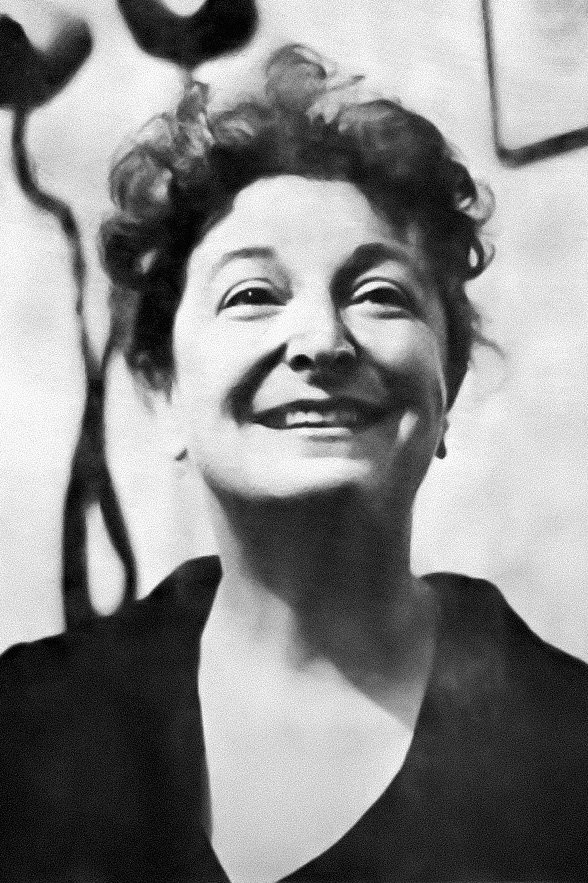
Profile via TMDB · Courtesy of TMDB
Pauline Kael
Sign in to saveAmerican film critic (1919-2001)
Film & TV
Petaluma, California, USA
Pauline Kael was an American film critic who wrote for The New Yorker from 1968 to 1991. Known for her "witty, biting, highly opinionated and sharply focused" reviews, Kael's opinions often ran contrary to those of her contemporaries.
Known for
- Clint Eastwood: The Last Legend — Self (archive footage)2022
- Ed & Pauline2014
- Life Itself — Self - Film Critic (archive footage)2014
- Big Joy: The Adventures of James Broughton — Self2013
- For the Love of Movies: The Story of American Film Criticism — Self2009
- Altman on His Own Terms — Self (voice)2000
- The Complete 'Citizen Kane'1991
- The Magical Eye — Self1989
- The Man with No Name — Self1977
- PBS News Hour — Self - Movie Critic, The New Yorker1975
via TMDB
Key facts
- Born
- ( 1919-06-19 ) June 19, 1919, Petaluma, California , U.S.
- Died
- September 3, 2001 (2001-09-03) (aged 82), Great Barrington, Massachusetts , U.S.
- Occupation
- Film critic
- Period
- 1951–1991
- Spouse
- Edward Landberg ( married</span>"}]]}'>m. 1955 ; divorced</span>"}]]}'>div. 1959 )
via Wikipedia infobox
Wikidata facts
- Instance of
- human
- Given name
- Pauline
- Gender
- female
- Citizenship
- United States
- Place of birth
- Petaluma
- Place of death
- Great Barrington
- Occupation
- journalist
- Educated at
- University of California, Berkeley
- Languages spoken
- English language
- Image
- Pauline Kael (1968).jpg
Show 6 more facts
- cause of death
- Parkinson's disease
- date of death
- 2001-09-03
- medical condition
- Parkinson's disease
- date of birth
- 1919-06-19
- manner of death
- natural causes
- Commons category
- Pauline Kael
Sources (3)
via Wikidata · CC0
~35 min read
Encyclopedic overview
Pauline Kael (/keɪl/ KAYL; June 19, 1919 – September 3, 2001) was an American film critic who wrote for The New Yorker from 1968 to 1991. Known for her "witty, biting, highly opinionated and sharply focused" reviews, Kael often defied the consensus of her contemporaries.
One of the most influential American film critics of her era, she left a lasting impression on the art form. Roger Ebert argued in an obituary that Kael "had a more positive influence on the climate for film in America than any other single person over the last three decades". Kael, he said, "had no theory, no rules, no guidelines, no objective standards. You couldn't apply her 'approach' to a film. With her it was all personal." In a blurb for The Age of Movies, a collection of her writings for the Library of America, Ebert wrote, "Like George Bernard Shaw, she wrote reviews that will be read for their style, humor and energy long after some of their subjects have been forgotten."
Excerpted from Wikipedia’s “Pauline Kael” article, available under the CC BY-SA 4.0 licence.