File:ScientificReview.jpg · Wikimedia Commons · See Wikimedia Commons
peer review
Sign in to saveprocess of collecting evaluations of a product or activity by one or more people of similar competence to the creator or actor
Peer review is a process where experts with similar knowledge and skills to the creator evaluate someone's work—like research, writing, or a product—to check its quality and accuracy. It matters because it helps catch mistakes, improve ideas, and build trust that the work is reliable before it's shared widely.
AI-generated from the Wikipedia summary — may contain errors.
Research
109,036 papersvia PubMed
Wikidata facts
- Subclass of
- review
- Image
- ScientificReview.jpg
- Has use
- engineering
Show 4 more facts
- topic's main category
- Category:Peer review
- Commons category
- Peer review
- product or material produced
- review
- P13411
- No Beef
via Wikidata · CC0
~24 min read
Encyclopedic overview
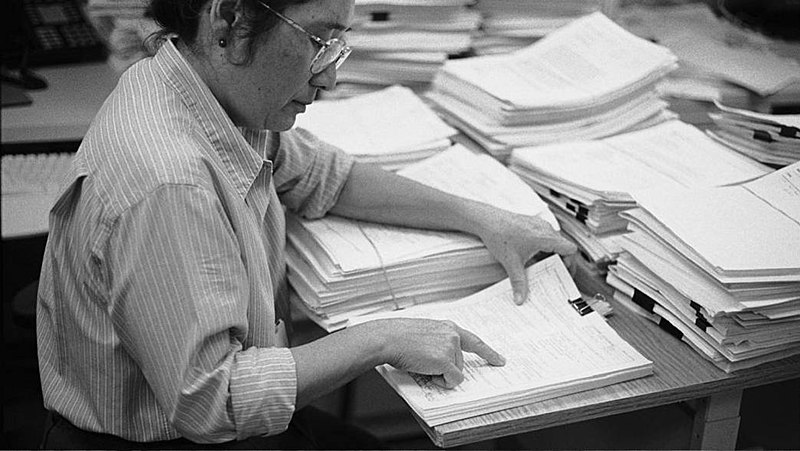
A reviewer at the American National Institutes of Health evaluating a grant proposal Peer review is the evaluation of work by one or more people with similar competencies as the producers of the work (peers). It functions as a form of self-regulation by qualified members of a profession within the relevant field. Peer review methods are used to maintain quality standards, improve performance, and provide credibility. In academia, scholarly peer review is typically used to determine an academic paper's suitability for publication. The reviewers are experts in the topic at hand and they have no connection to the author (they are not told the name of the author). They are anonymous and cannot be pressured. Top journals reject over 90% of submitted papers. Peer review can be categorized by the type and by the field or profession in which the activity occurs, e.g., medical peer review. It can also be used as a teaching tool to help students improve writing assignments.
Henry Oldenburg (1619–1677) was a German-born British philosopher who is seen as the 'father' of modern scientific peer review. It developed over the following centuries with, for example, the journal Nature making it standard practice in 1973. The term "peer review" was first used in the early 1970s. A monument to peer review has been at the Higher School of Economics in Moscow since 2017.
Excerpted from Wikipedia’s “peer review” article, available under the CC BY-SA 4.0 licence.