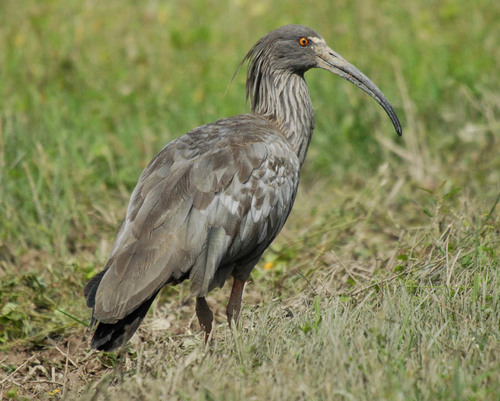
(c) Paul Donahue, some rights reserved (CC BY-NC), uploaded by Paul Donahue · cc-by-nc
Species
Least ConcernPlumbeous Ibis
Species
- PhylumChordata
- ClassAves
- OrderCiconiiformes
- FamilyThreskiornithidae
Habitatfreshwater
Observations1,545
Observations: Little is known about the longevity of these animals, but one specimen was still alive after 7 years in captivity (Brouwer et al. 1994).
via IUCN
Wikidata facts
- Instance of
- taxon
- Parent taxon
- Theristicus
- Image
- BANDURRIA MORA Harpiprioncaerulescens.jpg
Show 9 more facts
- taxon rank
- species
- IUCN conservation status
- Least Concern
- Commons category
- Theristicus caerulescens
- taxon name
- Theristicus caerulescens
- taxon common name
- bjeločeli ibis
- litter size
- 2.4
- egg incubation period
- 28
- taxon range
- South America
- short name
- T. caerulescens
via Wikidata · CC0
~18 min read
Encyclopedic overview
Theristicus caerulescens The plumbeous ibis (Theristicus caerulescens), also formerly called the blue ibis, is a large distinctive ibis species endemic to parts of central South America.
Taxonomy and systematics
Excerpted from Wikipedia’s “Plumbeous Ibis” article, available under the CC BY-SA 4.0 licence.