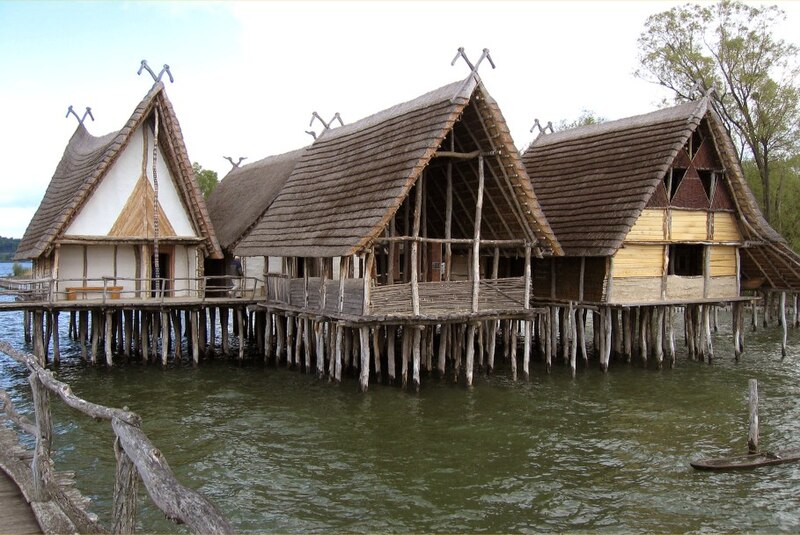
prehistoric pile dwellings around the Alps
Also known as Prehistoric pile dwellings around the Alps World Heritage Sites in Germany
series of stilt houses built near the Alps mountain range
AI overview
Prehistoric pile dwellings around the Alps are ancient stilt houses that were built in areas near the Alps mountain range during early human history. These settlements are important archaeological sites that help us understand how people lived in prehistoric times and adapted to their environment.
AI-generated from the Wikipedia summary — may contain errors.
Key facts
- Location
- (see map )
- Includes
- 111 locations in Austria , France , Germany , Italy , Slovenia and Switzerland
- Criteria
- Cultural: (iv), (v)
- Inscription
- 2011 (35th Session )
- Area
- 274.2 ha (678 acres)
- Buffer zone
- 3,960.77 ha (9,787.3 acres)
- Website
- www .palafittes .org
via Wikipedia infobox
Wikidata facts
- Area
- 3960.77
- Official website
- www.palafittes.org
- Image
- Pfahlbauten Unteruhldingen 2005 05.jpg
Show 1 more fact
~6 min read
Article
Prehistoric pile dwellings around the Alps are a series of prehistoric pile dwelling (or stilt house) settlements in and around the Alps built from about 5000 to 500 BC on the edges of lakes, rivers or wetlands. In 2011, 111 sites located variously in Switzerland (56), Italy (19), Germany (18), France (11), Austria (5) and Slovenia (2) were added to the UNESCO World Heritage Site list. In Slovenia, these were the first World Heritage Sites to be listed for their cultural value.
Excavations conducted at some of the sites have yielded evidence regarding prehistoric life and the way communities interacted with their environment during the Neolithic and Bronze Ages in Alpine Europe. These settlements are a unique group of exceptionally well-preserved and culturally rich archaeological sites, which constitute one of the most important sources for the study of early agrarian societies in the region.
Gallery (12)
On the map
60 mapped locations