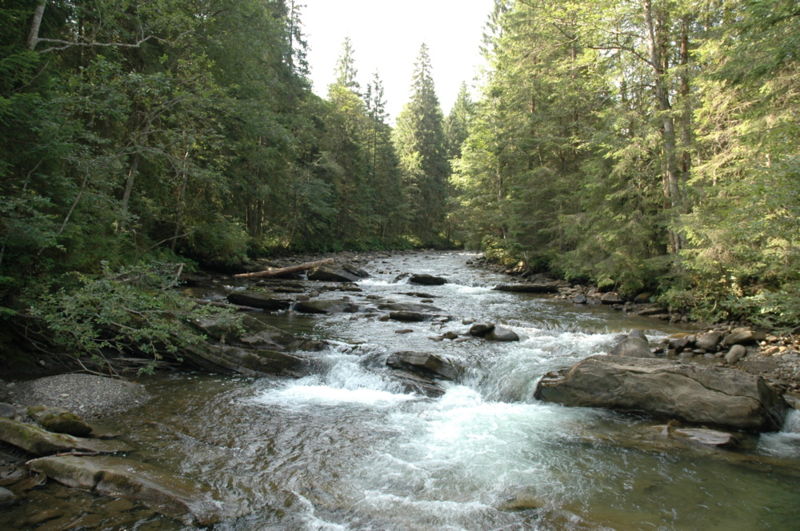
File:Prut_near_Hoverla.jpg · Wikimedia Commons · See Wikimedia Commons
The Prut is a river in Eastern Europe that flows into the Danube River, and it matters because part of it serves as the border between Romania and its neighbors Moldova and Ukraine.
AI-generated from the Wikipedia summary — may contain errors.
Key facts
- River.name
- Prut
- River.name_other
- Porata, Pyretus
- River.image
- Prut near Hoverla.jpg
- River.image_caption
- Prut River near Hoverla, Ivano-Frankivsk Oblast
- River.map
- Prut river.jpg
- River.map_caption
- Map of the Prut River
- River.mapframe
- yes
- River.mapframe zoom
- 5
- River.subdivision_type1
- Country
- River.subdivision_type2
- Oblasts/Counties/Districts
- River.subdivision_type3
- Cities
- River.discharge1_location
- mouth
- River.source1
- Mt. Hoverla, Carpathian Mountains
- River.source1_location
- Yablunytsia, Nadvirna Raion, Ivano-Frankivsk Oblast, Ukraine
- River.mouth
- Danube
- River.tributaries_right
- Cheremosh, Jijia
via Wikipedia infobox
Wikidata facts
- Instance of
- river
- Country
- Ukraine
- Located in
- Galați County
- Continent
- Europe
- Image
- Pruth Giurgiulesti.JPG
- Length
- 953
Show 10 more facts
- tributary
- Lopatnic
- topic's main category
- Category:Prut
- Commons category
- Prut River
- mouth of the watercourse
- Danube
- category for the water basin
- Category:Prut basin
- watershed area
- 27500
- discharge
- 121
- origin of the watercourse
- Carpathians
- basin country
- Romania
- on focus list of Wikimedia project
- WikiProject Ukraine
via Wikidata · CC0
Article · Français
La Prut (roumain : Prut, ukrainien : Прут soit Prut en transcription directe employée pour l'ukrainien et en transcription du moldave Прут) est une rivière d'Europe de l'Est, longue de 953 km, qui prend sa source en Ukraine et fait office de frontière moldo-roumaine sur la plus grande partie de son cours. C'est un affluent du bas-Danube. La graphie Prout est une transcription phonétique exclusivement française du nom russe : Прут. La rivière est nommée Prut dans les autres langues européennes. On trouve aussi la forme Pruth (dans les livres anciens et les livres d’histoire). Pruth est la forme la plus courante en allemand ; en roumain, l’orthographie postposée donne Prutul.
Abstract from DBpedia / Wikipedia · CC BY-SA
Gallery (11)
On the map
4 mapped locations
Available in 71 languages
- Español
- Français
- Deutsch
- 中文
- 日本語
- Русский
- Português
- Italiano
- العربية
- Afrikaans
- Armenian
- Asturian
- azb
- Azerbaijani
- Bahasa Indonesia
- Bashkir
- Basque
- be_x_old
Show 52 more
- Belarusian
- Bosnian
- Breton
- Bulgarian
- Catalan
- Cebuano
- Croatian
- Czech
- Danish
- Egyptian Arabic
- Esperanto
- Estonian
- Finnish
- Galician
- Georgian
- Greek
- Hebrew
- Hungarian
- Ido
- Javanese
- Kyrgyz
- Latin
- Latvian
- Lithuanian
- lld
- Low German
- Macedonian
- Mingrelian
- Nederlands
- Norwegian
- Norwegian Nynorsk
- Occitan
- Ossetic
- Polski
- Romanian
- Serbian
- Serbian (Latin)
- simple
- Slovak
- Slovenian
- Svenska
- Tiếng Việt
- Türkçe
- Ukrainian
- Upper Sorbian
- Uzbek
- Western Panjabi
- Wu Chinese
- zh_min_nan
- فارسی
- ไทย
- 한국어
via Wikidata sitelinks · CC0