Pycnanthemum · Kew POWO · Kew Plants of the World Online
Pycnanthemum
Sign in to saveAlso known as mountain mints, koellias
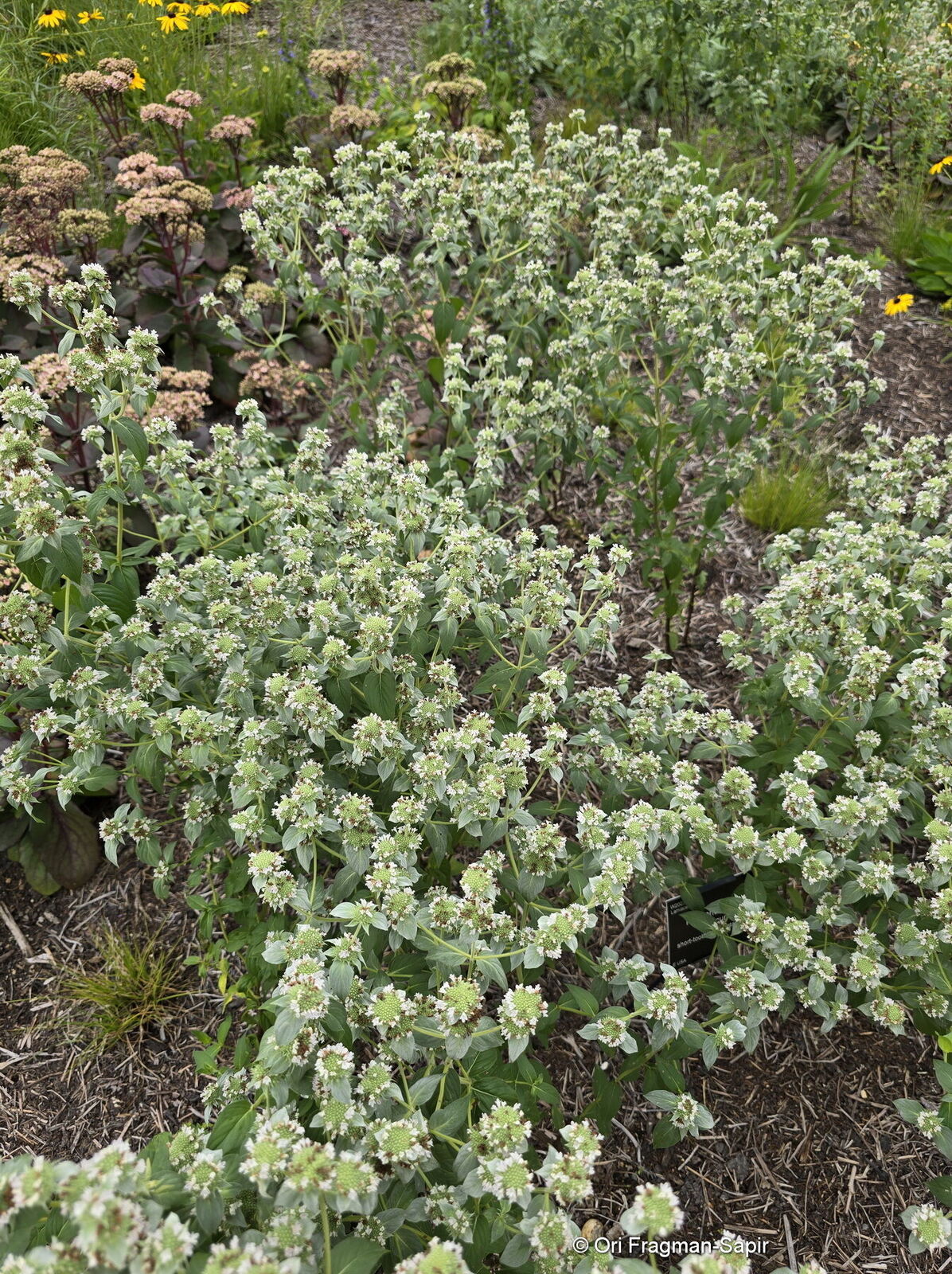
Pycnanthemum is a genus of herbaceous plants in the mint family (Lamiaceae). Species in this genus are often referred to as mountain mints and they often have a minty or thyme-like aroma when crushed. All species of Pycnanthemum are native to the United States and Canada. The center of diversity for the genus is North Carolina with 13 of the 20 species having been collected therein. Nineteen of the 20 species of Pycnanthemum occur in the Eastern US and Canada, and one disjunct species (P. californicum) occurs in California and Oregon.
Species
GENUS
- KingdomPlantae
- PhylumTracheophyta
- ClassMagnoliopsida
- OrderLamiales
- FamilyLamiaceae
via GBIF · Kew POWO
Museum specimens
- Specimen records
- 631
- With media
- 587
- Family
- Lamiaceae
- Collections
- USFWS, NY, USF, LSU, SD, GH
- Recorded in
- United States
Wikidata facts
Show 7 more facts
- Commons category
- Pycnanthemum
- taxon name
- Pycnanthemum
- taxon rank
- genus
- topic's main category
- Category:Pycnanthemum
- taxon common name
- mountainmint
- has fruit type
- schizocarp
Sources (2)
via Wikidata · CC0
~4 min read
Encyclopedic overview
4 sectionsContents
- Species
- Footnotes
- References
- External links
Pycnanthemum is a genus of herbaceous plants in the mint family (Lamiaceae). Species in this genus are often referred to as mountain mints and they often have a minty or thyme-like aroma when crushed. All species of Pycnanthemum are native to the United States and Canada. The center of diversity for the genus is North Carolina with 13 of the 20 species having been collected therein. Nineteen of the 20 species of Pycnanthemum occur in the Eastern US and Canada, and one disjunct species (P. californicum) occurs in California and Oregon.
Pycnanthemum is derived from Greek. The Greek word "pyknos" has the meaning of "dense", "tight", or "close-packed". It was combined with "anthos" meaning flower to give the genus name.
Excerpted from Wikipedia’s “Pycnanthemum” article, available under the CC BY-SA 4.0 licence.