Category
page 1Lamiaceae genera

Mentha
Mentha, also known as mint (from Greek , Linear B mi-ta), is a genus of flowering plants in the mint family, Lamiaceae. It is estimated that 18 to 24 species exist, but the exact distinction between species is unclear. Hybridization occurs naturally where some species' ranges overlap. Many hybrids and cultivars are known.

Lavandula
Lavandula (common name lavender) is a genus of 47 known species of perennial flowering plants in the sage family, Lamiaceae. It is native to the Old World, primarily found across the drier, warmer regions of the Mediterranean, with an affinity for maritime breezes.

Thymus
genus of plants

Salvia
Salvia () is the largest genus of plants in the sage family Lamiaceae, with just under 1,000 species of shrubs, herbaceous perennials, and annuals. Within the Lamiaceae, Salvia is part of the tribe Mentheae within the subfamily Nepetoideae. One of several genera commonly referred to as sage, it includes two widely used herbs, Salvia officinalis (common sage, or just "sage") and Salvia rosmarinus (rosemary, formerly Rosmarinus officinalis).

Origanum
thumb|Origanum syriacum

Satureja
Satureja is a genus of aromatic plants of the family Lamiaceae, related to rosemary and thyme. It is native to southern and southeastern Europe, North Africa, the Middle East, and Central Asia. Historically, Satureja was defined broadly and many species of the subtribe Menthinae from throughout the world were included in it. In the modern cladistic era of botany, Satureja was redefined to a narrower monophyletic genus whose species are all native to Eurasia. Several species are cultivated as culinary herbs called savory, and they have become established in the wild in a few places.

Ocimum
Ocimum is a genus of aromatic annual and perennial herbs and shrubs in the family Lamiaceae, native to the tropical and warm temperate regions of all 6 inhabited continents, with the greatest number of species in Africa. Its best known species are the cooking herb basil, O. basilicum, and the medicinal herb tulsi (holy basil), O. tenuiflorum.

Lamium
Lamium (dead-nettles) is a genus of about 30 species of flowering plants in the family Lamiaceae, of which it is the type genus. They are all herbaceous plants native to Eurasia and northern Africa, with several widely naturalised across much of the temperate world.

Stachys
Stachys is a genus of plants, one of the largest in the mint family Lamiaceae. Estimates of the number of species vary from about 300 to about 450. Plants of the World Online accepts 373 species. Stachys is in the subfamily Lamioideae and its type species is Stachys sylvatica. The precise extent of the genus and its relationship to other genera in the subfamily are poorly known.

Scutellaria
Scutellaria is a genus of flowering plants in the mint family, Lamiaceae. They are known commonly as skullcaps. The generic name is derived from the Latin scutella, meaning "a small dish, tray or platter", or "little dish", referring to the shape of the calyx. The common name alludes to the resemblance of the same structure to "miniature medieval helmets". The genus has a subcosmopolitan distribution, with species occurring nearly worldwide, mainly in temperate regions.

Nepeta
Nepeta is a genus of flowering plants in the family Lamiaceae. The genus name, from Latin (“catnip”), is reportedly in reference to Nepete, an ancient Etruscan city. There are 295 accepted species.

Ajuga
thumb|350px|Ajuga on fine gravel
Ajuga , also known as bugleweed, ground pine, carpet bugle, or just bugle, is a genus of flowering plants in the Ajugeae tribe of the mint family Lamiaceae. Over 60 species of annual or perennial, mostly herbaceous plants are known. They are native to Europe, Asia, Africa, and Australia.

Leonurus
Leonurus (motherwort) is a genus of flowering plants in the family Lamiaceae. It is native to Europe and Asia, naturalized in New Zealand, Hawaii, New Caledonia, and much of North and South America.

Prunella
genus of plants

Teucrium
Teucrium is a cosmopolitan genus of flowering plants in the mint family Lamiaceae, commonly known as germanders. Plants in this genus are perennial herbs or shrubs, with branches that are more or less square in cross-section, leaves arranged in opposite pairs, and flowers arranged in thyrses, the corolla with mostly white to cream-coloured, lobed petals.

Hyssopus
genus of plants

Melissa
genus of plants
.jpg)
Clerodendrum
Clerodendrum is a genus of flowering plants formerly placed in the family Verbenaceae, but now considered to belong to the Lamiaceae (mint) family. Its common names include glorybower, bagflower, pagoda flower and bleeding-heart. It is currently classified in the subfamily Ajugoideae, being one of several genera transferred from Verbenaceae to Lamiaceae in the 1990s, based on phylogenetic analysis of morphological and molecular data.

Vitex
Vitex is a genus of flowering plants in the family Lamiaceae. It has about 200–250 species; the Plants of the World Online database accepts 211 species. Common names include chaste tree or chastetree, traditionally referring to V. agnus-castus, but often applied to other species, as well, and pūriri for the New Zealand species V. lucens.

Galeopsis
Galeopsis is a genus of annual herbaceous plants native to Europe and Asia. Members of this genus often have common names ending in hemp-nettle or hempnettle. Some species are naturalized in North America and New Zealand.

Glechoma
Glechoma is a genus of flowering plants in the mint family, Lamiaceae, first described for modern science in 1753. It is distributed in northern Asia and Europe with a center of diversity in Asia, especially China. One species is naturalized in New Zealand and in North America.

Phlomis
thumb|200px|Phlomis armeniaca
thumb|200px|Phlomis tuberosa
Phlomis is a genus of over 100 species of herbaceous plants, subshrubs and shrubs in the mint family Lamiaceae, native from the Mediterranean region east across central Asia to China.

Marrubium
Marrubium (horehound or hoarhound) is a genus of flowering plants in the family Lamiaceae, native to temperate regions of Europe, North Africa, and Asia as far east as the Xinjiang region of western China. A few species are also naturalized in North and South America.

Sideritis
Sideritis, also known as ironwort, mountain tea and '''shepherd's tea''', is a genus of flowering plants known for their use as herbal medicine, commonly as a herbal tea. They are abundant in Mediterranean regions, the Balkans, the Iberian Peninsula and Macaronesia, but can also be found in Central Europe and temperate Asia.
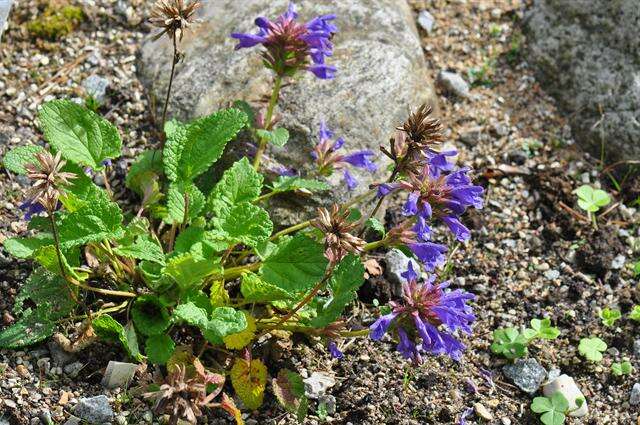
Dracocephalum
Dracocephalum is a genus of flowering plants in the family Lamiaceae, native to temperate regions of the Northern Hemisphere. These flowers, collectively called dragonhead, are annual or perennial herbaceous plants or subshrubs, growing to 15 to 90 centimeters tall. The genus has 89 species as currently circumscribed, which includes the formerly separate genera Hyssopus, Lallemantia, and others. Older circumscriptions include 60 to 70 species.

Tectona
Tectona is a genus of tropical hardwood trees in the mint family, Lamiaceae. The three species are often collectively called teak.

Clinopodium
Clinopodium is a genus of flowering plants in the family Lamiaceae, in the subtribe Menthinae. Clinopodium belongs to a large and complex group of genera including many New World mints such as Hedeoma, Monarda, and Pycnanthemum, and this group is in turn a sister clade to Mentha. The genus name Clinopodium is derived from the Latin clinopodion, from the Ancient Greek (), from () "bed" and () "little foot". These were names for Clinopodium vulgare. They allude to the form of the calyx.

Lycopus
Lycopus is a genus of herbaceous plants in the family Lamiaceae. The many species are known as water horehound, gypsywort, and bugleweed and are native to Europe, Asia, Australia, and North America. The species are most often found in wetlands, damp meadows, and stream banks. Some of the wetland species have become endangered.

Salvia subg. Rosmarinus
Rosmarinus ( ) is a small taxonomic clade of woody, perennial herbs with fragrant evergreen needle-like leaves in the family Lamiaceae, native to the Mediterranean Basin.

Monarda
Monarda is a genus of flowering plants in the mint family, Lamiaceae. The genus is endemic to North America. Common names include bergamot, bee balm, horsemint, and oswego tea, the first being inspired by the fragrance of the leaves, which is reminiscent of bergamot orange (Citrus bergamia). The genus was named for the Spanish botanist Nicolás Monardes, who wrote a book in 1574 describing plants of the New World.

Ballota
Ballota (horehound) is a genus of flowering evergreen perennial plants and subshrubs in the family Lamiaceae. It is native to temperate regions; the Mediterranean region has the highest diversity in the genus, with more isolated locations in South Africa, Central Asia, northern Europe, and the islands of the eastern North Atlantic. It is found in rocky and waste ground.

Agastache
thumb|Agastache rupestris in bloom.

Plectranthus
Plectranthus is a genus of about 85 species of flowering plants from the mint/sage family, Lamiaceae, found mostly in southern and tropical Africa and Madagascar. Common names include spur-flower. Plectranthus species are herbaceous perennial plants, rarely annuals or soft-wooded shrubs, sometimes succulent; sometimes with a tuberous base.
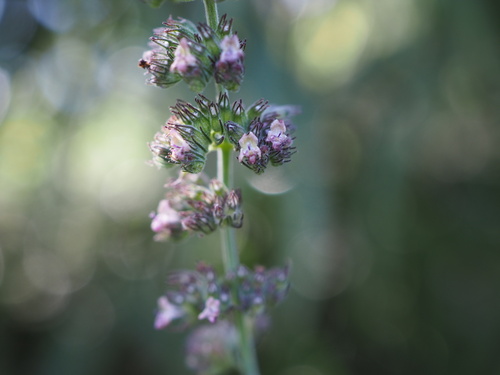
Pogostemon
Pogostemon is a large genus from the family Lamiaceae, first described as a genus in 1815. It is native to warmer parts of Asia, Africa, and Australia.

Coleus
thumb|Cultivar of [[Coleus scutellarioides]]

Caryopteris
Caryopteris (bluebeard; ) is a genus of flowering plants in the family Lamiaceae (formerly often placed in the family Verbenaceae). They are native to east Asia (China, Korea, Japan, Mongolia).

Betonica
Betonica is a genus of the plants in the family Lamiaceae.
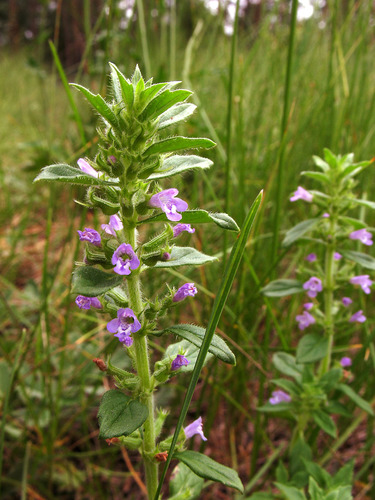
Ziziphora
Ziziphora are a genus of annual or perennial herbs or subshrubs in the family Lamiaceae. Ziziphora has aromatic leaves; they are found in open and often xeric habitats in Southern and Eastern Europe, North-West Africa and Asia to the Himalayas and Altai Mountains.

Callicarpa
Callicarpa (beautyberry) is a genus of shrubs and small trees in the family Lamiaceae. They are native to east and southeast Asia (where the majority of the species occur), Australia, Madagascar, south-eastern North America and South America.

Gmelina
Gmelina is a genus of plants in the family Lamiaceae. It consists of about 35 species, native to Australia, Southeast Asia, India, New Guinea and New Caledonia. Some species such as G. arborea have been planted and/or become naturalised in India, Africa and Australia. It was named by Carl Linnaeus in honour of botanist Johann Georg Gmelin.

Leonotis
Leonotis is a genus of flowering plants in the family Lamiaceae. One species, Leonotis nepetifolia, is native to tropical Africa and southern India. It is naturalized throughout most of the tropics. The other species are endemic to southern + eastern Africa.
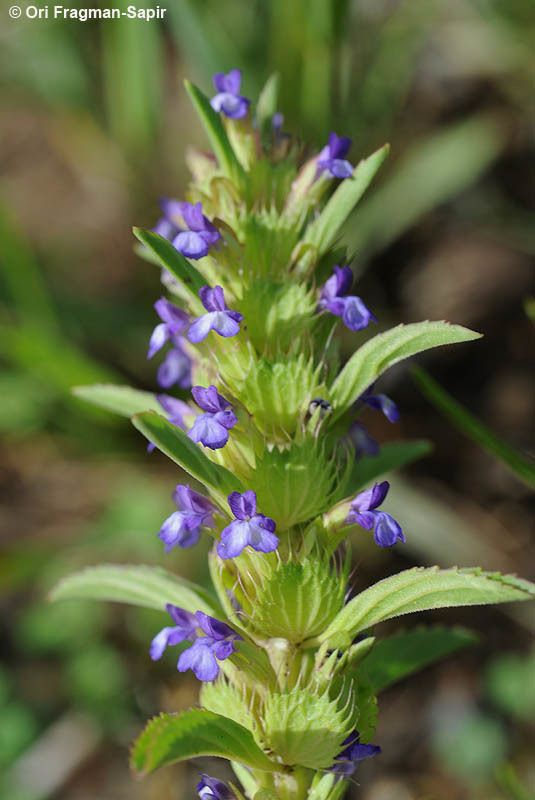
Lallemantia
Lallemantia is a genus of flowering plants in the family Lamiaceae. It is named after the German botanist Julius Léopold Eduard Avé-Lallemant.

Premna
Premna is a genus of flowering plants in the mint family, Lamiaceae, first described for modern science in 1771. It is widespread through tropical and subtropical regions in Africa, southern Asia, northern Australia, and various islands in the Pacific and Indian Oceans.
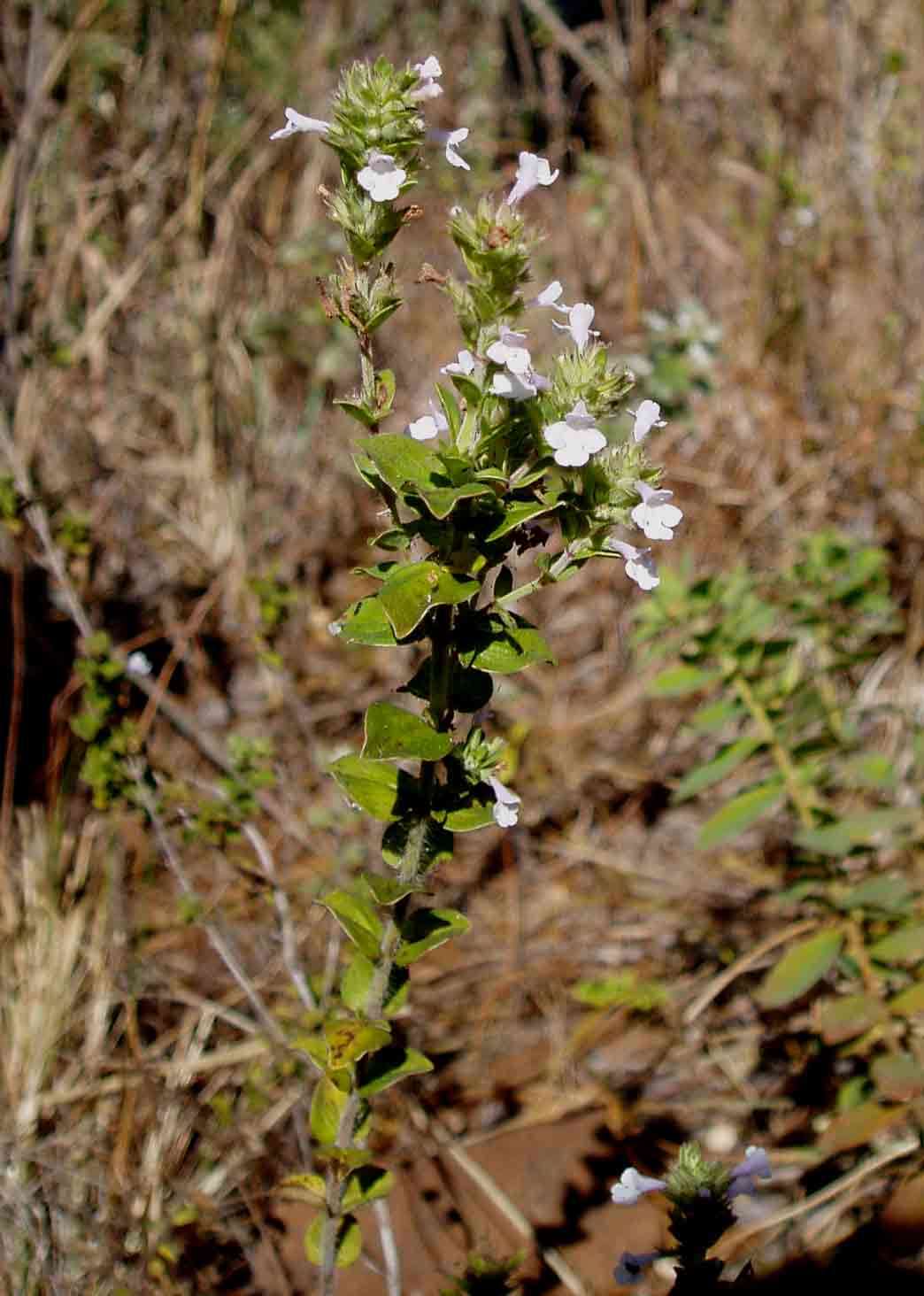
Micromeria
Micromeria is a genus of flowering plants in the mint family, Lamiaceae, widespread across Europe, Asia, Africa, and North America, with a center of diversity in the Mediterranean region and the Canary Islands. It is sometimes placed within the genus Satureja. The name is derived from the Greek words μῑκρος (mīkros), meaning "small," and μερίς (meris), meaning "portion," referring to the leaves and flowers. Common names include savory and whitweed.
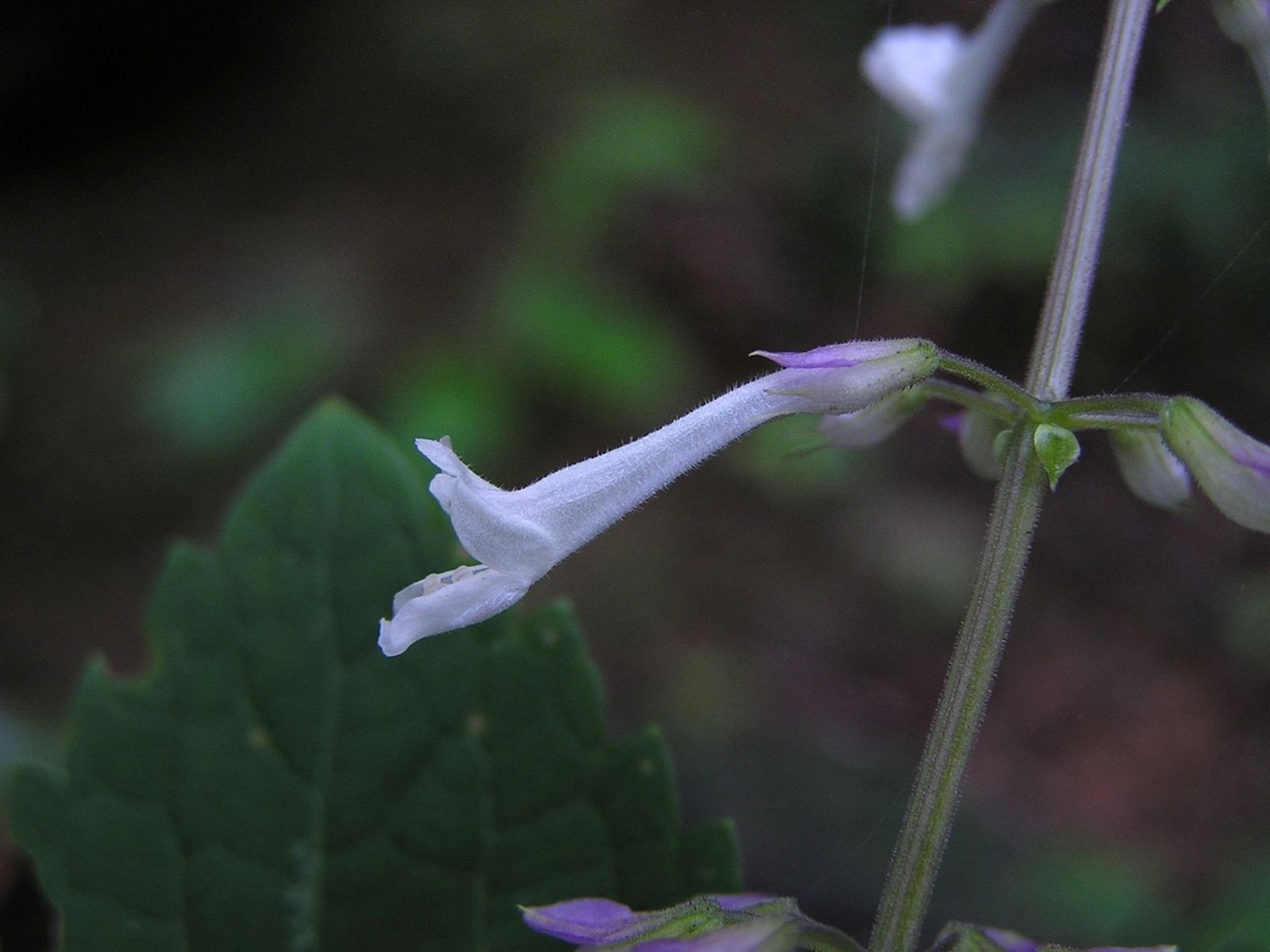
Orthosiphon
Orthosiphon is a genus of plants in the family Lamiaceae native to Africa, Southern Asia and Queensland, with one species (O. americanus) in Colombia. They are herbaceous shrubs which grow to a height of . Some Orthosiphon species are popular garden plants because of their flowers, which are white and bluish with filaments resembling a cat's whiskers. In the wild, the plants can be seen growing in forests and along roadsides.

Perilla
Perilla is a genus consisting of one major Asiatic crop species Perilla frutescens and a few wild species in nature belonging to the mint family, Lamiaceae. The genus encompasses several distinct varieties of Asian herb, seed, and vegetable crop, including P. frutescens (deulkkae) and P. frutescens var. crispa (shiso). The genus name Perilla is also a frequently employed common name ("perilla"), applicable to all varieties. Perilla varieties are cross-fertile and intra-specific hybridization occurs naturally. Some varieties are considered invasive.

Physostegia
Physostegia, the lionshearts or false dragonheads (in reference to their similarity to Dracocephalum), is a genus of flowering plants in the family Lamiaceae, native to North America (United States, Canada, northern Mexico). They are erect rhizomatous herbaceous perennials inhabiting damp, sunny places.
They grow up to tall with purple or pink tubular flowers in racemes in summer.

Hyptis
Hyptis is a genus of flowering plant in the family Lamiaceae. These plants, known commonly as bushmints, are native to the subtropical and tropical Americas, from the southern United States to northern Argentina. There are 170 species, which may be annual or perennial herb to shrub. In 2012 several genera were segregated from Hyptis, including Cantinoa, Mesosphaerum, and Oocephalus.

Elsholtzia
Elsholtzia is a plant genus in the Lamiaceae (mint family). It is widespread across much of temperate and tropical Asia from Siberia south to China, Northeastern India, Indonesia, etc.
The genus was named in honour of the Prussian naturalist Johann Sigismund Elsholtz.
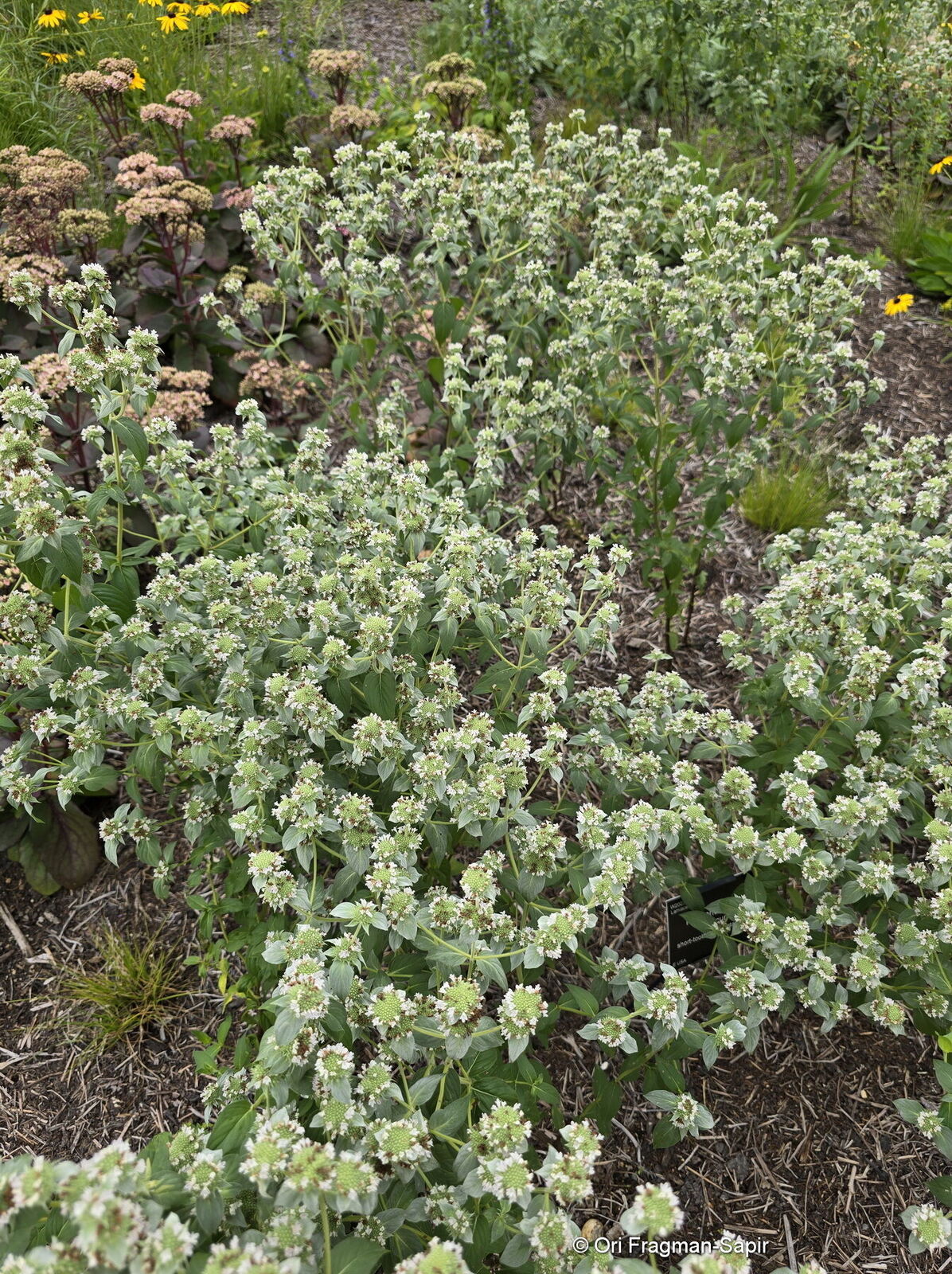
Pycnanthemum
Pycnanthemum is a genus of herbaceous plants in the mint family (Lamiaceae). Species in this genus are often referred to as mountain mints and they often have a minty or thyme-like aroma when crushed. All species of Pycnanthemum are native to the United States and Canada. The center of diversity for the genus is North Carolina with 13 of the 20 species having been collected therein. Nineteen of the 20 species of Pycnanthemum occur in the Eastern US and Canada, and one disjunct species (P. californicum) occurs in California and Oregon.
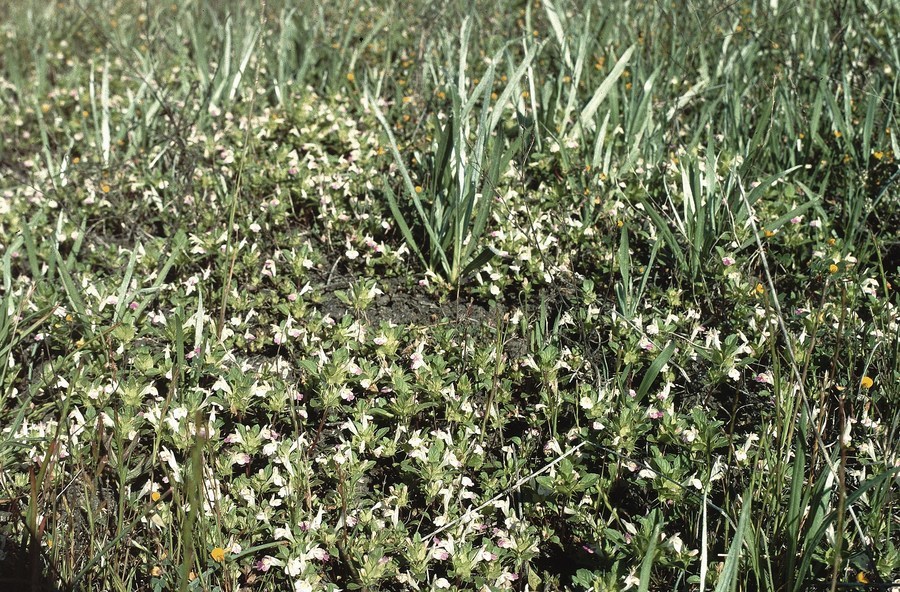
Acanthomintha
Acanthomintha is a genus of the mint family, Lamiaceae. The genus Acanthomintha is commonly referred to as thornmint or thorn-mint. There are four species within this genus, including the endangered species Acanthomintha duttonii. All four thornmints are native to the California Floristic Province. The origin of the genus name is from the identical Greek word meaning thornmint.
Lagochilus
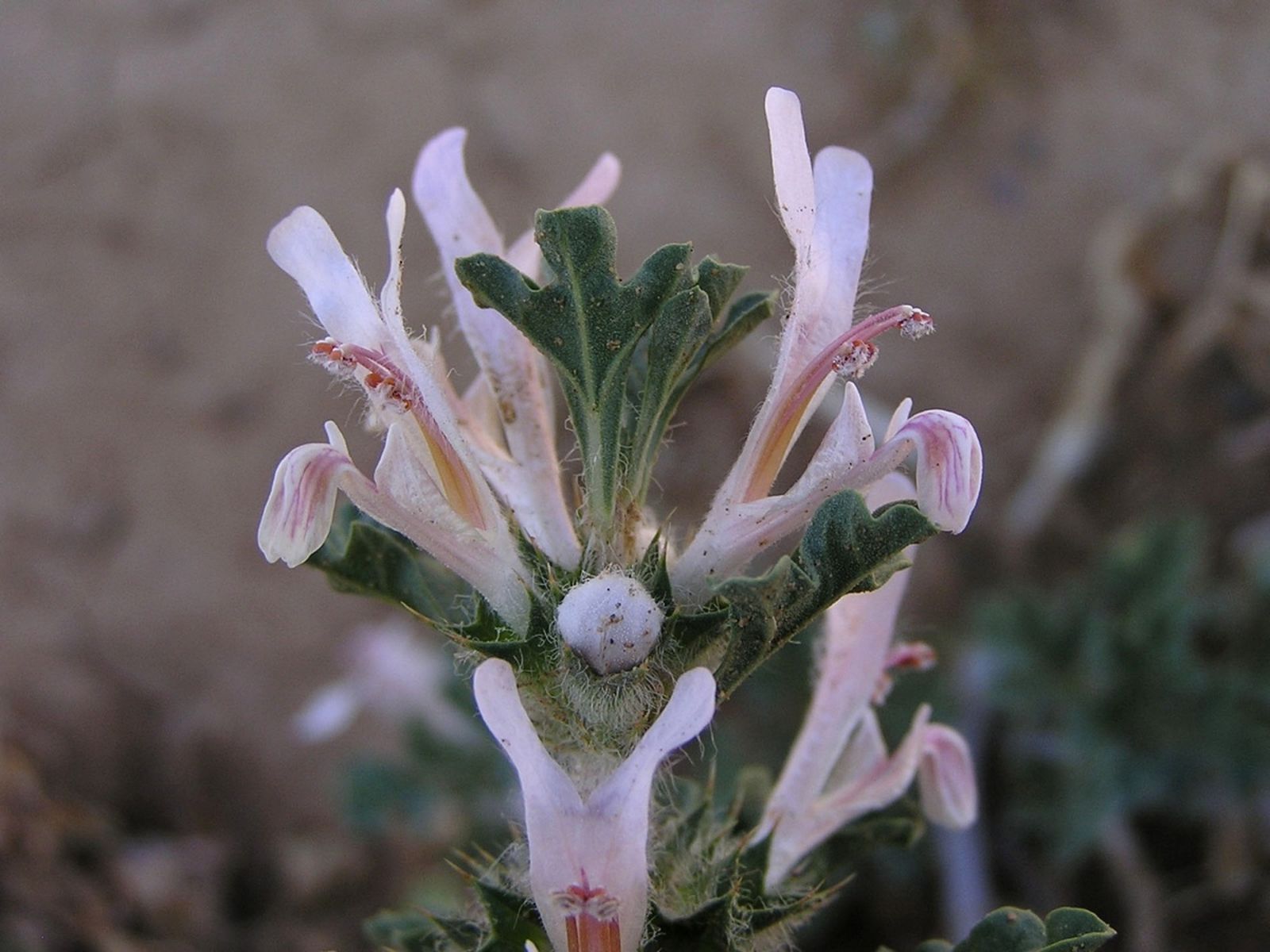
Lagochilus is a genus of the mint family that contains Turkistan mint (Lagochilus inebrians).
It is native to central, south-central, and eastern Asia (Iran, Pakistan, Kazakhstan, Mongolia, China, etc.).

Blephilia
Blephilia, the pagoda plant or wood mint, is a genus of four species of flowering plants in the family Lamiaceae. They are all herbaceous plants native to eastern North America. Blephilia are most often found in open areas, glades, and mesic forests. All species of Blephilia are considered threatened or endangered in some states.
Platostoma
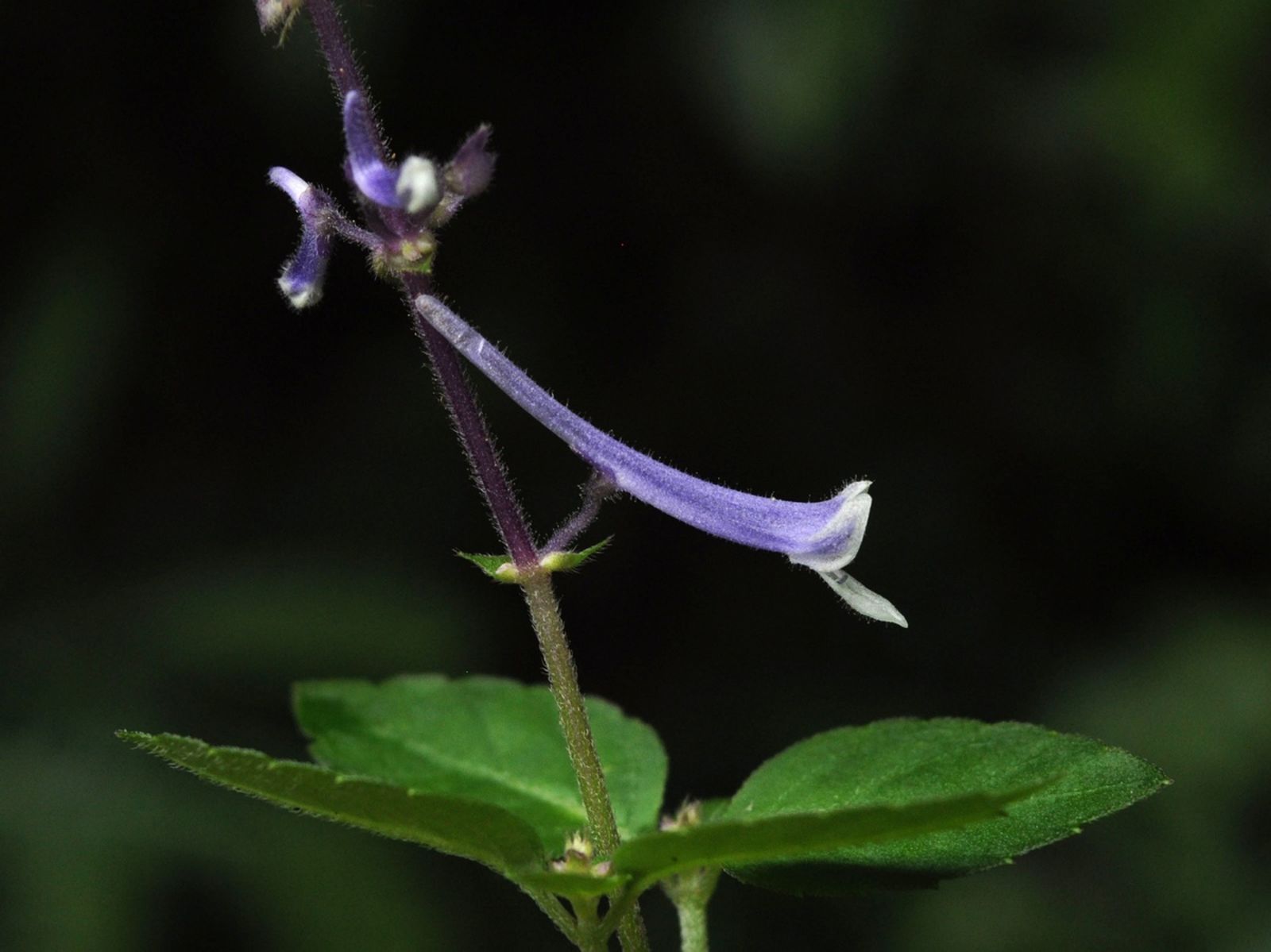
Platostoma is a genus of flowering plants in the mint family, Lamiaceae, first described as a genus in 1818. It is native to tropical parts of Africa, southern Asia, Papuasia, and Australia. Mesona and Acrocephalus has been known as its synonyms.

Aegiphila
thumb|right|Aegiphila fluminensis
thumb|right|Aegiphila macrantha
Hedeoma
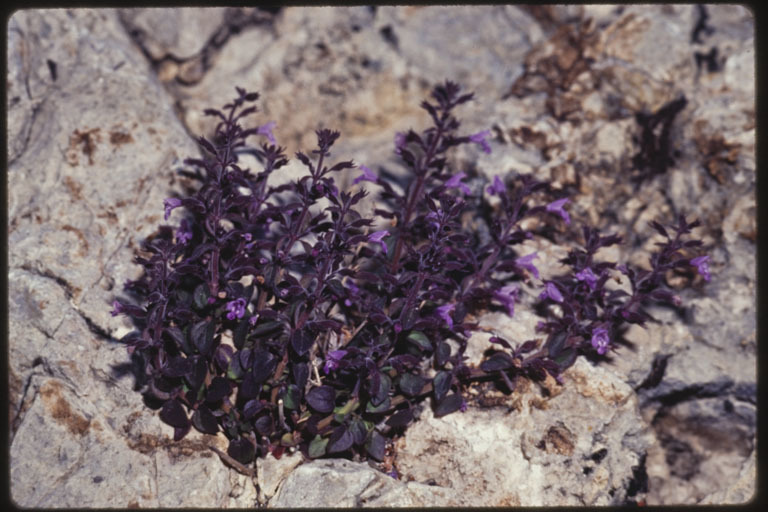
Hedeoma is a genus of flowering plants in the mint family, Lamiaceae. It is native to North and South America. They are commonly known as false pennyroyals.

Minthostachys
Minthostachys is a genus of the mint family Lamiaceae, comprising aromatic scandent shrubs. It occurs along the Andes from Northern Venezuela through Colombia, Ecuador, Peru and Bolivia to Central Argentina.

Solenostemon
thumb|Cultivar of Coleus scutellarioides, formerly Solenostemon scutellarioides

Prostanthera
thumb|Prostanthera aspalathoides
thumb|Prostanthera campbellii
thumb|Prostanthera decussata
thumb|Prostanthera grylloana
thumb|Prostanthera hirtula
thumb|Prostanthera lasianthos
thumb|Prostanthera magnifica
thumb|Prostanthera stenophylla
thumb|Prostanthera striatiflora
thumb|Prostanthera walteri
Thymbra
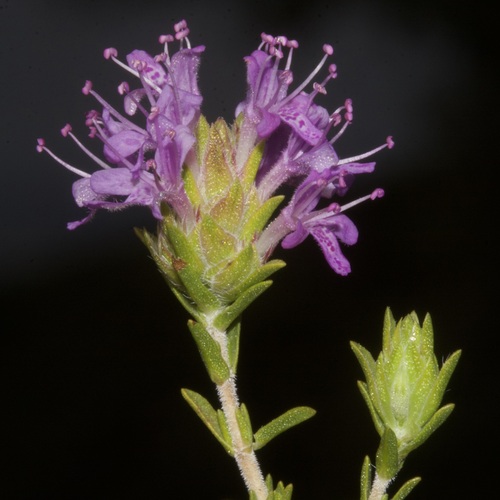
genus of plants