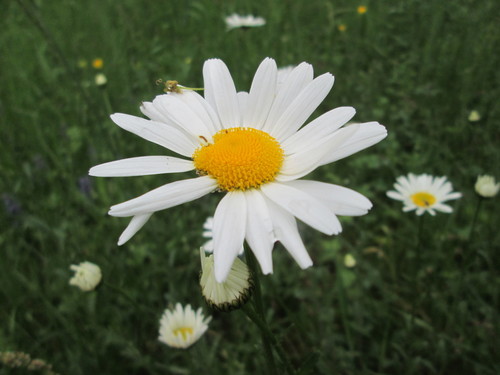
(c) Andreas Rockstein, some rights reserved (CC BY-SA) · cc-by-sa
Pyrethrum
Sign in to savePyrethrum was a genus of several Old World plants now classified in either Chrysanthemum or Tanacetum which are cultivated as ornamentals for their showy flower heads. Pyrethrum continues to be used as a common name for plants formerly included in the genus Pyrethrum. Pyrethrum is also the name of a natural insecticide made from the dried flower heads of Chrysanthemum cinerariifolium and Chrysanthemum coccineum. The insecticidal compounds present in these species are pyrethrins.
Species
oxeye daisy
GENUS
- KingdomPlantae
- PhylumTracheophyta
- ClassMagnoliopsida
- OrderAsterales
- FamilyAsteraceae
Common Name: shiraz gum
via GBIF · Kew POWO
Wikidata facts
- Instance of
- taxon
- Parent taxon
- Anthemidinae
- Image
- Pyrethrum corymbosum Podkomorské lesy.jpg
Show 6 more facts
- taxon name
- Pyrethrum
- taxon rank
- genus
- topic's main category
- Category:Pyrethrum
- Commons category
- Tanacetum
- taxon common name
- 小黄菊属
via Wikidata · CC0
~7 min read
Encyclopedic overview
11 sectionsContents
- Description
- Insecticides
- Sprays
- Companion planting
- Toxicity
- Mammals
- Other animals
- Common names
- See also
- References
- External links
Pyrethrum was a genus of several Old World plants now classified in either Chrysanthemum or Tanacetum which are cultivated as ornamentals for their showy flower heads. Pyrethrum continues to be used as a common name for plants formerly included in the genus Pyrethrum. Pyrethrum is also the name of a natural insecticide made from the dried flower heads of Chrysanthemum cinerariifolium and Chrysanthemum coccineum. The insecticidal compounds present in these species are pyrethrins.
==Description== Some members of the genus Chrysanthemum, such as the following two, are placed in the genus Tanacetum instead by some botanists. Both genera are members of the daisy (or aster) family, Asteraceae. They are all perennial plants with a daisy-like appearance and white petals. thumb|Tanacetum cinerariifolium Tanacetum cinerariifolium is called the Dalmatian chrysanthemum, denoting its origin in that region of the Balkans (Dalmatia). It looks more like the common daisy than other pyrethrums do. Its flowers, typically white with yellow centers, grow from numerous fairly rigid stems. Plants have blue-green leaves and grow to in height. The plant is economically important as a natural source of pyrethrin insecticides. thumb|Tanacetum coccineumC. coccineum, the Persian chrysanthemum, is a perennial plant native to Caucasus and looks somewhat like a daisy. It produces large white, pink or red flowers. The leaves resemble those of ferns, and the plant grows to between in height. The flowering period is June to July in temperate climates (Northern Hemisphere). C. coccineum also contains insecticidal pyrethrins, but it is a poor source compared to C. cinerariifolium. Other species, such as C. balsamita and C. marshalli, also contain insecticidal substances, but are less effective than the two species mentioned above.
Excerpted from Wikipedia’s “Pyrethrum” article, available under the CC BY-SA 4.0 licence.