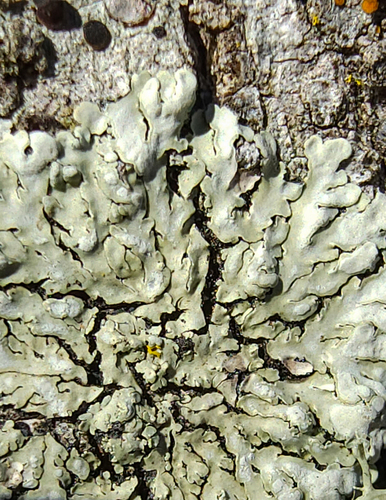
(c) grinnin, some rights reserved (CC BY-NC), uploaded by grinnin · cc-by-nc
Pyxine
Sign in to savePyxine is a genus of foliose lichens in the family Caliciaceae. The genus has a widespread distribution in tropical regions. It was established in 1825 by the Swedish botanist Elias Fries and is distinguished from similar lichens by its characteristic golden fluorescence under ultraviolet light due to the compound lichexanthone. These small, leaf-like lichens form radiating rosettes with narrow and tiny white lines called pseudocyphellae that act as air vents on their upper surface.
Species
mustard lichen
GENUS
- KingdomFungi
- PhylumAscomycota
- ClassLecanoromycetes
- OrderCaliciales
- FamilyCaliciaceae
via GBIF
Museum specimens
- Specimen records
- 1,220
- With media
- 552
- Family
- Caliciaceae
- Collections
- US, LSU, DUKE
- Recorded in
- United States, Australia, Mexico, Spain, India, Sri Lanka, Venezuela, South Africa
Wikidata facts
- Instance of
- taxon
- Parent taxon
- Caliciaceae
- Image
- Pyxine sorediata-1.jpg
Show 5 more facts
- taxon name
- Pyxine
- taxon rank
- genus
- taxonomic type
- Pyxine sorediata
- Commons category
- Pyxine
- taxon author citation
- Fr.
Sources (2)
via Wikidata · CC0
~6 min read
Encyclopedic overview
4 sectionsContents
- Taxonomy
- Description
- Species
- References
Pyxine is a genus of foliose lichens in the family Caliciaceae. The genus has a widespread distribution in tropical regions. It was established in 1825 by the Swedish botanist Elias Fries and is distinguished from similar lichens by its characteristic golden fluorescence under ultraviolet light due to the compound lichexanthone. These small, leaf-like lichens form radiating rosettes with narrow and tiny white lines called pseudocyphellae that act as air vents on their upper surface.
==Taxonomy==
Excerpted from Wikipedia’s “Pyxine” article, available under the CC BY-SA 4.0 licence.