Q150202
Also known as (284) Amalia, Amalia
main-belt asteroid
Picture of the Day · NASA
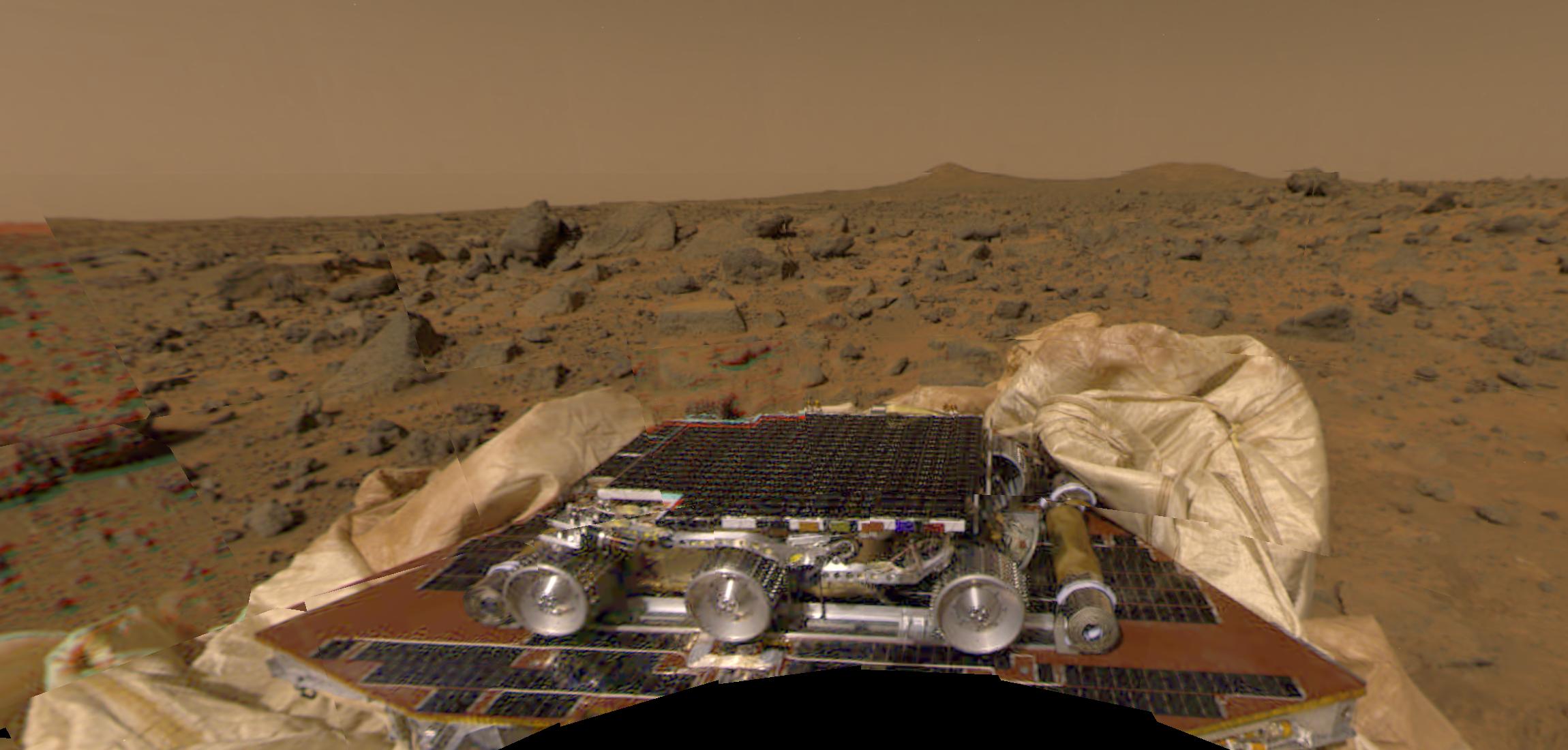
Pathfinder on Mars
2026-07-04
On July 4th, 1997, using its own array of fireworks, a parachute, and a cocoon of airbags, the Mars Pathfinder spacecraft bounced like a giant beach ball at least 15 times before it came to rest on the surface of Mars at 10:07 AM Pacific Daylight Time. After its then novel airbag-assisted landing sequence was completed, Pathfinder transmitted this color mosaic to mission operators on Earth. In the scene from another world, the Mars Sojourner robot rover is visible in the foreground, crouched on top of the unfolded Pathfinder. About the size of a large house cat, the six-wheeled, solar-powered Sojourner became the first successful Martian rover. Surrounding Pathfinder are deflated airbags and the rock-strewn terrain of the Ares Vallis floodplain. In the distance Martian hills appear against a dusty brownish sky. The Pathfinder lander was subsequently renamed the Carl Sagan Memorial Station.
via NASA APOD
Key facts
- Discovered by
- Auguste Charlois
- Discovery date
- 29 May 1889
- Pronunciation
- / ə ˈ m ɑː l i ə /
- Alternative designations
- A889 KA
- Minor planet category
- Main belt
~1 min read
Article
284 Amalia is a large main belt asteroid. It was discovered by Auguste Charlois on 29 May 1889 in Nice. This is classified as a Ch-type asteroid in the Bus taxonomy and CX in the Tholen system. It has been observed occulting stars on five occasions as of 2018, which provide a diameter estimate of 54±3 km via a fitted ellipse plot.
References