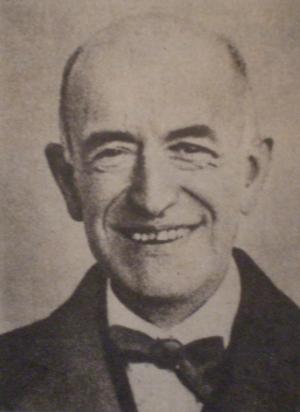
File:ManuelDeFalla.JPG · Wikimedia Commons · See Wikimedia Commons
Manuel de Falla
Sign in to saveSpanish composer (1876–1946)
OverviewAI-generated
Manuel María de los Dolores Clemente Ramón del Sagrado Corazón de Jesús Falla y Matheu was a Spanish composer, poet, pianist, and musician. Born on November 23, 1876, he died on November 14, 1946, in Alta Gracia. He was educated at the Madrid Royal Conservatory and studied under José Tragó and Felip Pedrell.
Falla’s notable works include *El amor brujo*, *The Three-Cornered Hat*, *Fantasía Bética*, and *El retablo de maese Pedro*. His musical output spans 36 works, primarily in the classical music and orchestra genres. He performed on the organ and piano.
A member of the Royal Academy of Fine Arts of San Fernando, Falla received the Knight of the Legion of Honour. He spoke and wrote in Spanish and German.
Synthesized by Vinony from 27 facts across 4 sources: Wikidata, Europeana Sparql, MusicBrainz, Vinony graph. Generated from structured data (not the Wikipedia text) and checked against those facts — may still contain errors.
Music · MusicBrainz
- Type
- Person
- Gender
- Male
- Country
- Spain
- Active from
- 1876
- Active to
- 1946
Discography
- Three Cornered Hat (Two Dances)1948
- The Three-cornered Hat / La Vida Breve - Interlude and Dance1961
- Сюита Из Балета «Любовь-Волшебница»1961
- Bolero / Sorcerer's Apprentice and Works by Falla and Chabrier1964
- El sombrero de tres picos1964
- L'Amour Sorcier - Danses Du "Tricorne"1966
- Falla: El amor brujo / Granados: Intermezzo from "Goyescas" / Ravel: Pavane pour une infante défunte / Alborada del gracioso1967
- Suites from El sombrero de tres picos and El amor brujo / Fantasía baetica / Cuatro piezas españolas1975
- Nights in the Gardens of Spain / Fantasía bética for piano solo / Harpsichord Concerto1977
- De Falla: L'Amour Sorcier - Le Tricorne / Ravel: Alborada Del Gracioso1980
via MusicBrainz · CC0
Wikidata facts
- Instance of
- human
- Gender
- male
- Citizenship
- Spain
- Place of birth
- Cádiz
- Place of death
- Alta Gracia
- Occupation
- pianist
- Educated at
- Madrid Royal Conservatory
- Languages spoken
- Spanish
- Notable work
- El retablo de maese Pedro
- Field of work
- performing arts
- Genre
- classical music
- Instrument
- piano
- Official website
- www.manueldefalla.com
- Image
- Manuel de Falla con bastón (cropped).jpg
Show 11 more facts
- Commons category
- Manuel de Falla
- date of birth
- 1876-11-23
- date of death
- 1946-11-14
- topic's main category
- Category:Manuel de Falla
- Commons Creator page
- Manuel de Falla
- writing language
- Spanish
- birth name
- Manuel María de los Dolores Clemente Ramón del Sagrado Corazón de Jesús Falla y Matheu
- name in native language
- Manuel de Falla
- related category
- Category:Compositions by Manuel de Falla
- relative
- José María García de Paredes
- P12749
- Candelariales
via Wikidata · CC0
Works in European collections
36 objects attributed to Manuel de Falla, held across European museums, libraries & archives · via Europeana
Serenata andaluza para piano [Música notada]
Nocturno para piano [Música notada]

Untitled
Untitled

Untitled

Untitled

Untitled

Untitled

Untitled

Untitled

Untitled

Untitled

Untitled

Untitled

Untitled

Untitled

Untitled

Untitled

Untitled

Untitled

Untitled

Untitled
Untitled

Untitled

Untitled

Untitled

Untitled

Untitled

Untitled

Untitled

Untitled

Untitled

Untitled

Untitled

Untitled

Untitled
~12 min read
Encyclopedic overview
Manuel de Falla (27 October 1919)
Manuel de Falla y Matheu ( Spanish pronunciation: [maˈnwel de ˈfaʎa], 23 November 1876, Cádiz, Spain – 14 November 1946, Alta Gracia, Argentina) was a Spanish composer and pianist. Along with Isaac Albéniz, Francisco Tárrega, and Enrique Granados, he was one of Spain's most important musicians of the first half of the 20th century. He has a claim to being Spain's greatest composer of the 20th century, although the number of pieces he composed was relatively modest.
Excerpted from Wikipedia’s “Manuel de Falla” article, available under the CC BY-SA 4.0 licence.