Encyclopedia of Life · EOL (see source)
Species
SPECIES
- KingdomFungi
- PhylumBasidiomycota
- ClassAgaricomycetes
- OrderGomphales
- FamilyGomphaceae
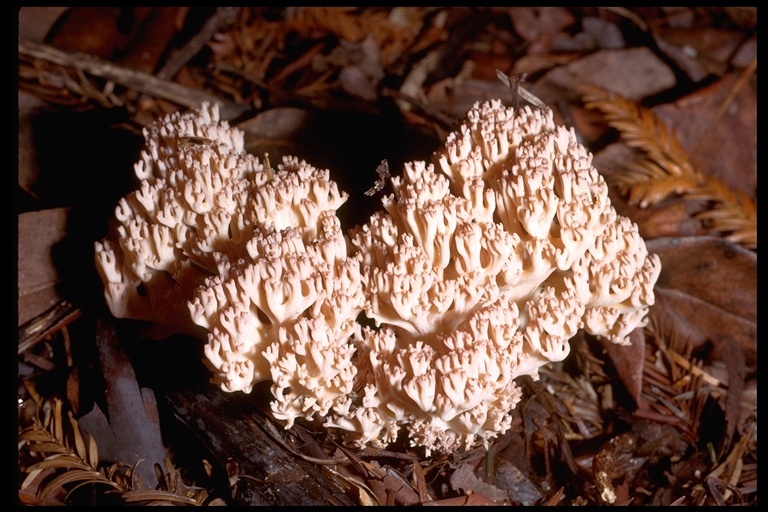
ホウキタケ(Ramaria botrytis)は、ラッパタケ科ホウキタケ属のキノコの一種。地方によりカブタケ、ネズミタケと呼称される場合がある。
via GBIF
Museum specimens
- Specimen records
- 522
- With media
- 184
- Family
- Gomphaceae
- Collections
- IREGEP-CP, IB-CUCBA-UDG, ECOSUR, OSC, O, MSC
- Recorded in
- Mexico, United States, Norway
Wikidata facts
Show 11 more facts
- Commons gallery
- Ramaria botrytis
- Commons category
- Ramaria botrytis
- taxon rank
- species
- taxon name
- Ramaria botrytis
- mushroom ecological type
- mycorrhiza
- spore print color
- yellow
- edibility
- edible mushroom
- taxon common name
- ホウキタケ
- short name
- R. botrytis
- taxon range
- Hainan
- regional conservation status
- Near Threatened
Sources (7)
via Wikidata · CC0
~12 min read
Encyclopedic overview
Ramaria botrytis, commonly known as the clustered coral, the pink-tipped coral mushroom, or the cauliflower coral, is a species of coral fungus in the family Gomphaceae. The type species of the genus Ramaria, R. botrytis was first described scientifically in 1797 by mycologist Christiaan Hendrik Persoon.
The robust fruit body can grow up to 15 cm (6 in) in diameter and 20 cm (8 in) tall, and resembles some marine coral. Its dense branches, which originate from a stout, massive base, are swollen at the tips and divided into several small branchlets. The branches are initially whitish but age to buff or tan, with tips that are pink to reddish. The flesh is thick and white. The spores, yellowish in deposit, are ellipsoid, feature longitudinal striations, and measure about 13.8 by 4.7 micrometers. It resembles several species of coral fungi, some of which require microscopy to reliably identify.
Excerpted from Wikipedia’s “Ramaria botrytis” article, available under the CC BY-SA 4.0 licence.