Beu, Alan G.
Recluzia
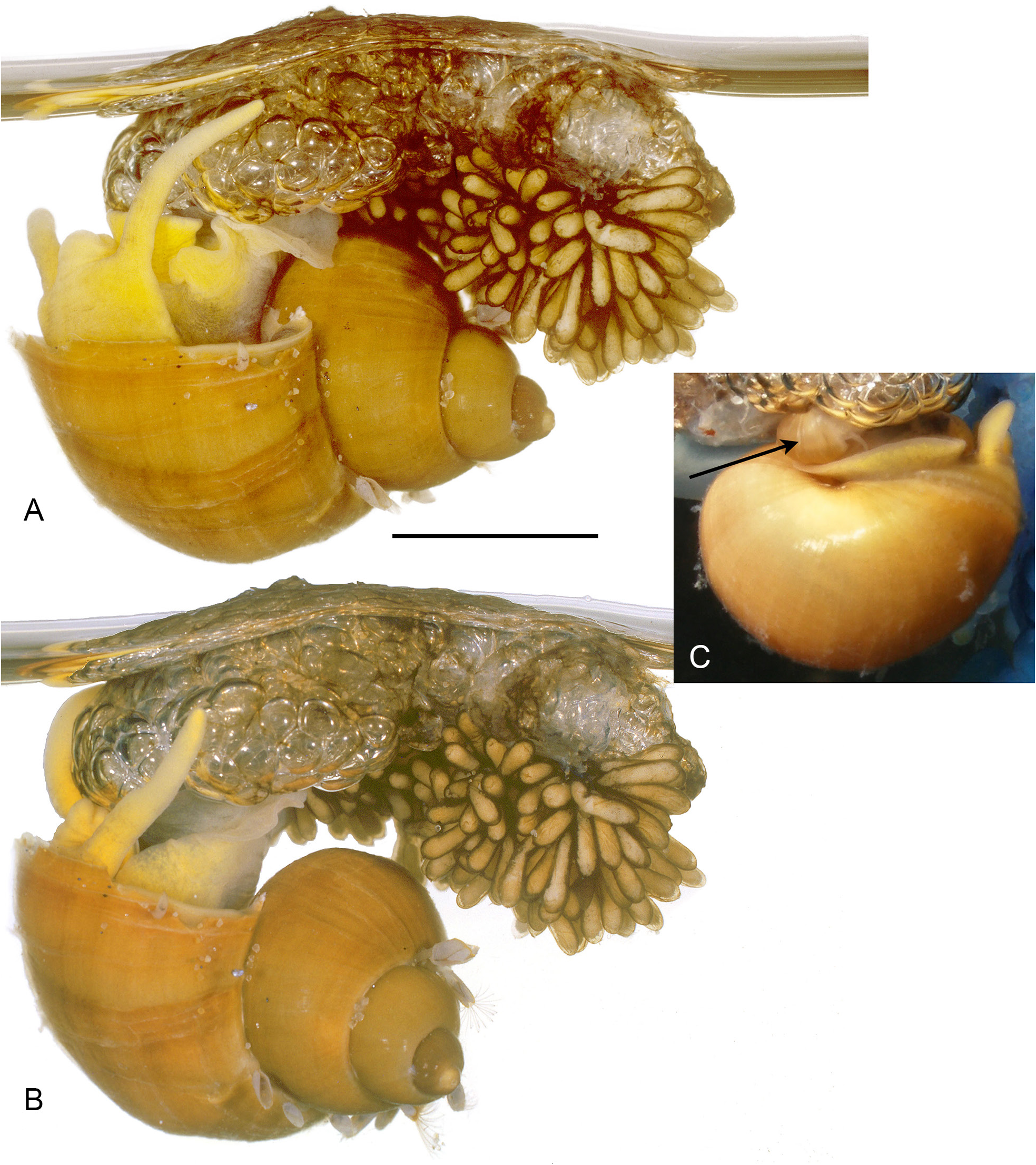
Sign in to saveRecluzia is a genus of neustonic sea snails, marine gastropod molluscs in the family Epitoniidae, which also includes the convergently neustonic Janthina. These uncommon, yellow-brownish snails are known principally from the Indo-West Pacific province and northern Indian Ocean, though Recluzia lutea can also be found rarely in the east Pacific and Atlantic oceans.
In the Vinony graph
Vinony's link graph records 8 inbound references to Recluzia, and connects out to Gastropoda, Epitoniidae and Animalia.
It is catalogued under the topic Wentletraps.
Vinony links it to 5 Wikipedia language editions.
Species
ヒルガオガイ属
GENUS
- KingdomAnimalia
- PhylumMollusca
- ClassGastropoda
- OrderCaenogastropoda incertae sedis
- FamilyEpitoniidae
via GBIF
Museum specimens
- Specimen records
- 17
- Family
- Epitoniidae
- Collections
- CAS, USNM, NHMUK, NMV, UF, MNHN
- Recorded in
- Philippines, United States, Pitcairn, Australia, Nouvelle-Caledonie, Bahamas
Wikidata facts
- Instance of
- taxon
- Parent taxon
- Epitoniidae
- Named after
- César A. Récluz
- Image
- Recluzia lutea (Bennett, 1840) - iNaturalist.nz.jpg
Show 3 more facts
- taxon name
- Recluzia
- taxon rank
- genus
- Commons category
- Recluzia
Sources (1)
via Wikidata · CC0
~3 min read
Encyclopedic overview
5 sectionsContents
- Description
- Shell
- Species
- References
- External links
Recluzia is a genus of neustonic sea snails, marine gastropod molluscs in the family Epitoniidae, which also includes the convergently neustonic Janthina. These uncommon, yellow-brownish snails are known principally from the Indo-West Pacific province and northern Indian Ocean, though Recluzia lutea can also be found rarely in the east Pacific and Atlantic oceans.
Despite the various convergent traits between Recluzia and Janthina, they seem to have evolved to their neustonic habit independently, with the former likely being most closely related to Alexania, for their shell characteristics, or Surrepifungium and Epidendrium, for their tissue coloration, while the latter is likely most close to Alora, especially Alora terrenima for its shell's resemblance to early janthinid fossils'. Further differing them from the violet snails, Recluzia have unforked cephalic tentacles, proportionally smaller heads and snouts, teleoconch-parallel protoconch coiling axis, thinner, longer, spineless egg casings, taller shell spires and retained statocysts as adults. Furthermore, they lack epipodia, free-swimming larvae with proto-floats, which instead adhere to the parent's float, one of the protoconch II whorls, having 2.2 instead of 3.2 whorls, shell outer lip sinuses and ianthinin glands.
Excerpted from Wikipedia’s “Recluzia” article, available under the CC BY-SA 4.0 licence.