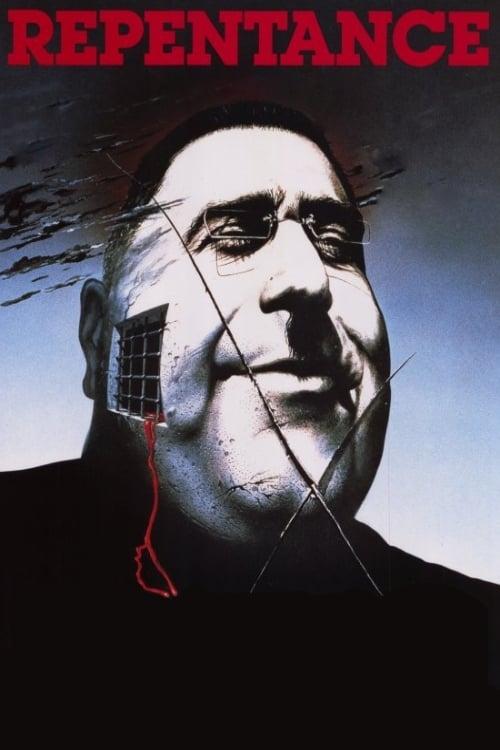
Poster from TMDB
Film · TMDB
7.1The day after his funeral, the corpse of Varlam Aravidze, the mayor of a small Georgian town, turns up in his son's garden. Although it is secretly reburied, the corpse keeps returning until the police capture the local woman who is responsible. This woman says that Varlam should never be laid to rest since his Stalin-like reign of terror led to the disappearance of her family and friends.
Cast
- Avtandil Makharadze as Varlam Aravidze / Abel Aravidze
- Iya Ninidze as Guliko
- Zeinab Botsvadze as Ketevan Barateli
- Ketevan Abuladze as Nino Barateli
- Edisher (Davit) Giorgobiani as Sandro Barateli
- Kakhi Kavsadze as Mikheil Koresheli
Themes
- rebellion
- corruption
- philosophy
- symbolism
- redemption
- satire
- dictatorship
- sin
- trial
- repentance
This product uses the TMDB API but is not endorsed or certified by TMDB.
Wikidata facts
- Instance of
- film
- Named after
- repentance
- Genre
- drama film
- Country of origin
- Soviet Union
- Original language
- Georgian
- Director
- Tengiz Abuladze
- Screenwriter
- Tengiz Abuladze
- Cast member
- Avtandil Makharadze
- Production company
- USSR State Committee for Television and Radio
- Cinematographer
- Mikhail Agranovich
- Narrative location
- Georgia (country)
- Duration
- 153
- FilmAffinity ID
- 234906
- Distribution format
- video on demand
Show 5 more facts
- publication date
- 1984-00-00
- distributed by
- Netflix
- title
- Покаяние
- different from
- Reconciliation
- review score
- 71%
Sources (7)
via Wikidata · CC0
Article · Italiano
Pentimento (in russo: Покаяние?, traslitterato: Pokajanie; in georgiano: მონანიება?, Monanieba) è un film sovietico del 1984 diretto dal regista georgiano Tengiz Abuladze, vincitore del Grand Prix Speciale della Giuria al 40º Festival di Cannes. Con "Pentimento", si concluse la trilogia che aveva inaugurato la maturità dell'artista: dopo essersi soffermato con acuta sensibilità e pregnante simbolismo sull'eterno problema del conflitto fra l'individuo e la comunità in cui vive, calandolo in un ancestrale mondo pastorale prima ("La supplica", 1968) e nel conformismo di un villaggio contadino pre-rivoluzionario poi ("L'albero dei desideri",1977), Abuladze lo declina nella sua più drammatica espressione, quella segnata dall'avvento di una società totalitaria e poi post-totalitaria, dilaniate fra resistenza e compiacenza, fra perpetuazione di verità e memoria e criminale dimenticanza e negazione.
Abstract from DBpedia / Wikipedia · CC BY-SA