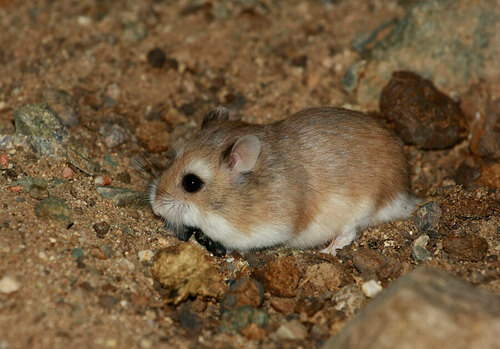
(c) konstantin_mikhailov, some rights reserved (CC BY-NC) · cc-by-nc
Roborovski hamster
Sign in to saveAlso known as Phodopus roborovskii, Desert Hamster
species of mammal
OverviewAI-generated
The Roborovski hamster, scientifically designated as *Phodopus roborovskii*, is a species within the genus *Phodopus*. It belongs to the class Mammalia and is commonly referred to as the Desert Hamster, Roborowski’s Hamster, or Roborovski’s Desert Hamster. This organism inhabits shrubland environments.
According to the 2016 IUCN Red List assessment, the species has a conservation status of Least Concern. Biological records indicate a mass of 1.45, a gestation period of 21, and a litter size of 6. The longest observed lifespan for this taxon is 4.8.
Synthesized by Vinony from 23 facts across 4 sources: Wikidata, iNaturalist, IUCN Red List, Vinony graph. Generated from structured data (not the Wikipedia text) and checked against those facts — may still contain errors.
Species
Least ConcernDesert Hamster
species
Der Roborowski-Zwerghamster bewohnt die Wüstensteppe Gobi und angrenzende Wüstenregionen. Der Roborowski-Zwerghamster (Phodopus roborovskii) ist eine zu den Kurzschwanz-Zwerghamstern gehörende Art der Hamster. Er bewohnt die Wüstensteppe Gobi und angrenzende Wüstenregionen des nördlichen Chinas und der Mongolei, ist nicht im Bestand gefährdet und wird zunehmend als Heimtier gehalten. Seine Kopf-Rumpf-Länge beträgt etwa sieben Zentimeter, das durchschnittliche Körpergewicht der Männchen etwa 23,5 Gramm und das der Weibchen etwa 20 Gramm. Das weiche Fell der Oberseite ist hellbraun bis grau, das der Unterseite weiß. Über jedem Auge befindet sich ein markanter weißer Fleck. Ein Aalstrich ist nicht vorhanden. Der Roborowski-Zwerghamster bewohnt ausschließlich Sandgebiete mit spärlichem Pflanzenbewuchs und ernährt sich hauptsächlich von Pflanzensamen. Sein selbstgegrabener Bau besteht meist aus einer einfachen Röhre mit einer Nestkammer. Er ist ganzjährig und hauptsächlich in der Dämmerung aktiv, im Winter jedoch weniger. Von April bis September bringen die Weibchen nach einer Tragzeit von je etwa 21 Tagen drei bis vier Würfe mit durchschnittlich 4,5 Jungtieren zur Welt. Diese sind nach
via IUCN
Wikidata facts
Show 11 more facts
- taxon rank
- species
- IUCN conservation status
- Least Concern
- Commons category
- Phodopus roborovskii
- taxon name
- Phodopus roborovskii
- Commons gallery
- Phodopus roborovskii
- taxon common name
- hámster de roborovski
- gestation period
- 21
- litter size
- 6
- longest observed lifespan
- 4.8
- habitat
- shrubland
- short name
- P. roborovskii
Sources (3)
via Wikidata · CC0
~10 min read
Encyclopedic overview
The Roborovski hamster (Phodopus roborovskii), also known as the desert hamster, Robo dwarf hamster or simply dwarf hamster is the smallest of three species of hamster in the genus Phodopus, and is native to the deserts of Central Asia. They average 1.6 cm (0.6 in) in length at birth and grow to be 6.3 cm (2.5 in) in length and 16 g (0.56 oz) in weight in adulthood. Distinguishing characteristics of the Roborovskis are eyebrow-like white spots and the lack of any dorsal stripe (found on the other members of the genus Phodopus). The average lifespan for the Roborovski hamster is 2–4 years, though this is dependent on living conditions (extremes being four years in captivity and two in the wild). Roborovskis are known for their speed and have been said to run up to 6 miles a night. The common name and scientific name honor the Russian explorer Vsevolod Ivanovich Roborovsky, who collected the holotype of this species.
Distribution and habitat
Excerpted from Wikipedia’s “Roborovski hamster” article, available under the CC BY-SA 4.0 licence.