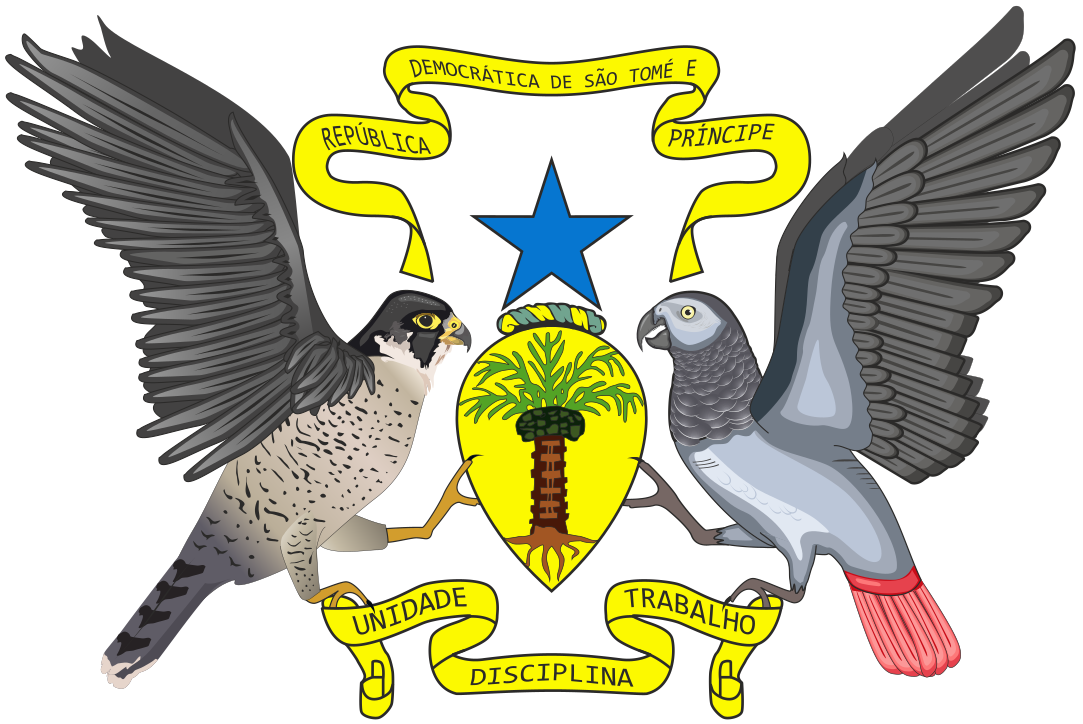
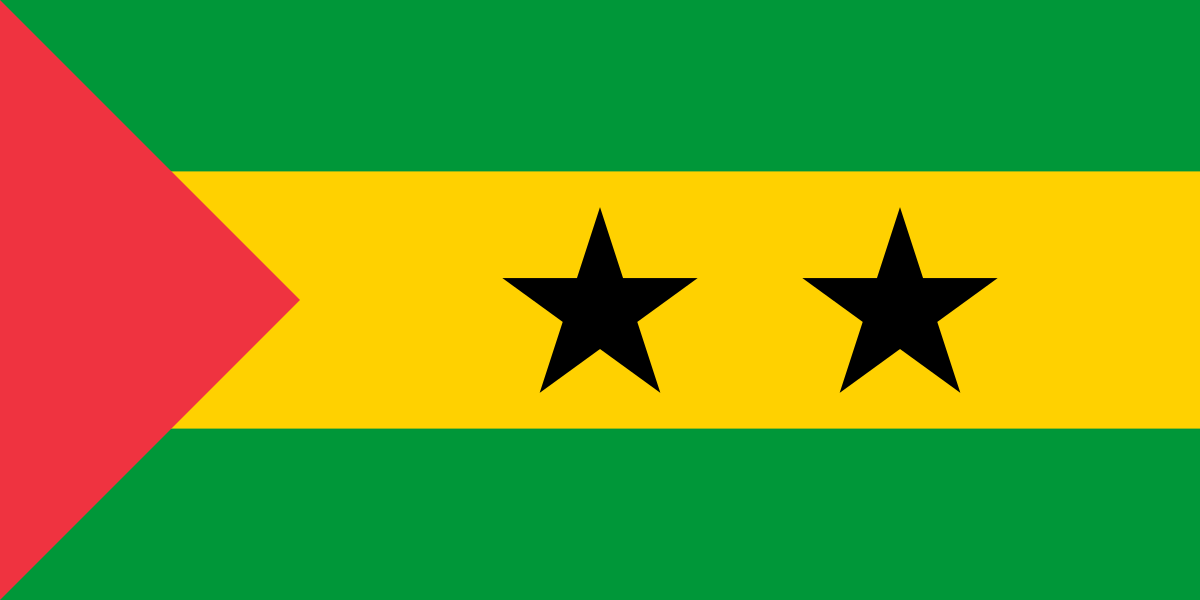
Also known as Democratic Republic of São Tomé and Príncipe, São Tomé og Príncipe, Sao Tome and Principe, st, Sao Tome & Principe
São Tomé and Príncipe, officially the Democratic Republic of São Tomé and Príncipe, is an island country in the Gulf of Guinea, off the western equatorial coast of Central Africa. It consists of two archipelagos around the two main islands of São Tomé and Príncipe, about 81 nautical miles apart and about 135 and 121 nautical miles off the northwestern coast of Gabon. With a population of 201,800, São Tomé and Príncipe is the second-smallest and second-least populous African sovereign state after Seychelles.
São Tomé and Príncipe is a small island nation located in the Gulf of Guinea off the coast of Central Africa, consisting of two main islands and their surrounding archipelagos. With fewer than 202,000 people, it is one of Africa's tiniest and least populated countries, second only to Seychelles.
AI-generated from the Wikipedia summary — may contain errors.
via Open-Meteo
The country is often mistakenly called "São Tomé", but São Tomé is the name of one of its two main islands.
Trees cover almost 90% of the islands. The main crop on São Tomé is cocoa, representing about 95% of agricultural exports. Other export crops include copra, palm kernels, and coffee. Other than agriculture, the main economic activities are fishing and a small industrial sector engaged in processing local agricultural products and producing a few basic consumer goods. The scenic islands have potential for tourism, and the government is attempting to improve its rudimentary tourist industry infrastructure.
São Toméan culture is a mixture of African and Portuguese influences. São Toméans are known for ússua and socopé rhythms, while Príncipe is home to the dêxa beat. Portuguese ballroom may have played an integral part in the development of these rhythms and their associated dances. Tchiloli is a musical dance performance that tells a dramatic story. The danço-Congo is similarly a combination of music, dance, and theatre.
Football is the most popular sport in São Tomé and Principe.
São Tomé and Príncipe is a nation of a little over 230,000 people as of 2023. The two main islands are about 259 km apart and straddle the Equator in the Gulf of Guinea, west of Gabon. The country sees few tourists: in 2016, there were an estimated 13,000 visitors to the country.
thumb|375px|Countries in green enjoy visa-free access, countries in yellow need an eVisa
On São Tomé Island, there are many taxis, including shared ones that depart to other cities when enough people are there. It is common for tourists to rent a car or scooter to better explore all that the island has to offer. Beware that although roads are paved, they are often not in good condition.
To get to Príncipe, the most common choice for tourists are commercial flights (STP Airways) connecting São Tomé International Airport to Príncipe Airport. The aircraft used on this route are small 19 seat Dornier 228 propeller planes. Locals instead typically hop on a cargo boat, but the 10 hour overnight journey is not considered particularly safe. There are faster charter boats that can do the trip in 3.5h.
On Príncipe, there are fewer roads, and many are not paved. It is common to hire a driver (car or motorbike) to explore the island, or to hire a boat.
~40 min read
São Tomé and Príncipe, officially the Democratic Republic of Sao Tome and Principe, is an island country in the Gulf of Guinea, off the western equatorial coast of Central Africa. It consists of two archipelagos around the two main islands of São Tomé and Príncipe, about 81 nautical miles (150 km; 93 mi) apart and about 135 and 121 nautical miles (250 and 224 km; 155 and 139 mi) off the northwestern coast of Gabon. With a population of 201,800 (2018 official estimate), São Tomé and Príncipe is the second-smallest and second-least populous African sovereign state after Seychelles.
The islands were uninhabited until Portuguese explorers João de Santarém and Pedro Escobar became the first to discover them on 21 December 1470. Gradually colonized and settled throughout the 16th century, they collectively served as a vital commercial and trade centre for the Atlantic slave trade. The rich volcanic soil and proximity to the equator made São Tomé and Príncipe ideal for sugar cultivation, followed later by cash crops such as coffee and cocoa. The lucrative plantation economy was heavily dependent upon enslaved Africans. Cycles of social unrest and economic instability throughout the 19th and 20th centuries culminated in peaceful independence in 1975 as a one-party communist state, which would remain in place until 1990. São Tomé and Príncipe has since remained one of Africa's most stable and democratic countries. São Tomé and Príncipe is a developing economy with a medium Human Development Index.
2 mapped locations
via REST Countries
via World Bank Open Data · CC BY 4.0
via Wikimedia Pageviews API
via PubMed
via Wikidata · CC0
thumbnail|Sao Tome Se
São Tomé and Príncipe was uninhabited before colonization by the Portuguese in the 1490s. Since then, much of the landscape has remained unchanged or, where former plantations once stood, reclaimed by the rainforests. The islands are covered by lush rainforests and with a small population and very few tourists, and remain for visitors a veritable tropical paradise. right|thumb|Pico Cão Grande The interior of São Tomé island contains Obo National Park. Find a local guide to take you bird-watching, climb the 2,024-meter Pico de Sao Tome, trek to a secluded waterfall, or try to spot as many of the island's 109 species of orchids as you can. Waves enter an underwater cave on the south side of São Tomé island and, with nowhere to go, shoot straight up through the Boca do Inferno (Mouth of Hell) blowhole in an impressive show for visitors. The isolated beaches on Príncipe are breathtakingly beautiful and romantic... don't blame yourself for feeling like you're on a deserted island in the South Pacific.
Just offshore are coral reefs with a large diversity of sea life—including a few endemics as the waters between other islands and the mainland reach 2,000 meters! Diving and snorkeling are the ideal ways to explore the underwater side of this paradise, during which you can come face-to-face with dolphins, large green turtles, and a wide array of colorful fish. Experienced and daring divers can explore underwater caves. thumb|Túnel de Santa Catarina Among…
thumb|250px|The equator marked as it crosses [[Ilhéu das Rolas, small island off the southern tip of São Tomé.]] The waters around São Tomé are clear and rich with life. Consequently, diving, fishing and boat tours provide much to see. The forests of both islands lend themselves wonderfully to hiking. thumb|right|São Tomé town centre Walk around. Traffic is light, the sea breeze is cooling, and you can admire the architecture and people. The capital city of São Tomé is replete with public art. Painting and carvings by local artists, in addition to old Portuguese statues, can be found throughout the city. Oftentimes you will walk down the street and turn a corner to come up suddenly against a colorful and sprightly painting right in front of you.
Claudio Corallo Chocolate. Tours of his chocolate factory are give on request. He or one of his sons will gleefully describes the shocking inferior stuff that passes for chocolate around the world. Claudio maintains complete control of the chocolate making process, from growing the pods on his own plantation on Principe through to packaging the chocolate in his own vacuum-sealed clean rooms. He gives copious free samples during the demonstration, and sells all his products right there in the demonstration room. Expensive but worth it.
Bird watching: There are over 135 species in 40 families on the islands. The widest variety is found in the southern part of São Time, but Principe also hosts many species, including parrots roaming fr…
thumb|Barbecue Fish is a staple of the São Toméan diet, often served with breadfruit and mashed, cooked bananas. Tropical fruits such as papaya, mangoes, pineapples, avocado, and bananas are grown plentifully on the islands and are significant components of the cuisine. The use of hot spices is prominent in São Tomése dishes too. The variety of fish is wide, including flying fish at certain times of year. Those who live inland and are unable to afford fish or meat get their protein from buzios, large land snails. Sea snails are also quite common along the coast. The hotels in the capital offer European-style fare at higher prices.
Roça São João dos Angolares in the village of Angolares 42 km SE of São Tomé city on EN No. 2. Make reservations as far in advance as possible (+239 9906900), but it is worth it. Gourmet meals served as a multiple course prix fixe are worth the extra workout you will need. Also offers rooms from €60 (Dec 2017).
Sum Secreto. Standard grill fare, but they can handle large groups without a reservation. Service is generally very good, and the meat and fish are excellent. Nothing fancy, but the place is popular because it has that secret something.
Beer is readily available everywhere, though São Toméans are not known as big drinkers. Local brands include Creolla and Rosema. Inland, palm wine is available very inexpensively from vendors along the road. In the capital, whiskey and other spirits are popular among the elites. Wine, especially Portuguese vinho verde, is popular with fish dishes.
A small handful of hotels exist in the capital. Near the town of Santana lies an idyllic bed and breakfast with stunning views. Opulent resorts have been built at the very northern and southern extremes of the country, on the small island of Ilheu das Rolas, and at Ilha Bom Bom off the coast of Príncipe.
In Santo António, the main city of Príncipe, several small pousadas (B&Bs) can be found.
Bom Bom Island Resort In addition to an ensuite bathroom, air-conditioning and other modern amenities, each bungalow has its own veranda with views across the green palm fronds and the bay. Bom Bom’s restaurant, bar and marina are on a tiny islet, which can be reached by crossing the 230-metre wooden walkway. Mucumbli An amazing lodge, situated a view minutes down the road from the city of Neves. It only has 5 bungalows so book well in advance! Owned by Titiano and Marie, an extremely nice and helpful Italian couple that arrived to the Island in the 1980s and built this place little by little. Private and remote (in São Tomé terms that is), sitting on the deck watching the sunset side of the island or going to the beach or hitting the trails, this place is a must. There is also a donkey pen, that were practically saved by the owners (after the government received them as a gift from Angola and didn't know what to do with them). Includes breakfast.
thumb|Street in São Tomé city Safety is not an issue in São Tomé and Príncipe, though the roadway traffic is hazardous as in other parts of Africa. Violent crime in public is almost unheard of. However, with an increase in tourism there has been an increase in crime against tourists. Road blocks near Santana have been reported, as well as scams targeting tourists in the main city.
The only dangerous animal in the islands is the black cobra, which can be found in southern and eastern areas of São Tomé island. Young ones are completely black, adults have yellow-white scales on the front. They are afraid of humans and will normally slither away when you approach. Be alert when hiking and very careful of where you stick your hands. Anti-venom is available at local hospitals. If bitten you need to seek immediate help, preferably within 30-120 minutes. Deaths are rare, though.
Malaria was once extremely common on the islands, but an eradication program initiated by the Taiwanese government in 2005 has effectively stamped out malaria in populated areas (deaths have dropped from over 1000/year to just a handful). However, visitors should still continue taking precautions against mosquito bites (which can transmit other severe illnesses) such as the use of insect repellants and bed netting. Furthermore, the rate of malaria infections in nearby, mainland countries is high and there is the potential for isolated outbreaks from infected people/animals arriving from those countries. If you are also visiting the mainland on your journey, keep in mind the length of time before/after visiting malarial regions that you need to take your anti-malaria medication (which can be several weeks).
The rate of HIV/AIDS in STP among people aged 15-49 as of 2022 is approximately 0.4%, which is relatively low compared with nearby countries. There is a very strong stigma against those infected on the islands and few have ever come out with their diagnosis and in many cases health workers have to deliver medications to their homes in secret because patients are unwilling to be seen in public collecting these medications. Even with the low risk, you should always use protection, such as condoms.
Tap Water is not fit for drinking. Boil it or stick to bottled.
Travel guide from Wikivoyage (CC BY-SA 4.0)
via Wikidata sitelinks · CC0
Discovered by embedding cosine similarity (sentence-transformers MiniLM, 384-dim).