O’Grady, Patrick;Bonacum, James;Desalle, R.;Val, Francisca Do
Scaptomyza
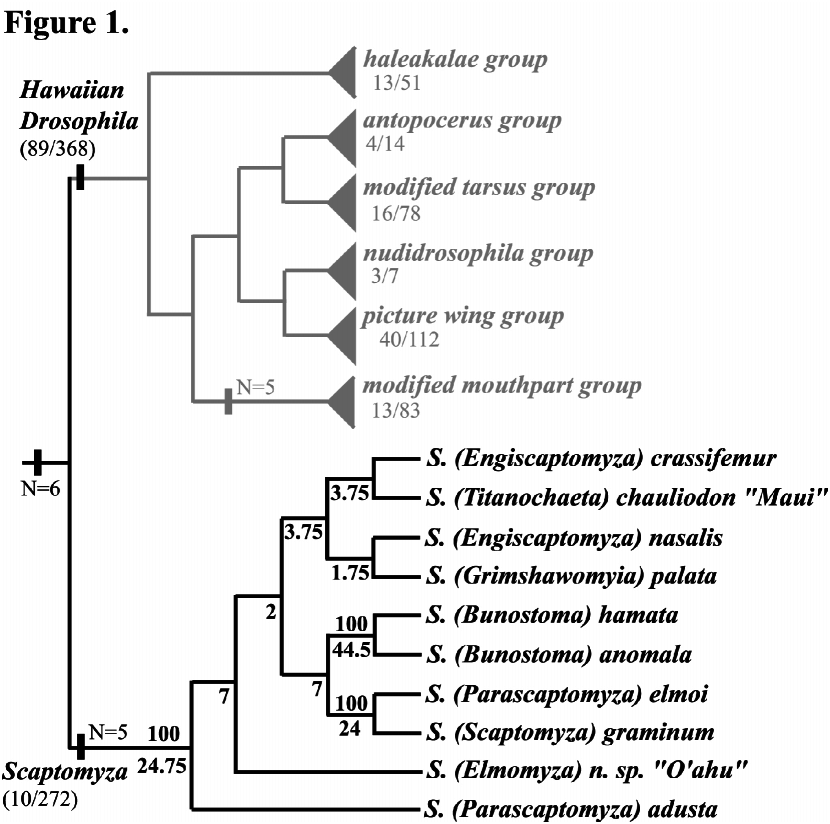
Sign in to saveScaptomyza is a genus of vinegar flies in the family Drosophilidae. , there are currently 274 described species of Scaptomyza. Of those, 149 are endemic to the Hawaiian archipelago. This genus is part of the species-rich lineage of Hawaiian Drosophilidae, and is the sister lineage to the endemic Hawaiian Drosophila. The genus Scaptomyza is one of several nested within the genus Drosophila, rendering it paraphyletic.
Museum specimens
- Specimen records
- 617
- With media
- 140
- Family
- Drosophilidae
- Collections
- UAM, UCSB, UHIM
- Recorded in
- United States
Wikidata facts
- Instance of
- taxon
- Parent taxon
- Drosophilinae
- Image
- Scaptomyza pallida1.jpg
Show 4 more facts
- taxon name
- Scaptomyza
- taxon rank
- genus
- topic's main category
- Category:Scaptomyza
- Commons category
- Scaptomyza
Sources (1)
via Wikidata · CC0
~11 min read
Encyclopedic overview
15 sectionsContents
- Description
- Taxonomy
- History
- Phylogeny
- Evolution
- Dispersal to Hawaii
- Progression rule
- Natural history
- Diet
- Mating behavior
- Microbiome
- See also
- References
- Further reading
- External links
Scaptomyza is a genus of vinegar flies in the family Drosophilidae. , there are currently 274 described species of Scaptomyza. Of those, 149 are endemic to the Hawaiian archipelago. This genus is part of the species-rich lineage of Hawaiian Drosophilidae, and is the sister lineage to the endemic Hawaiian Drosophila. The genus Scaptomyza is one of several nested within the genus Drosophila, rendering it paraphyletic.
== Description == Species of Scaptomyza are often cryptic and lacking in distinct morphological characters. Subgenera are generally defined from characters such as the number and size of the aristal rays, the number and size of thoracic setae, wing pattern, body coloration, and genitalia. Most of these traits are also used to distinguish individual species, though many are only discernible by the structure of the male terminalia. Species descriptions typically include important characters such as the coloration of various body parts, the number, orientation, and morphometrics of important bristles on the head and thorax (chaetotaxy), and the form of the genitalia.
Excerpted from Wikipedia’s “Scaptomyza” article, available under the CC BY-SA 4.0 licence.