File:The_uncivilized_races_of_men_in_all_countries_of_the_world;_being_a_comprehensive_account_of_their_manners_and_customs,_and_of_their_physical,_social,_mental,_moral_and_religious_characteristics._By_(14762645001).jpg · Wikimedia Commons · See Wikimedia Commons
tarcza
Sign in to saveAlso known as 🛡
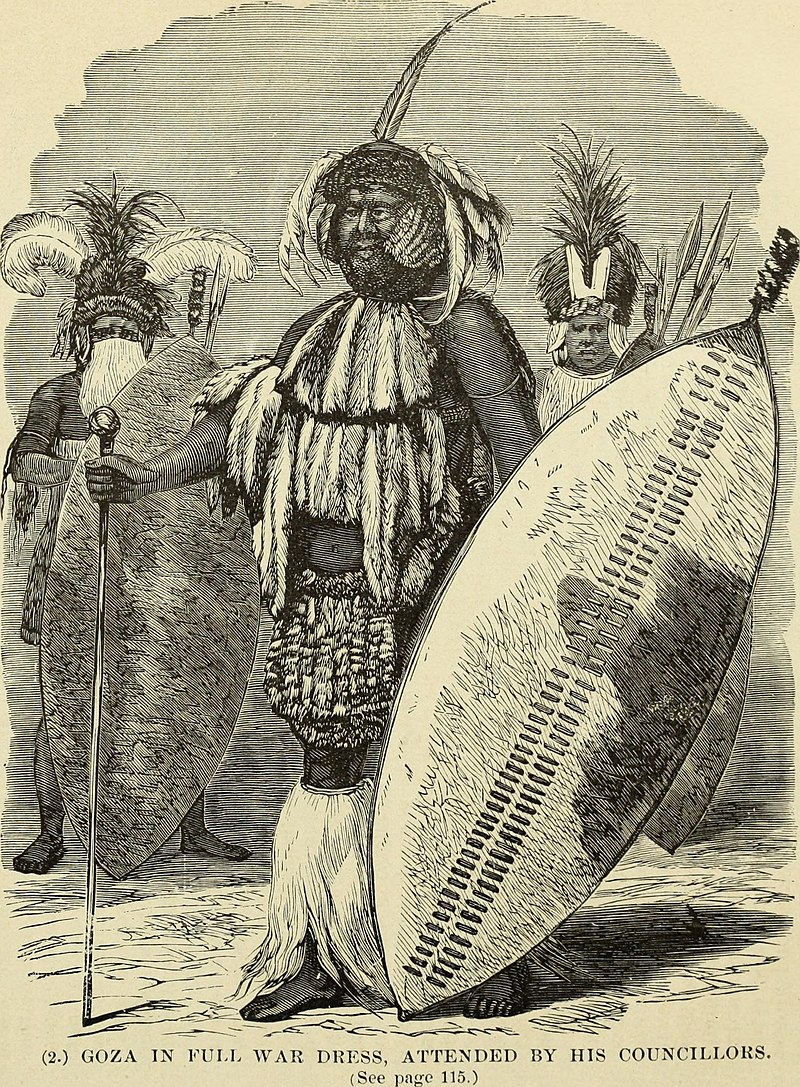
thumb |Zulu people|Zulu chief Goza and two of his councillors in war-dress, all with [[Nguni shields, . The size of the shield on the chief's left arm denotes his status, and the white colour that he is a married man.]] thumb|Wall painting depicting a Mycenaean Greece|Mycenaean Greek "figure eight", 15th century BC, [[National Archaeological Museum, Athens]]
A shield is a protective barrier carried by a person, historically made in various shapes and sizes, that was used in combat to defend against weapons and attacks. Beyond its practical function in warfare, shields often conveyed important social information, such as a person's status or marital condition, making them significant cultural objects in many societies.
AI-generated from the Wikipedia summary — may contain errors.
Wikidata facts
- Image
- Thorsberg Shields.jpg
Show 4 more facts
- Unicode character
- 🛡
- Commons category
- Shields
- topic's main category
- Category:Shields
- on focus list of Wikimedia project
- Wikipedia:Vital articles/Level/4
Sources (2)
via Wikidata · CC0
Article · Polski
Tarcza (od starofranc. targe); staropol. szczyt – obronna część uzbrojenia używana przez formacje konne i piesze. Wyrabiana z drewna, kory, wikliny lub skóry, a z czasem głównie z drewna powlekanego skórą, często obijanego metalem lub skórą, później także w całości z metalu, współcześnie także z tworzyw sztucznych. Była używana co najmniej od okresu brązu, w starożytności i w średniowieczu, tracąc na znaczeniu po wprowadzeniu broni palnej przez piechotę i jazdę, stosowana w specjalnych sytuacjach także współcześnie.
Abstract from DBpedia / Wikipedia · CC BY-SA
Gallery (32)
Available in 91 languages
- Español
- Français
- Deutsch
- 中文
- 日本語
- Русский
- Português
- Italiano
- العربية
- हिन्दी
- Afrikaans
- Albanian
- Armenian
- Asturian
- azb
- Azerbaijani
- Bahasa Indonesia
- Bashkir
Show 72 more
- Basque
- be_x_old
- Belarusian
- Breton
- Bulgarian
- Catalan
- Central Kurdish
- Croatian
- Czech
- Danish
- Erzya
- Esperanto
- Estonian
- Filipino
- Finnish
- Galician
- Georgian
- Greek
- guw
- Hebrew
- Hungarian
- Iban
- Ido
- Interlingua
- Irish
- Javanese
- Kannada
- Kazakh
- Khmer
- Kurdish
- Kyrgyz
- Latin
- Latvian
- Lingala
- Lithuanian
- Macedonian
- Malay
- Manipuri
- Marathi
- Nederlands
- Norwegian
- Norwegian Nynorsk
- Occitan
- Old English
- Piedmontese
- Polski
- Punjabi
- Quechua
- Romanian
- Serbian
- Serbian (Latin)
- Shona
- simple
- Sinhala
- Slovak
- Slovenian
- Sundanese
- Svenska
- Swahili
- Tajik
- Tamil
- Tiếng Việt
- Türkçe
- Tyap
- Ukrainian
- Uzbek
- Wu Chinese
- zh_min_nan
- zh_yue
- فارسی
- ไทย
- 한국어
via Wikidata sitelinks · CC0