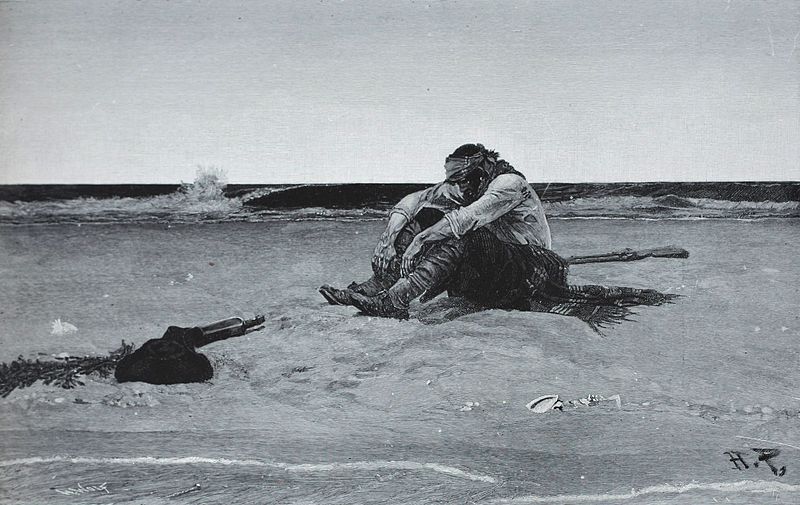
File:Pyle_pirate_marooned.jpg · Wikimedia Commons · See Wikimedia Commons
tecrit
Sign in to saveAlso known as isolation, lone, alone, solitary, social withdrawal
300px|thumb|Howard Pyle's 19th century illustration of a marooned [[pirate]] Solitude, also known as social withdrawal, is a state of seclusion or isolation, meaning lack of socialisation. Effects can be either positive or negative, depending on the situation. Short-term solitude is often valued as a time when one may work, think, or rest without disturbance. It may be desired for the sake of privacy. Long-term solitude may stem from soured relationships, loss of loved ones, deliberate choice, infectious disease, mental disorders, neurological disorders such as circadian rhythm sleep disorder,
Solitude is a state of being alone or withdrawn from social interaction, which can have both positive and negative effects depending on the circumstances. While short-term solitude is often valued for providing uninterrupted time to work, think, rest, or maintain privacy, long-term solitude can result from various causes including relationship problems, loss, personal choice, or health conditions.
AI-generated from the Wikipedia summary — may contain errors.
Wikidata facts
- Instance of
- social issue
- Subclass of
- isolation
- Image
- L'Esule by Antonio Ciseri (1821-1891).jpg
Show 3 more facts
- Commons category
- Solitude
- ICPC 2 ID
- P03
- has effect
- loneliness
Sources (2)
via Wikidata · CC0