
Sistema de Lanzamiento Espacial
Sign in to saveAlso known as SLS
proyecto de vehículo de lanzamiento pesado estadounidense
Wikipedia views (30d)
60,921 totalvia Wikimedia Pageviews API
Key facts
- Function
- Super heavy-lift launch vehicle
- Manufacturer
- Aerojet Rocketdyne Boeing Northrop Grumman United Launch Alliance
- Country of origin
- United States
- Project cost
- US$ 31.6 billion as of 2025 (excluding Orion)
- Cost per launch
- US$2.5 billion (excluding Orion)
- Cost per year
- US$2.6 billion ( FY 23) (excluding Orion)
- Height
- 98 m (322 ft)
- Diameter
- 8.4 m (27.6 ft)
- Mass
- 2,610,000 kg (5,750,000 lb)
- Stages
- 2½
- Maximum thrust
- 39 MN (8,800,000 lbf)
- Altitude
- 200 km (120 mi)
- Orbital inclination
- 28.5°
- Based on
- Ares V Delta IV Space Shuttle
- Comparable
- Energia Falcon Heavy Long March 9 N1 Saturn V Starship
- Status
- Active
- Launch sites
- Kennedy , LC-39B
- First flight
- November 16, 2022
via Wikipedia infobox
Official website
Space Launch System (SLS) - NASA
Combining power and capability, NASA’s Space Launch System (SLS) rocket is part of NASA’s backbone for deep space exploration and Artemis.
nasa.gov →NASA explores the unknown in air and space, innovates for the benefit of humanity, and inspires the world through discovery. Technicians inside the Payload Hazardous Servicing Facility at Kennedy Space Center in Florida install and test antennas on a solar array on Wednesday, March 20, 2024, for the agency’s Europa Clipper spacecraft. NASA’s future will continue to be a story of human exploration, technology, and science. We will go back to the Moon to learn more about what it will take to support human exploration to Mars and beyond. We will continue to nurture the development of a vibrant low-Earth orbit economy that builds on the work done to date by the International Space Station. NASA engineers will develop new technologies to improve air transport at home and meet the challenges of advanced space exploration. Our scientists will work to increase an understanding of our planet and our place in the universe. The Artemis II crew, from left: NASA astronauts Reid Wiseman and Christina Koch; CSA (Canadian Space Agency) astronaut Jeremy Hansen; and NASA astronaut Victor Glover pose for a group photo after viewing the Orion spacecraft in the well deck of the USS John P. Murtha, Saturday, April 11, 2026, in the Pacific Ocean off the coast of California. When NASA opened for business on October 1, 1958, it accelerated the work already started on human and robotic spaceflight, and over the last 65 years it has continued to push the boundaries of aeronautics and space exploration. Now NASA is preparing to take humankind farther than ever before, as it helps to foster a robust commercial space economy near Earth, and pioneers further human and robotic exploration as we venture into deep space. NASA’s Perseverance Mars rover took a selfie with the Ingenuity helicopter, seen here about 13 feet from the rover. This image was taken by the WASTON camera on the rover’s robotic arm on April 6, 2021, the 46th Martian day, or sol, of the mission. Jared “Rook” Isaacman is the 15th Administrator of the National Aeronautics and Space Administration. An entrepreneur and skilled pilot, Isaacman commanded Inspiration4, the first all-civilian orbital spaceflight aboard the Dragon spacecraft. The mission was a major milestone in commercial spaceflight. Matt Anderson is NASA’s deputy administrator. Anderson is a decorated Air Force command pilot in multiple aircraft with more than 5,000 flight hours, including more than 650 in combat. Throughout his 24-year Air Force career, he served on several senior U.S. Department of War staffs and commanded at multiple levels before retiring in 2021. Amit Kshatriya is NASA’s associate administrator. Kshatriya serves as the highest-ranking civil servant at the agency and as a senior advisor to the administrator. Kshatriya leads the agency’s 10 center directors, as well as the mission directorate associate administrators at NASA Headquarters in Washington. Align your talents with your passion and find out why NASA consistently is named a best place to work in the federal government. At NASA, you'll have an opportunity to work on unique and challenging projects that truly make an impact on humanity. Stay up-to-date on the latest news from NASA–from Earth to the Moon, the Solar System and beyond.
Read more on their site →Excerpt from the official site · 37,009 chars · not written by Vinony
Wikidata facts
- Subclass of
- super heavy-lift launch vehicle
- Operator
- NASA
- Country of origin
- United States
- Official website
- www.nasa.gov/humans-in-space/space-launch-system
- Image
- Artemis II launch (SLS MAF 20260401 ArtemisIILaunch 02) crop.jpg
- Has parts of class
- Exploration Upper Stage
Show 4 more facts
- Commons category
- Space Launch System
- topic's main category
- Category:Space Launch System
- social media followers
- 634427
- capital cost
- 2550000000
Sources (2)
via Wikidata · CC0
Article · Español
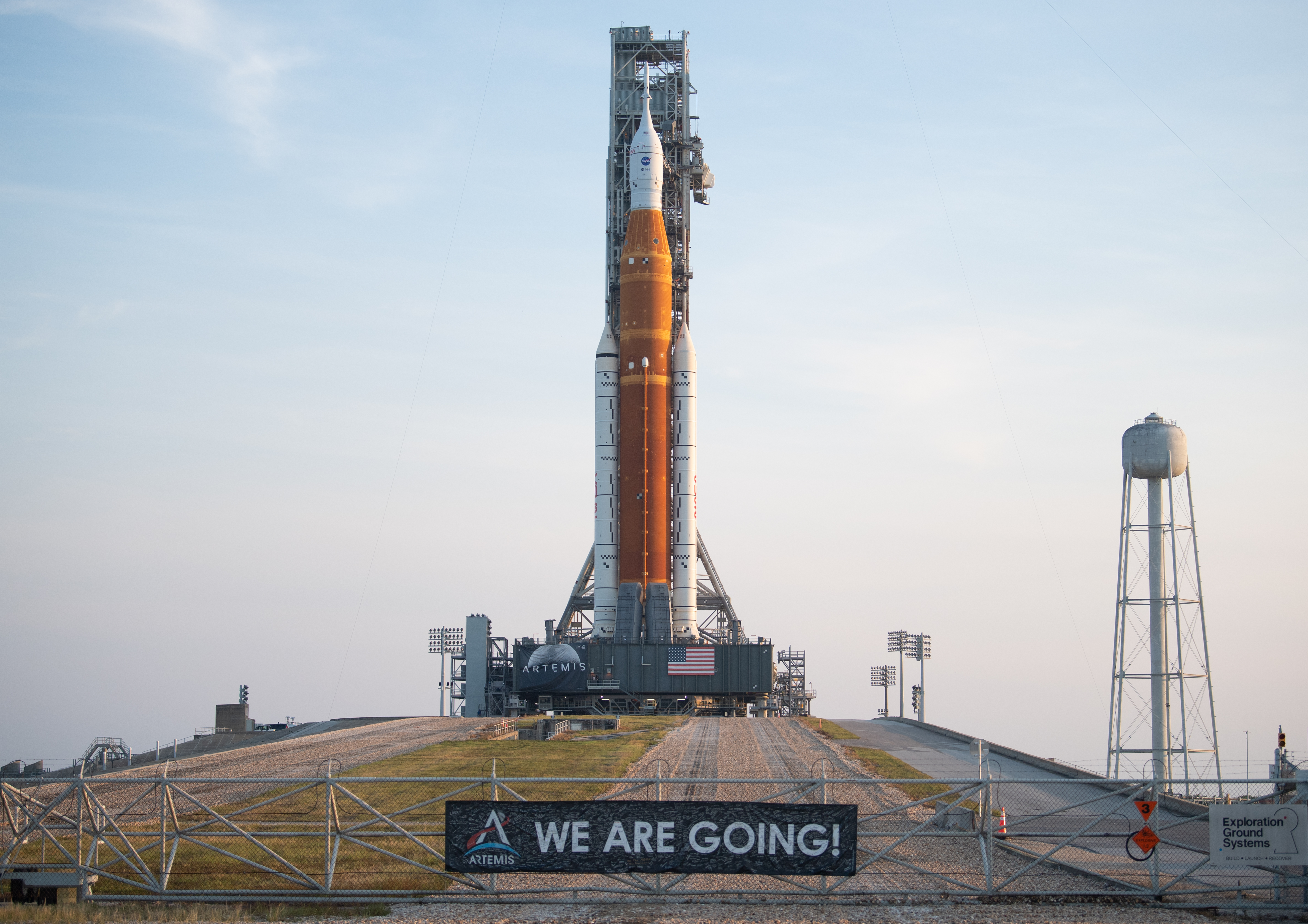
El sistema de lanzamiento espacial (en inglés: "Space Launch System" o "SLS"), es un vehículo de lanzamiento no recuperable superpesado estadounidense que está siendo desarrollado por la NASA desde 2011. El primer lanzamiento, denominado Artemis 1, tuvo lugar el 16 de noviembre de 2022 a las 06:47 UTC desde el Centro Espacial Kennedy. El SLS sustituye a los vehículos de lanzamiento Ares I y Ares V, que fueron cancelados junto con el resto del Proyecto Constelación, un programa anterior destinado a volver a la Luna. El SLS está destinado a convertirse en el sucesor del retirado transbordador espacial y en el principal vehículo de lanzamiento de los planes de exploración del espacio profundo de la NASA hasta finales de la década de 2030. En el marco del programa Artemis se prevén vuelos lunares con tripulación, que conducirán a una posible misión humana a Marte. El SLS se está desarrollando en tres grandes fases con capacidades crecientes: Block 1, Block 1B y Block 2. A partir de noviembre de 2022, los vehículos de lanzamiento SLS Block 1 van a lanzar las tres primeras misiones Artemis y está previsto que cinco vuelos posteriores del SLS utilicen el Block 1B, tras lo cual todos los vuelos utilizarán el Block 2. Está previsto que el SLS lance la nave Orión en el marco del programa Artemis, utilizando las instalaciones de operaciones terrestres y de lanzamiento del Centro Espacial Kennedy de la NASA en Florida. Se prevé que Artemis utilice como máximo un SLS cada año hasta al menos 2030. El SLS se lanzará desde el LC-39B en el Centro Espacial Kennedy. El primer lanzamiento fue ordenado originalmente por el Congreso para diciembre de 2016, pero se ha retrasado al menos dieciséis veces, añadiendo más de cinco años al calendario original de seis años.
Abstract from DBpedia / Wikipedia · CC BY-SA