Space Shuttle Challenger disaster
Sign in to saveAlso known as Challenger disaster
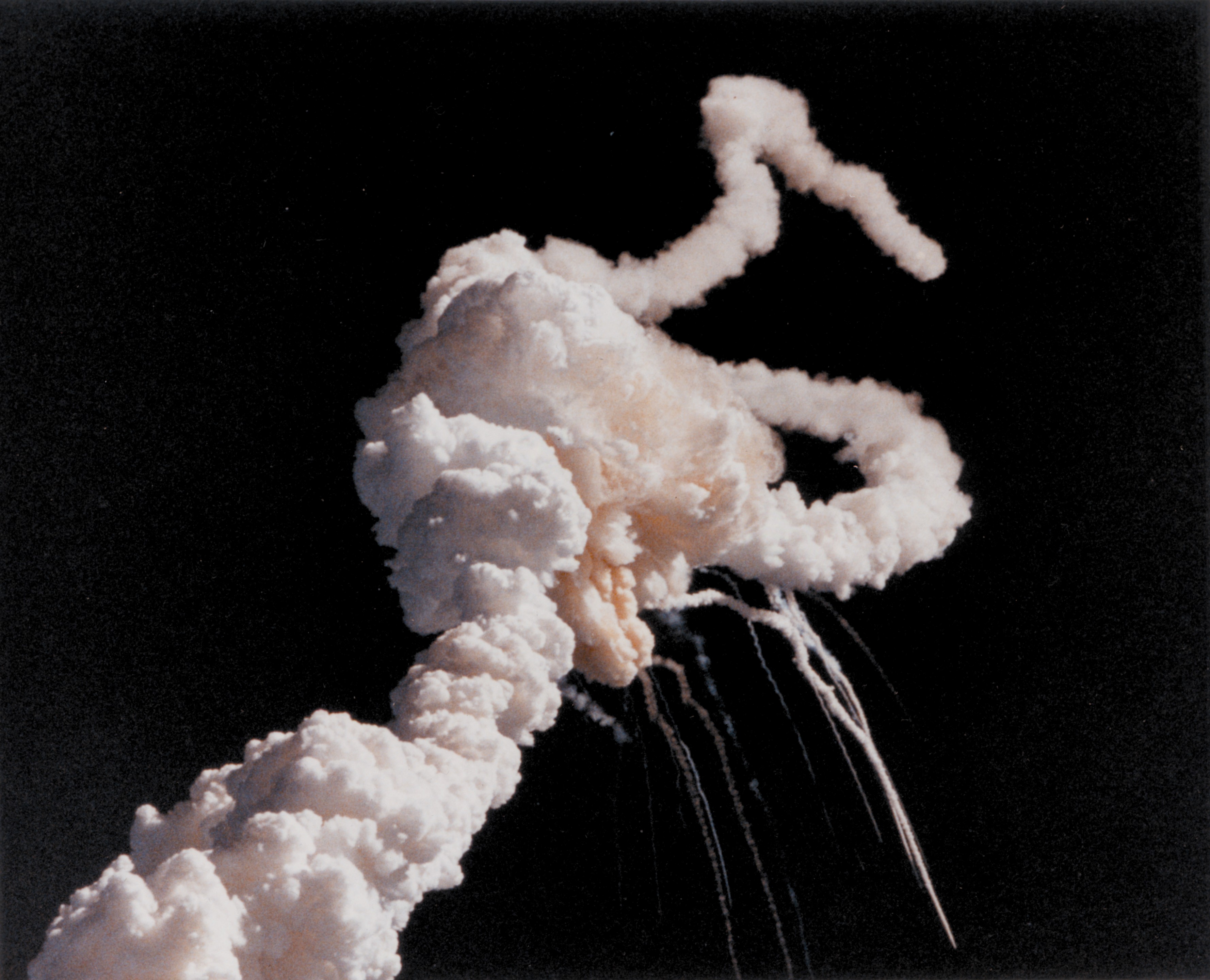
On January 28, 1986, Space Shuttle Challenger broke apart 73 seconds into its flight, killing all seven crew members. The spacecraft disintegrated about 46,000 feet (14 km) above the Atlantic Ocean, off the coast of Cape Canaveral, Florida, at 16:39:13 UTC. It was the first fatal accident involving an American spacecraft while in flight.
Wikipedia views (30d)
188,749 totalvia Wikimedia Pageviews API
Key facts
- Date
- January 28, 1986 ; 40 years ago ( 1986-01-28 )
- Time
- 16:39:13 UTC (11:39:13 EST )
- Location
- Atlantic Ocean , off the coast of Florida
- Cause
- O-ring seal failure in right SRB due to cold weather and wind shear
- Outcome
- Loss of Challenger and crew Teacher in Space Project and subsequent civilian shuttle spaceflights cancelled Shuttle fleet grounded for implementation of safety measures Construction of replacement orbiter Endeavour Second disaster with Space Shuttle Columbia
- Deaths
- Dick Scobee , commander Michael J. Smith , pilot Ronald McNair , mission specialist Ellison Onizuka , mission specialist Judith Resnik , mission specialist Gregory Jarvis , payload specialist Christa McAuliffe , payload specialist, teacher
- Inquiries
- Rogers Commission Report
via Wikipedia infobox
Wikidata facts
- Part of
- STS-51-L
- Country
- United States
- Location
- Cape Canaveral
- Image
- Challenger explosion.jpg
- Number of deaths
- 7
Show 6 more facts
- point in time
- 1986-01-28
- has immediate cause
- cold weather
- Commons category
- Space Shuttle Challenger disaster
- topic's main category
- Category:Space Shuttle Challenger disaster
- destroyed
- Challenger
- different from
- Space Shuttle Columbia disaster
Sources (2)
via Wikidata · CC0
~40 min read
Encyclopedic overview
On January 28, 1986, Space Shuttle Challenger broke apart 73 seconds into its flight, killing all seven crew members. The spacecraft disintegrated about 46,000 feet (14 km) above the Atlantic Ocean, off the coast of Cape Canaveral, Florida, at 16:39:13 UTC (11:39:13 a.m. EST, local time at the launch site). It was the first fatal accident involving an American spacecraft while in flight.
The mission, designated STS-51-L, was the 10th flight for the orbiter and the 25th flight of the NASA's Space Shuttle program. The crew was scheduled to deploy a commercial communications satellite and study Halley's Comet while they were in orbit, in addition to taking schoolteacher Christa McAuliffe into space under the Teacher in Space Project. This latter task resulted in a higher-than-usual media interest in and coverage of the mission, and the launch and subsequent disaster were seen live in many schools across the United States.
Excerpted from Wikipedia’s “Space Shuttle Challenger disaster” article, available under the CC BY-SA 4.0 licence.