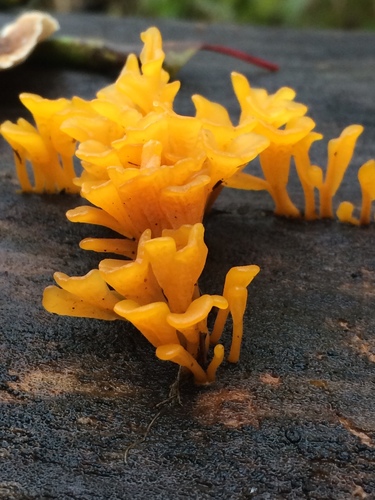
(c) dmartin, some rights reserved (CC BY-NC) · cc-by-nc
Spathularia
Sign in to saveSpathularia is a genus of fungi in the family Cudoniaceae. Species in the genus are found in coniferous forests around the bases of conifers or near rotting logs. The genus name is Latin for 'broad sword'.
Species
Fan-shaped Jelly Fungus
species
via
Museum specimens
- Specimen records
- 114
- With media
- 87
- Family
- Cudoniaceae
- Collections
- DBG, ILLS, BPI, TENN-F, NY, DUKE
- Recorded in
- United States, New Zealand, China, United Kingdom, Japan, Canada
Wikidata facts
- Instance of
- taxon
- Parent taxon
- Cudoniaceae
- Image
- Spathularia flavida.jpg
Show 5 more facts
- taxon name
- Spathularia
- taxon rank
- genus
- taxonomic type
- Spathularia flavida
- Commons category
- Spathularia
- taxon author citation
- Pers.
Sources (1)
via Wikidata · CC0
~2 min read
Encyclopedic overview
3 sectionsContents
- ''Spathularia flavida''
- ''Spathularia neesii''
- References
Spathularia is a genus of fungi in the family Cudoniaceae. Species in the genus are found in coniferous forests around the bases of conifers or near rotting logs. The genus name is Latin for 'broad sword'.
==Spathularia flavida== Spathularia flavida, like other members of the family Cudoniaceae, is distinguished by having long, needle-like spores. A common name for Spathularia flavida is yellow Earth tongue. The spores are tightly packed side by side in the asci. The fruit body of S. flavida is a light yellowish-brown color and rarely of a brown color. The stipe grows to about eight centimeters in length and one centimeter in girth, and the flattened head grows on the sides of the stipe. It has a fairly smooth head and stipe, and has no odor. Several specimens were recovered in two expeditions to Sichuan Province, China, in 1997 and 1998. The habitat ranges across continents, mainly the coniferous forests of the United States and Europe. It can be found near the bases of coniferous trees in ring shaped clusters; however, sightings are rare and infrequent.
Excerpted from Wikipedia’s “Spathularia” article, available under the CC BY-SA 4.0 licence.