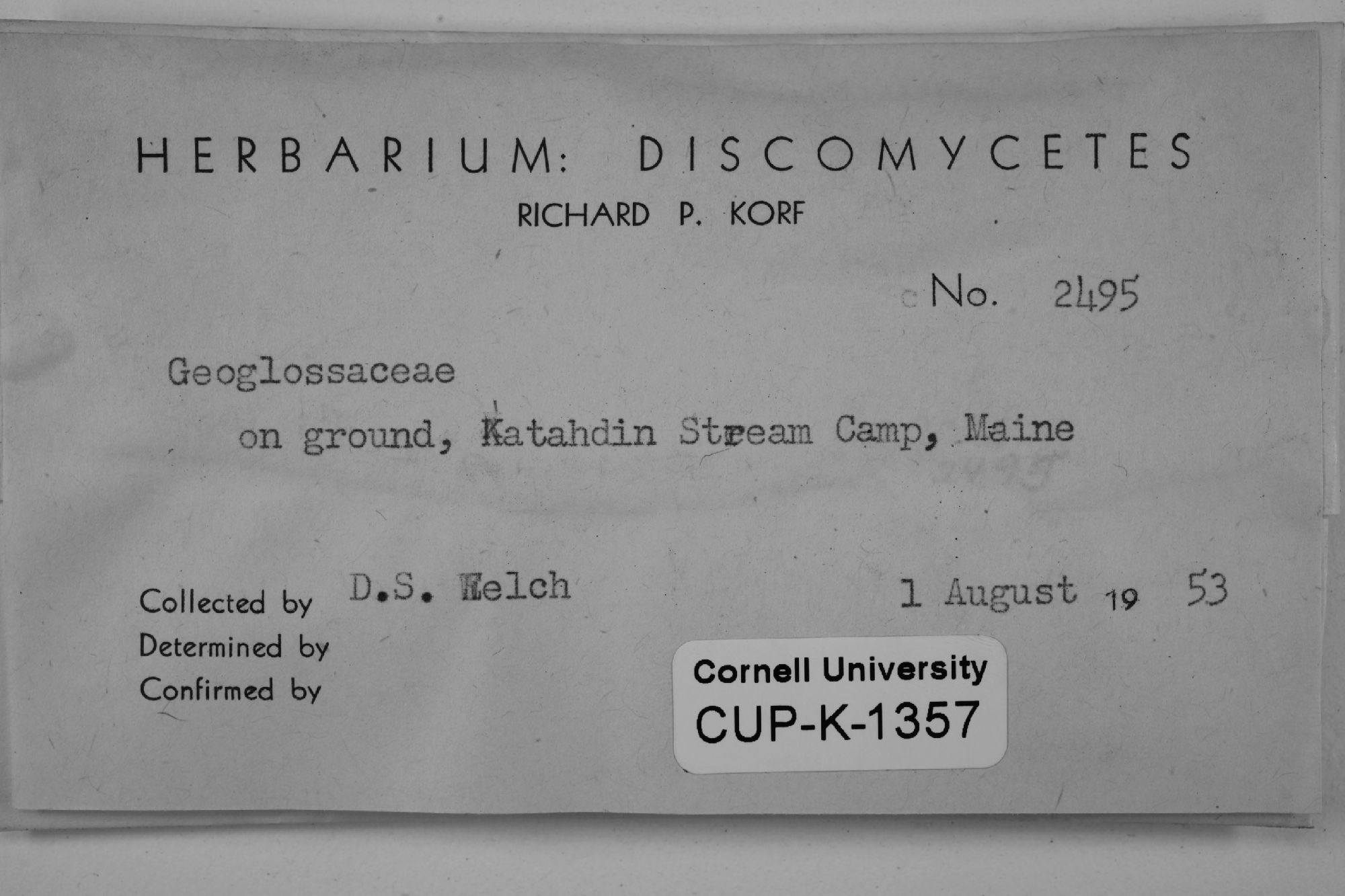
Specimen image via iDigBio · BY-NC-SA
Geoglossaceae
Sign in to saveGeoglossaceae is a family of fungi in the order Geoglossales, class Geoglossomycetes. These fungi are broadly known as earth tongues. The ascocarps of most species in the family Geoglossaceae are terrestrial and are generally small, dark in color, and club-shaped with a height of 2–8 cm. The ascospores are typically light-brown to dark-brown and are often multiseptate. Other species of fungi have been known to parasitize ascocarps. The use of a compound microscope is needed for accurate identification.
Species
FAMILY
- KingdomFungi
- PhylumAscomycota
- ClassGeoglossomycetes
- OrderGeoglossales
- FamilyGeoglossaceae
via GBIF
Museum specimens
- Specimen records
- 58
- With media
- 13
- Family
- Geoglossaceae
- Collections
- CUP, FH, INSTITUTO NACIONAL DE PESQUISAS DA AMAZÔNIA (INPA), MEL
- Recorded in
- United States, Chile, Brasil, Canada, Australia, China, Panama, Russia
Wikidata facts
- Instance of
- taxon
- Image
- Glutinoglossum glutinosum 138160.jpg
Show 6 more facts
- Commons category
- Geoglossaceae
- taxon name
- Geoglossaceae
- taxon rank
- family
- topic's main category
- Category:Geoglossaceae
- taxon common name
- Earth Tongues
- taxonomic type
- Geoglossum
Sources (1)
via Wikidata · CC0
~3 min read
Encyclopedic overview
3 sectionsContents
- Systematics
- Habitat
- References
Geoglossaceae is a family of fungi in the order Geoglossales, class Geoglossomycetes. These fungi are broadly known as earth tongues. The ascocarps of most species in the family Geoglossaceae are terrestrial and are generally small, dark in color, and club-shaped with a height of 2–8 cm. The ascospores are typically light-brown to dark-brown and are often multiseptate. Other species of fungi have been known to parasitize ascocarps. The use of a compound microscope is needed for accurate identification.
==Systematics== {{cladogram|align=left|title= |clade= {{clade |style=font-size:75%;line-height:75% |label1= |1={{clade |1={{clade |1={{clade |1= |2=Sabuloglossum arenarium }} |2= }} }} }} |caption=Cladogram showing phylogeny of Geoglossomycetes based on a four-gene dataset. }} The fungi that are now included in the fungal class Geoglossomycetes were previously considered by mycologists to be a family (Geoglossaceae) within the class Leotiomycetes. The family Geoglossaceae sensu lato was previously defined with 6 genera and 48 species. Early molecular evidence using ribosomal DNA suggested that Geoglossaceae sensu lato was not a monophyletic group, and that the hyaline spored genera (e.g. Leotia, Microglossum, and Spathularia) were not allied within the same clade as the darker-spored genera (Geoglossum and Trichoglossum). Schoch et al., using a six-gene phylogeny including ribosomal DNA and protein-coding genes, found support for the establishment of a new class (Geoglossomycetes), containing the genera Geoglossum, Sarcoleotia, and Trichoglossum. Further molecular research resulted in the addition of Nothomitra (previously treated as a relative or synonym of Microglossum) to the group in 2011. Glutinoglossum was circumscribed in 2013 to contain the species formerly known as Geoglossum glutinosum, and a new European species, G. heptaseptatum.
Excerpted from Wikipedia’s “Geoglossaceae” article, available under the CC BY-SA 4.0 licence.