steam locomotive
Also known as locomotive - driven by - steam, 🚂, steam train
railway locomotive that produces its pulling power through a steam engine
AI overview
A steam locomotive is a railway engine that uses steam power to pull trains along tracks. These machines were crucial to the development of modern transportation and industry, enabling the mass movement of goods and people across long distances.
AI-generated from the Wikipedia summary — may contain errors.
Wikidata facts
- Image
- 0350 Brockenbahn - Dampflokomotive.jpg
via Wikidata · CC0
Article
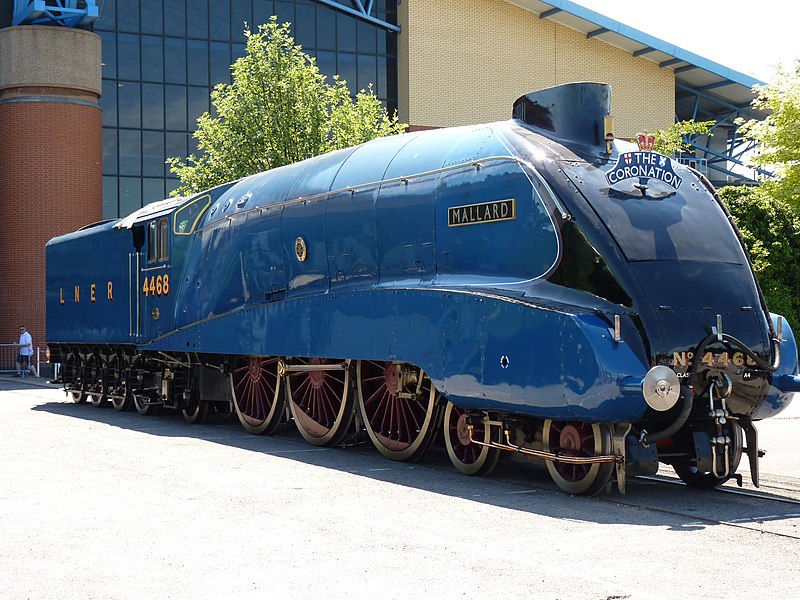
LNER Class A4 4468 Mallard is officially the fastest steam locomotive, reaching 126 mph (203 km/h) on 3 July 1938. JŽ 06-018 steam locomotive, in Ljubljana, Slovenia LNER Class A3 4472 Flying Scotsman was the first steam locomotive to officially reach 100 mph (160 km/h), on 30 November 1934. Union Pacific Big Boy 4014 is the largest operating steam locomotive in the world. 41 018 climbing the Schiefe Ebene with 01 1066 as pusher locomotive (video 34.4 MB)
A steam locomotive is a type of locomotive that provides the force to move itself and other vehicles by means of the expansion of steam. It is fuelled by burning combustible material (usually coal, oil or, rarely, wood) to heat water in the locomotive's boiler to the point where it becomes gaseous and its volume increases 1,600 to 1,700 times. Functionally, it is a self-propelled steam engine on wheels.