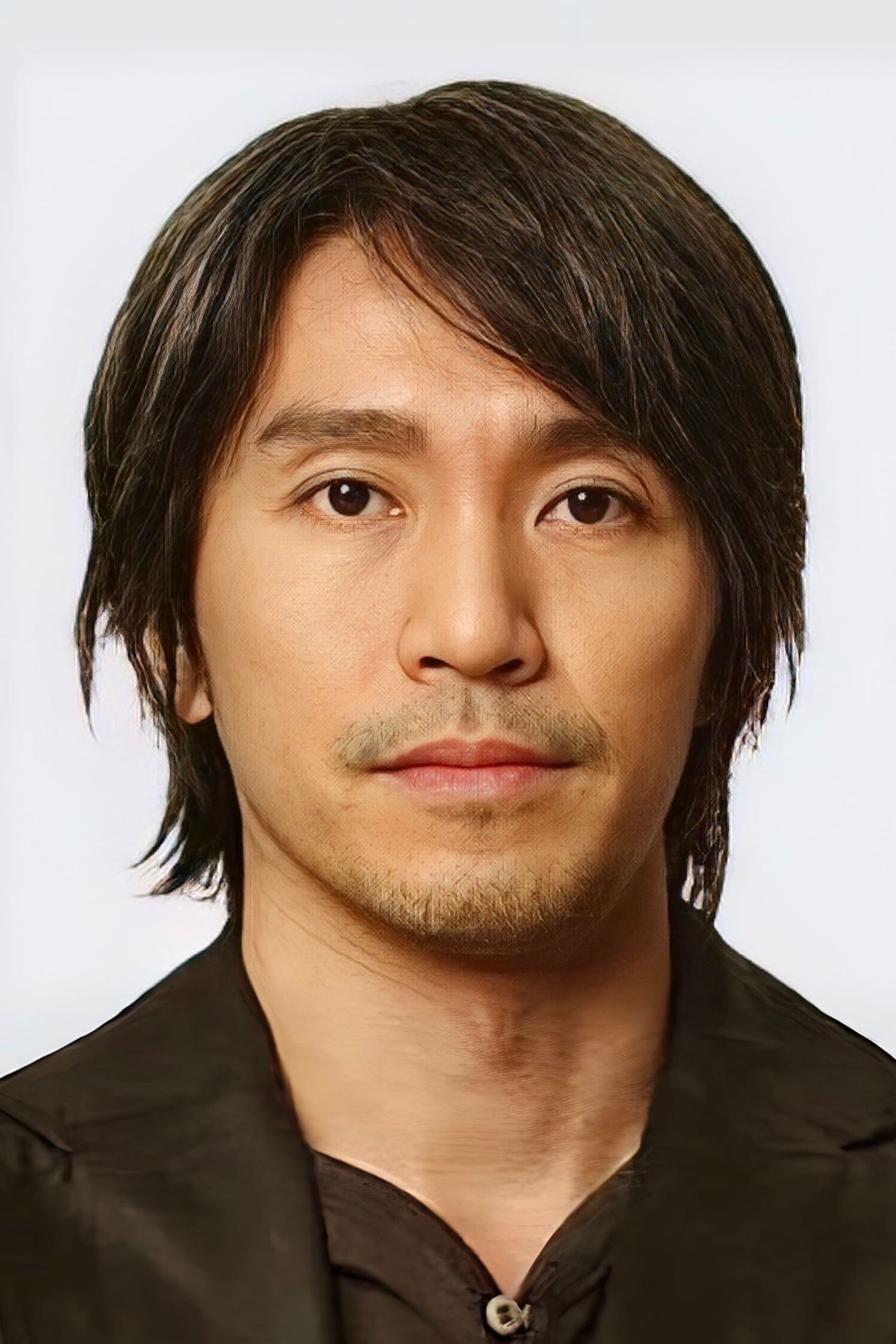
Profile via TMDB · Courtesy of TMDB
Stephen Chow
Sign in to saveAlso known as Stephen Chow Sing Chi, Chow Sing Chi, Zhou Xingchi, Stephen Chiau, Stephen Chiau Sing-chi
Hong Kong actor, comedian and filmmaker (born 1962)
Film & TV
Hong Kong, British Crown Colony [now China]
Stephen Chow Sing-Chi (Chinese: 周星馳) is a Hong Kong filmmaker, actor, and producer. Stephen Chow was born in Hong Kong on 22 June 1962 to Ling Po Yee, an alumna of Guangzhou Normal University, and Chow Yik Sheung, an immigrant from Ningbo, Zhejiang. Chow has an elder sister named Chow Man Kei and a younger sister named Chow Sing Ha. Chow's given name "Sing-chi" derives from Tang dynasty Chinese…
Known for
- Hong Kong Hustle: The Chinese Cinema Odyssey Of Stephen Chow — Archival Footage2024
- The King of Stand-up Comedy — 节目发起人2024
- The 40th Anniversary of Chinese Film Since China's Reform and Opening-Up2018
- Journey to the West: The Demons Strike Back — Theater Employee (uncredited)2017
- CJ7: The Cartoon2010
- CJ7 — Ti Chow2008
- Kung Fu Hustle — Sing2004
- Jimmy Kimmel Live! — Self2003
- Shaolin Soccer — Mighty Steel Leg / Sing2001
- King of Comedy — Wan Tin Sau1999
via TMDB
Key facts
- Born
- Stephen Chow Sing-chi , ( 1962-06-22 ) 22 June 1962 (age 63) , British Hong Kong
- Occupations
- Director, actor, comedian, screenwriter, producer
- Years active
- As an actor: , 1982–2008, As a director: , 1994–present
- Traditional chinese
- 周星馳
- Simplified chinese
- 周星驰
- Hanyu pinyin
- Zhōu Xīngchí
- Bopomofo
- ㄓㄡ ㄒㄧㄥ ㄔˊ
- Yale romanization
- Jāu Sīng-chìh
- Jyutping
- Zau1 Sing1-ci4
- Ipa
- [ tsɐ́u séŋ.tsʰȉ ]
via Wikipedia infobox
Wikidata facts
- Instance of
- human
- Family name
- Zhou
- Gender
- male
- Citizenship
- British Hong Kong
- Place of birth
- Hong Kong
- Occupation
- film producer
- Languages spoken
- Cantonese
- Native language
- Cantonese
- Genre
- mo lei tau
- Image
- Stephen Chow, 2008 (cropped).JPG
- Residence
- Shanghai
Show 9 more facts
- Commons category
- Stephen Chow
- date of birth
- 1962-06-22
- nominated for
- Hong Kong Film Award for Best Film
- start of work period
- 1980-00-00
- related category
- Category:Films directed by Stephen Chow
- name in native language
- Stephen Chow
- pseudonym
- 幇主
- ethnic group
- Hongkongers
- writing language
- Chinese
Sources (7)
via Wikidata · CC0
~15 min read
Encyclopedic overview
Stephen Chow Sing-chi (Chinese: 周星馳; born 22 June 1962) is a Hong Kong filmmaker and former actor, known for his mo lei tau comedy, which has a significant influence on Chinese popular culture. His career began in television, where he gained recognition through variety shows and TV dramas. Chow's breakthrough came in 1989 with the comedy dramas The Final Combat and The Justice of Life, the latter marking the beginning of his on-screen collaboration with Ng Man-tat. He consecutively broke Hong Kong’s box office records in the next two years with films All for the Winner (1990) and Fight Back to School (1991), cementing his status as one of the region's most popular comedic actors.
Since the early 1990s, Chow began working as a screenwriter and director, serving as a de facto director for Flirting Scholar (1993) before receiving his first directorial credit with From Beijing with Love (1994). His first two attempts at Hong Kong–mainland co-productions, Flirting Scholar and A Chinese Odyssey (1995), received mixed reviews and underperformed at the box office in both markets upon release. However, they gained popularity over time, and by the 2000s, A Chinese Odyssey had particularly elevated his status as a cultural icon in China.
Excerpted from Wikipedia’s “Stephen Chow” article, available under the CC BY-SA 4.0 licence.