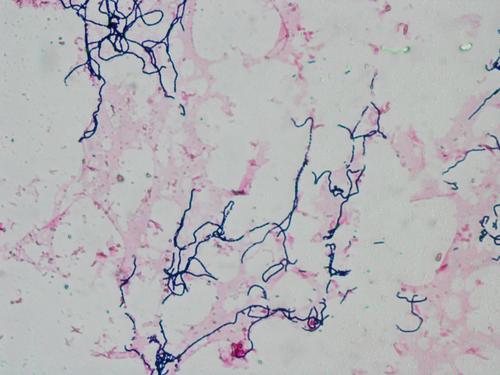
(c) Ansel Oommen, some rights reserved (CC BY-NC), uploaded by Ansel Oommen · cc-by-nc
Streptococcus mitis
Sign in to savesoort uit het geslacht streptokokken
Species
SPECIES
- KingdomBacteria
- PhylumFirmicutes
- ClassBacilli
- OrderLactobacillales
- FamilyStreptococcaceae
via GBIF
Research
2,422 papers- Identification of Streptococcus pneumoniae and other Mitis streptococci: importance of molecular methods.European journal of clinical microbiology & infectious diseases : official publication of the European Society of Clinical Microbiology · 2020
- Streptococcus mitis: walking the line between commensalism and pathogenesis.Molecular oral microbiology · 2011
- Population genomics of Streptococcus mitis in UK and Ireland bloodstream infection and infective endocarditis cases.Nature communications · 2024
- Post-Streptococcus mitis infection polyserositis.BMJ case reports · 2021
- Streptococcus Mitis Endocarditis Associated with Early Gastric Carcinoma.The Kurume medical journal · 2023
via PubMed
Wikidata facts
- Instance of
- taxon
- Parent taxon
- Streptococcus
- Image
- Streptococcal hemolysis.jpg
Show 6 more facts
- taxon name
- Streptococcus mitis
- taxon rank
- species
- Gram staining
- gram-positive bacteria
- Commons category
- Streptococcus mitis
- short name
- S. mitis
Sources (2)
via Wikidata · CC0
Article · Nederlands
Streptococcus mitis is een gram-positieve, facultatief anaerobe bacterie. Streptococcus mitis komt voor in de neus en keel. Deze bacterie zorgt ervoor dat de bacteriën die cariës veroorzaken in hun groei vertraagd worden en zich minder goed aan het tandglazuur kunnen hechten. Lang is beweerd dat in 1967 Streptococcus mitis per ongeluk met de Surveyor 3 naar de Maan gebracht werd. Astronauten van de Apollo 12 brachten 31 maanden later delen van Surveyor 3 terug naar de Aarde. Bij onderzoek van de meegenomen camera trof NASA levende Streptococcus mitis aan. Hun conclusie dat die bacteriën al die tijd overleefd had op de Maan is daarna een veel geciteerd voorbeeld geworden van de overlevingskracht van bacteriën en daarmee een argument voor panspermie. In 2011 is duidelijk geworden dat de gevonden bacteriën door de onderzoekers zelf door gebrekkige cleanroometiquette geïntroduceerd zijn en dus nooit op de maan geweest.
Abstract from DBpedia / Wikipedia · CC BY-SA
Available in 8 languages
via Wikidata sitelinks · CC0