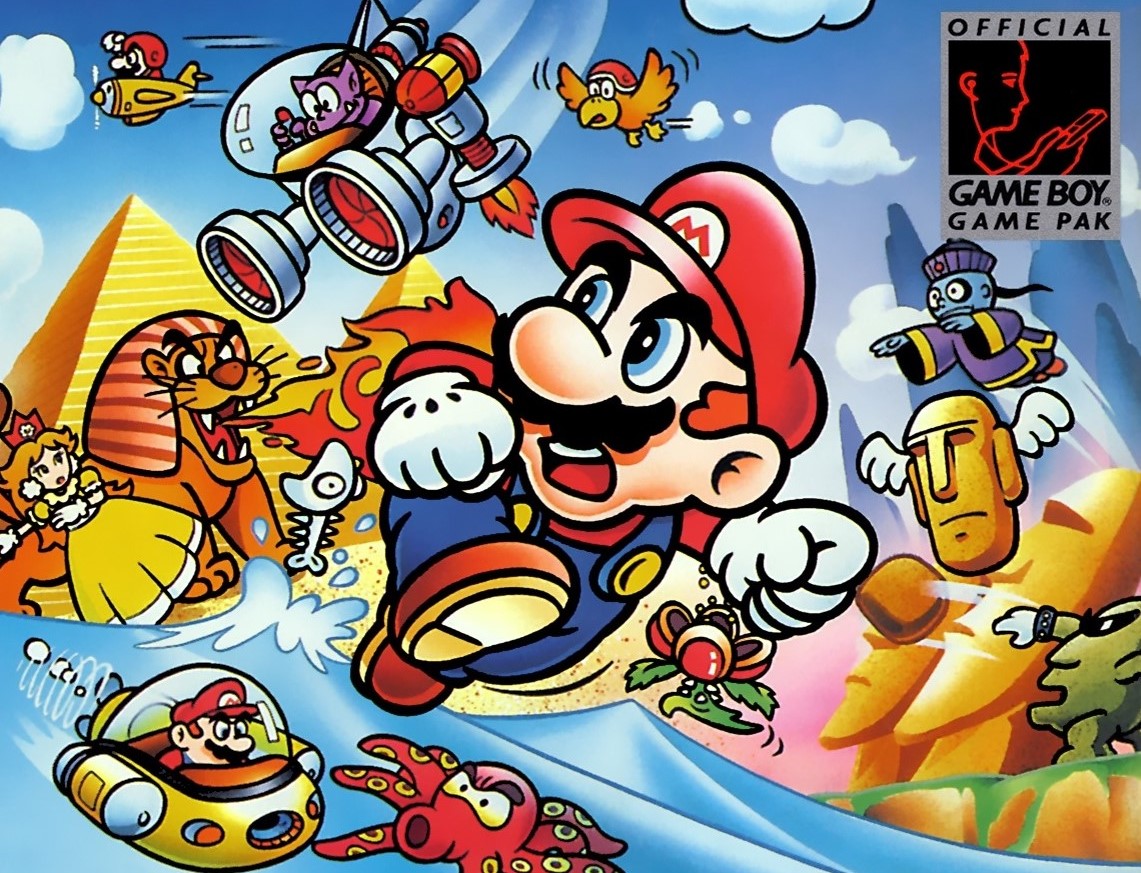
Super Mario Land · RAWG · Courtesy of RAWG
OverviewAI-generated
Super Mario Land is a platformer and action video game developed by Nintendo R&D1. It was published by Nintendo, Playtronic, and Mani. The title is part of the Mario Bros. and Mario franchises. It supports single-player game modes.
The game was released on April 21, 1989, July 31, 1989, August 30, 1989, and August 11, 1989. It is available on the Nintendo 3DS and Game Boy platforms.
Super Mario Land holds a rating of 3.93 on RAWG. On IGDB, it has a rating of 74 based on 311 ratings.
Synthesized by Vinony from 15 facts across 3 sources: Wikidata, RAWG, IGDB. Generated from structured data (not the Wikipedia text) and checked against those facts — may still contain errors.
Game data
- Released
- 1989-04-21
- User rating
- 3.93 / 5
- Genres
- Platformer, Action
- Platforms
- Nintendo 3DS, Game Boy
via RAWG
Game details · IGDB
Super Mario Land is the first Mario's outing on the Game Boy. It is a side-scrolling platformer much in the vein of the previous Super Mario Bros. This time, Mario must save Princess Daisy, rather than Princess Toadstool, from her kidnapper Tatanga, a mysterious spaceman. The game follows largely the same formula of its aforementioned predecessor, with Mario defeating enemies by jumping on them and collecting coins and power ups by hitting floating blocks, with each world leading up to a boss fight which is defeated using by collapsing the floor. A unique feature of this installment is two …
- Released
- 1989
- Genres
- Platform
- Platforms
- Nintendo 3DS, Game Boy
- Game modes
- Single player
- Franchise
- Mario Bros., Mario
- Developer
- Nintendo R&D1
- Publisher
- Nintendo, Playtronic, Mani
Key facts
- Developer
- Nintendo R&D1
- Publisher
- Nintendo
- Director
- Satoru Okada
- Producer
- Gunpei Yokoi
- Designer
- Hirofumi Matsuoka
- Programmers
- Takahiro Harada, Masao Yamamoto
- Artists
- Hirofumi Matsuoka, Masahiko Mashimo
- Composer
- Hirokazu Tanaka
- Series
- Super Mario
- Platform
- Game Boy
- Release
- JP : April 21, 1989 NA : August 1, 1989 EU : September 1990 AU : 1990
- Genre
- Platform
- Mode
- Single-player
via Wikipedia infobox
Wikidata facts
- Instance of
- video game
- Country of origin
- Japan
- Publisher
- Nintendo
- Director
- Satoru Okada
- Composer
- Hirokazu Tanaka
- Producer
- Gunpei Yokoi
- Platform
- Game Boy
- Game mode
- single-player video game
- Official website
- www.nintendo.co.jp/n02/dmg/mla/index.html
Show 6 more facts
- publication date
- 1989-08-11
- title
- Super Mario Land
- distributed by
- Nintendo eShop
- input device
- video game controller
- media franchise
- Mario
- Commons category
- Super Mario Land
Sources (10)
via Wikidata · CC0
~16 min read
Encyclopedic overview
Super Mario Land is a 1989 platform game developed and published by Nintendo for the Game Boy, as one of four launch titles for the console. It was first released in Japan in April 1989, followed by North America in August of that year, and Europe and Australia in 1990. It is the first handheld entry in the Super Mario series, as well as the first mainline title not designed by series creator Shigeru Miyamoto. Modeled after the original Super Mario Bros. (1985), the game adapts side-scrolling gameplay for the Game Boy's smaller screen, with the player guiding Mario through 12 levels to rescue Princess Daisy (in her debut appearance) from the alien Tatanga in the new setting of Sarasaland.
The game is notable for its distinctive sound effects, minimalist line-art visuals, inconsistent use of familiar Mario elements, and the inclusion of shooting stages inspired by titles such as Gradius. Nintendo developed Super Mario Land under the direction of Game Boy creators Gunpei Yokoi and Satoru Okada, intending it to be the system's pack-in game. However, during development, Tetris captured their attention, and they recognized its potential for a handheld platform. Henk Rogers, who held the rights to Tetris, convinced Nintendo of America that it would appeal to a broader audience than Super Mario Land; as a result, Tetris was bundled with the Game Boy instead.
Excerpted from Wikipedia’s “Super Mario Land” article, available under the CC BY-SA 4.0 licence.