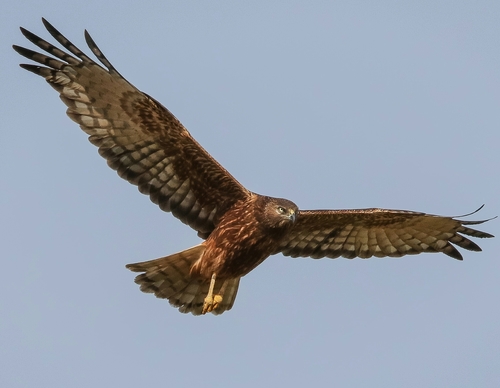
(c) devil66, all rights reserved, uploaded by devil66
OverviewAI-generated
The Swamp Harrier, scientifically known as *Circus approximans*, is a species of bird within the genus *Circus*. It belongs to the class Aves and is also referred to by the common names boda’r Môr Tawel, Sumpfweihe, and Aguilucho lagunero del Pacífico. The species is currently classified as Least Concern on the IUCN Red List, a status recorded in 2024.
Physical characteristics of the Swamp Harrier include a wingspan of 131.5 and a mass of 40. Reproductive data indicates a litter size of 3.5 and an egg incubation period of 32. The taxon is not considered extinct.
Synthesized by Vinony from 22 facts across 4 sources: Wikidata, iNaturalist, IUCN Red List, Vinony graph. Generated from structured data (not the Wikipedia text) and checked against those facts — may still contain errors.
Species
Least ConcernSwamp Harrier
species
via IUCN
Wikidata facts
Show 10 more facts
- taxon rank
- species
- IUCN conservation status
- Least Concern
- Commons category
- Circus approximans
- taxon name
- Circus approximans
- Commons gallery
- Circus approximans
- taxon common name
- tartaranhão-do-pacífico
- wingspan
- 131.5
- litter size
- 3.5
- egg incubation period
- 32
- short name
- C. approximans
via Wikidata · CC0
~5 min read
Encyclopedic overview
The swamp harrier (Circus approximans), also known as the Australasian marsh harrier or Australasian harrier, is a large, slim bird of prey widely distributed across Australasia. In New Zealand, it is also known by the Māori name kāhu. It arrived in New Zealand within the last 700 years, replacing the larger species, the extinct New Zealand endemic Eyles's harrier.
The swamp harrier belongs to the subfamily Circinae and genus Circus, which are represented worldwide, except Antarctica. The subfamily and genus are derived from the characteristic behaviour of circling flight during courtship and hawking.
Excerpted from Wikipedia’s “Swamp Harrier” article, available under the CC BY-SA 4.0 licence.