
Sverige
Also known as Kingdom of Sweden, se, Swedish Kingdom
konstitutionell monarki i Nordeuropa
AI overview
Sweden is a large Nordic country in Northern Europe, bordered by Norway and Finland, with a capital in Stockholm and a population of 10.6 million people concentrated mainly in urban areas. It is the largest country in the Nordic region and the fifth-largest in Europe overall.
AI-generated from the Wikipedia summary — may contain errors.
Weather now
cached 29h ago9°overcast clouds
92% 4.4 m/s OpenWeatherMap
7-day forecast
via Open-Meteo
Country
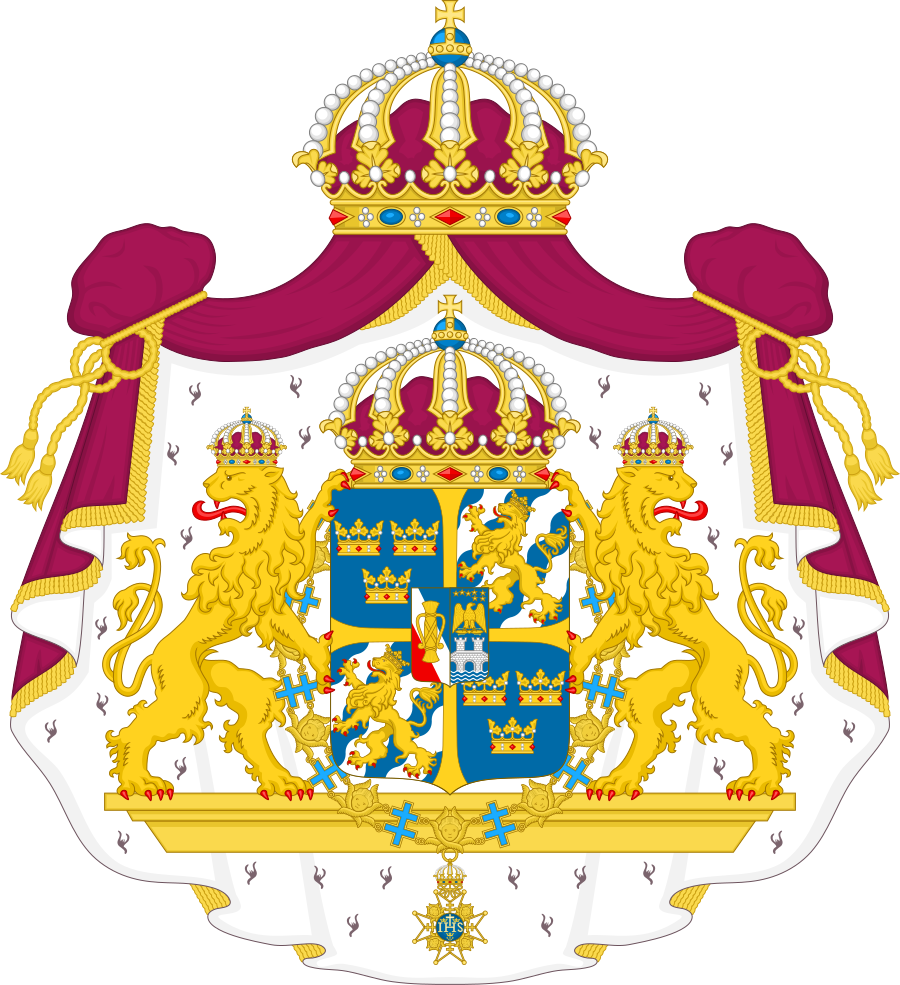

- Capital
- Stockholm
- Population
- 10,605,098
- Region
Travel guide
Understand
The "Nordic model" of economics and social policy was largely developed by Swedish social democrats and liberals during the early 20th century. The foundation is a strong welfare state, combined with market economics. Swedish society, as it has become through this policy, is often described as "folkhemmet", comparing solidarity in the society with that in a family:
Get in
thumb|The Öresund Bridge connects Sweden to [[Denmark.]]
Get around
thumb|The X40 train, used on many regional routes, has an upper deck, which gives a good view of the Swedish scenery.
The ancient right to access (allemansrätten) grants everybody a right to move freely on most land on foot, swimming, by horse, by ski, by bicycle or by boat, even on privately owned property – but not through private yards. With the right comes an obligation to respect the privacy of people and the integrity of nature. It is important to understand the limitations.
See
As modern as its society is, Sweden is a country full of seemingly untouched nature and ever-present history. The first stop for many visitors is historic and compact Stockholm, full of heritage, home to the Vasa Museum and gateway to the Stockholm Archipelago. There's the canals and cobblestoned streets of Gothenburg, with its famous botanical garden, or the modern architecture of Malmö. For more history, head to the port town of Visby, a recognized Unesco World Heritage Site, or the medieval town of Ystad, famous through the Kurt Wallander novels that are set here and for Ales stenar, one of the ancient iron-age burial monuments in the country.
Do
thumb|Besides [[association football and ice hockey, bandy is a major spectator sport in Sweden, with the 26th of December as a traditional game day. The stands are usually outdoors, so the audience needs to dress warm.]]
Eat
See Nordic cuisine for an in-depth description of Swedish food. Swedish food is typical of Nordic cuisine, based on meat (notably pork and game), fish, dairy products, potatoes and bread, together with berries and wild mushrooms. Fresh fruit and vegetables are rather recent additions to the menu.
thumbnail|Meatballs with mashed potatoes and a glass of milk Traditional everyday dishes are called husmanskost (pronounced whos-mans-cost). Some of them are: Pickled herring (sill) is eaten with bread or potatoes for summer lunch or as a starter on the smörgåsbord, at traditional holidays. Many forms of salmon (lax), especially cured salmon (gravlax). Meatballs (köttbullar), the internationally most famous Swedish dish. Served with potatoes, brown sauce and lingonberry jam. Hash (pytt i panna) consisting of meat, onions and potatoes, all diced and fried. Sliced beetroots and a fried or boiled whole egg are mandatory accessories. Pea soup (ärtsoppa) with diced pork, followed by thin pancakes, is traditionally eaten on Thursdays. Blodpudding, a black sausage made by pig's blood and flour, eaten with lingonberry jam. thumbnail|Falukorv in a supermarket fridge Falukorv, a big baloney from Falun. Sweden has many varieties of bread (bröd). Many of them are whole-grain or mixed grain, containing wheat, barley, oats, compact and rich in fiber. Some notable examples are tunnbröd (thin wrap bread), knäckebröd (hard bread - might has a bland taste, but is nearly always available), and differe…
Article · Svenska
Sverige ([sværjɛ]), formellt Konungariket Sverige ([ˈkôːnɵŋaˌriːkɛt ˈsvæ̌rjɛ]), är ett land som ligger på Skandinaviska halvön i Nordeuropa. Sverige har landgräns i väst med Norge, i nordost med Finland samt angränsande territorialvatten till Norge i västsydväst, Danmark i sydväst och Finland i öst. Landet har kuster mot Bottenviken, Bottenhavet, Ålands hav, Östersjön, Öresund, Kattegatt och Skagerrak. Sverige hade den 31 augusti 2022 enligt SCB en befolkning på 10 502 959 och är, med en area (inklusive sjöar) på 447 425 km², det geografiskt femte största landet i Europa. Huvudstad är Stockholm, landets största stad med 1,4 miljoner invånare. Därutöver finns ytterligare tre storstäder enligt Statistiska centralbyråns definition om kommun med fler än 200 000 invånare: Göteborg, Malmö och Uppsala. Omkring 87 procent av befolkningen, en ökande andel, lever i tätorter med minst 200 invånare (år 2016). Med OECD-definitionen – utgående från minst 50 000 invånare – bor 41 procent av svenskarna i urbana system. Sverige är därmed ett utpräglat landsbygdsland, med låg befolkningstäthet om 22 invånare per km² och med högre täthet i södra landshalvan. Sverige är en konstitutionell monarki med parlamentarisk demokrati och utvecklad ekonomi. Landet är medlem i Förenta nationerna sedan november 1946 och Europeiska unionen sedan den 1 januari 1995. Sverige eller traditionellt Svea rike från fornnordiskans svíar, i sig troligen från nordiskans Svitiod, tidigast dokumenterat som Swēorice i det anglosaxiska Beowulfkvädet cirka år 1000, avsåg ursprungligen ett rike av svear, en folkstam i sin tur tidigast dokumenterad av den romerske historikern Tacitus år 98 e.Kr. Riket kristnades under medeltiden och erkändes genom kung Inge den äldre av påve Gregorius VII år 1080. Sedermera omfattades både svear och götar från omkring år 1160. Sverige ingick därefter i den nordiska Kalmarunionen 1397–1523. Under 1600-talets stormaktstid expanderade landet militärt, men förlorade större delen av områdena utanför skandinaviska halvön under 1700- och 1800-talen. Östra rikshalvan, sedermera Finland, som hade varit en del av riket sedan 1100-talet, förlorades till Ryssland år 1809. Det senaste kriget som Sverige direkt var inblandat i var Napoleonkrigen 1814, när Sverige förlänades Norge från Danmark in i Svensk-norska unionen, en personalunion som varade till 1905. Under 1900-talet präglades Sveriges utrikespolitik av militär alliansfrihet. Detta till trots har Sveriges försvarsmakt medverkat i utländska militära operationer genom Natosamarbetet Partnerskap för fred och EU:s gemensamma säkerhets- och försvarspolitik. Svensk kultur utmärker sig i internationella värderingsmätningar med sin individualism, humanism och sekularism samt med ett stort förtroende för stat, politik och myndigheter bland medborgarna. Svensk ekonomisk politik har sedan mitten av 1900-talet utmärkt sig internationellt för en högbeskattande offentlig resursfördelning av svenska folkets resurser, både inrikes och utrikes, och för blandekonomi (blandning av socialism och marknadsekonomi). Samförstånd råder mellan arbetsmarknadens parter, känt som den svenska modellen. Landet rankas tredje i världen i tidningen The Economists demokratiindex (2020) och plats 7 i Förenta nationernas ”Human Development Index” (2020). Landet är en av Förenta nationernas största bidragsgivare och ett av få länder som uppfyller deras biståndsmål om över 0,7 procent av BNI.
Gallery (39)
On the map
4 mapped locations
Connections
Categories
Countries and territories where Swedish is an official languageCountries in EuropeFormer Christian statesKingdom of SwedenMembers of the Nordic CouncilMember states of NATOMember states of the European UnionMember states of the Union for the MediterraneanMember states of the United NationsOECD membersScandinaviaSweden