Encyclopedia of Life · EOL (see source)
Syngnathoidei
Sign in to saveSyngnathoidei is a large, diverse suborder of syngnathiform fish. It contains the "long-snouted" members of the order, and its monophyly has been affirmed by phylogenetic studies. The order contains pipefish, seahorses, trumpetfish, cornetfish, shrimpfish, and snipefish. They are found in tropical, subtropical and temperate seas, especially in coastal waters around rock and coral reefs and among sea weed and sea grass beds. However, there are also pelagic species of pipefish and even freshwater species.
Species
I Syngnathoidei sono un sottordine dei Syngnathiformes. Famiglie Aulostomidae Centriscidae Fistulariidae Indostomidae Pegasidae Solenostomidae Syngnathidae
via
Wikidata facts
- Instance of
- taxon
- Parent taxon
- Syngnathiformes
- Image
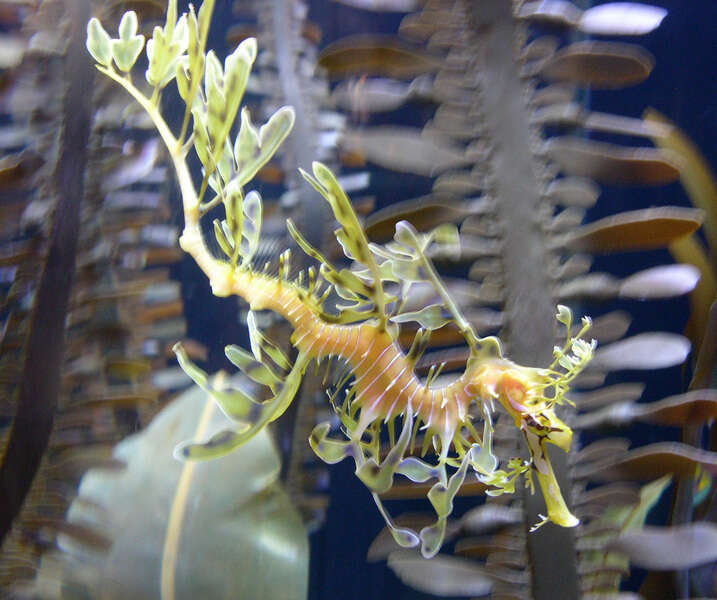
- Phyllopteryx taeniolatus1.jpg
Show 4 more facts
- taxon name
- Syngnathoidei
- taxon rank
- suborder
- topic's main category
- Category:Syngnathoidei
- Commons category
- Syngnathiformes
Sources (1)
via Wikidata · CC0
~2 min read
Encyclopedic overview
3 sectionsContents
- Taxonomy
- Fossil taxa
- References
Syngnathoidei is a large, diverse suborder of syngnathiform fish. It contains the "long-snouted" members of the order, and its monophyly has been affirmed by phylogenetic studies. The order contains pipefish, seahorses, trumpetfish, cornetfish, shrimpfish, and snipefish. They are found in tropical, subtropical and temperate seas, especially in coastal waters around rock and coral reefs and among sea weed and sea grass beds. However, there are also pelagic species of pipefish and even freshwater species.
This appears to be an ancient suborder, with fossil remains known as early as the Late Cretaceous period.
Excerpted from Wikipedia’s “Syngnathoidei” article, available under the CC BY-SA 4.0 licence.