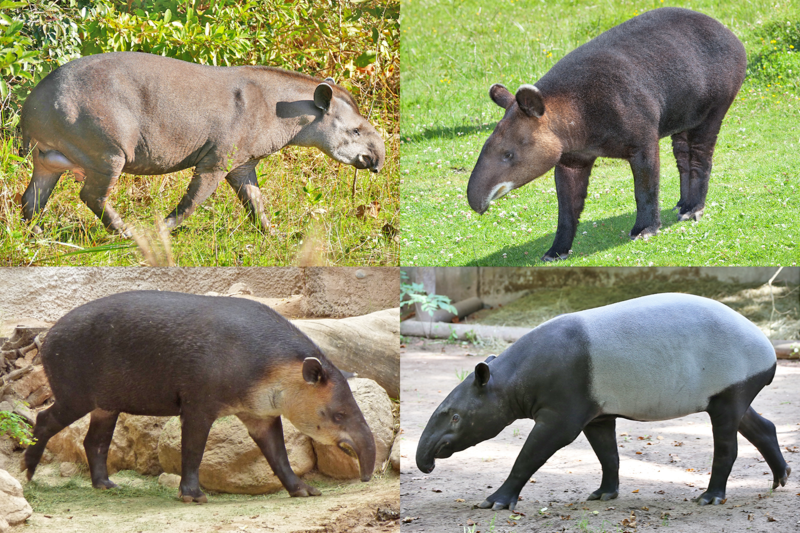
File:Tapiridae.png · Wikimedia Commons · See Wikimedia Commons
tapir
Sign in to saveAlso known as Tapiridae, tapirid, tapirids
Tapirs ( ) are large herbivorous mammals belonging to the family Tapiridae. They are similar in shape to a pig, with a short, prehensile nose trunk (proboscis). Tapirs inhabit jungle and forest regions of South and Central America and Southeast Asia. They are one of three extant branches of Perissodactyla (odd-toed ungulates), alongside equines and rhinoceroses. Only a single genus, Tapirus, is extant. Tapirs migrated into South America during the Pleistocene epoch from North America after the formation of the Isthmus of Panama as part of the Great American Interchange. Tapirs were present acr
Species
貘(mò)科(学名:Tapiridae)是哺乳纲奇蹄目仅存三个科之一,现仅存貘属1属5种,而依史前化石还可分成另若干属。
via
Wikidata facts
- Instance of
- taxon
- Parent taxon
- Tapiroidea
- Image
- Tapiridae.png
Show 7 more facts
- taxon name
- Tapiridae
- Commons category
- Tapiridae
- taxon rank
- family
- topic's main category
- Category:Tapirs
- CITES Appendix
- Appendix I of CITES
- described by source
- Encyclopædia Britannica 11th edition
- taxonomic type
- Tapirus
Sources (2)
via Wikidata · CC0
~17 min read
Encyclopedic overview
18 sectionsContents
- Etymology
- Species
- Extant species
- Extinct species
- General appearance
- Physical characteristics
- Proboscis
- Dentition
- Life cycle
- Behaviour
- Habitat, predation, and vulnerability
- Evolution and natural history
- Genetics
- Conservation
- Attacks on humans
- Folklore
- References
- External links
Tapirs ( ) are large herbivorous mammals belonging to the family Tapiridae. They are similar in shape to a pig, with a short, prehensile nose trunk (proboscis). Tapirs inhabit jungle and forest regions of South and Central America and Southeast Asia. They are one of three extant branches of Perissodactyla (odd-toed ungulates), alongside equines and rhinoceroses. Only a single genus, Tapirus, is extant. Tapirs migrated into South America during the Pleistocene epoch from North America after the formation of the Isthmus of Panama as part of the Great American Interchange. Tapirs were present across North America, but became extinct in the region at the end of the Late Pleistocene, around 12,000 years ago.
== Etymology == The term tapir comes from the Portuguese-language words , , which themselves trace their origins back to Old Tupi, specifically the term . This word, according to Eduardo de Almeida Navarro, referred in a more precise manner to the species Tapirus terrestris.
Excerpted from Wikipedia’s “tapir” article, available under the CC BY-SA 4.0 licence.