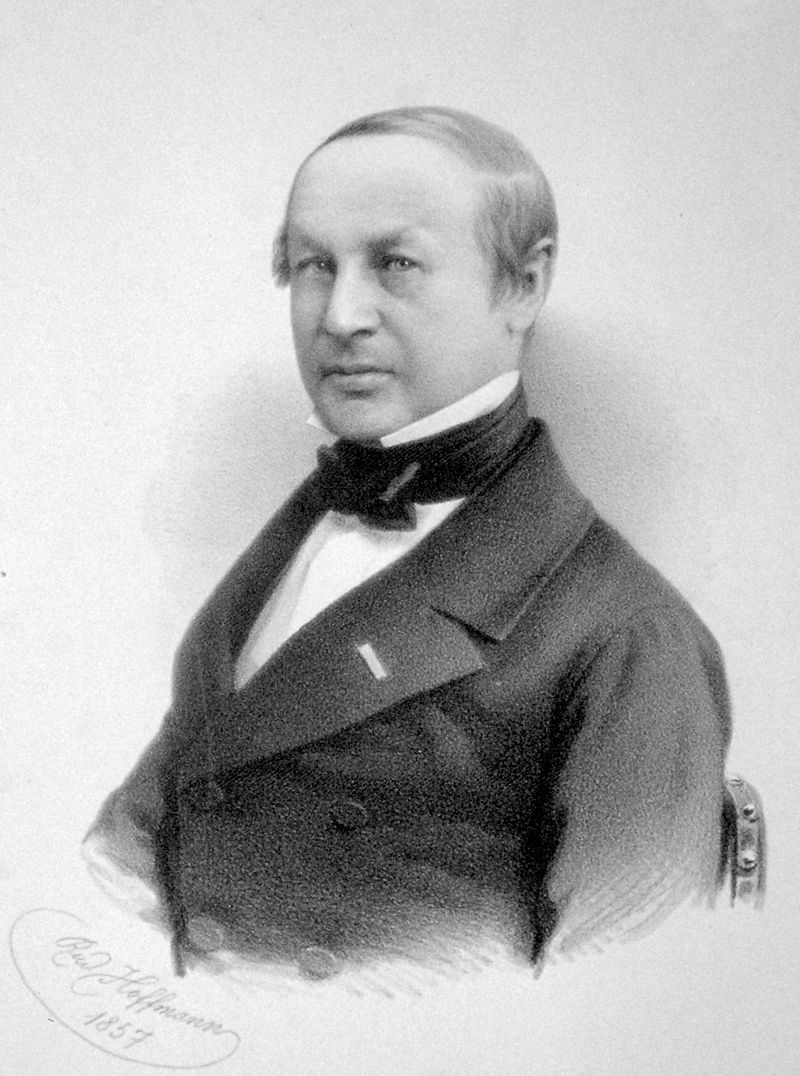
File:Theodor_Schwann_Litho.jpg · Wikimedia Commons · See Wikimedia Commons
Theodor Schwann was a 19th-century German scientist who made fundamental discoveries about how living organisms are structured. His most important contribution was helping establish the cell theory—the idea that all living things are made of cells—which became one of the foundation principles of modern biology.
AI-generated from the Wikipedia summary — may contain errors.
Person · Open Library
- Born
- 1810
- Died
- 1882
- Works
- 14
Top works
- Mein Gutachten über die Versuche
- Mikroskopische Untersuchungen über die Uebereinstimmung in der Struktur und dem Wachsthum der Thiere und Pflanzen
- Mikroskopische Untersuchungen über die Uebereinstimmung in der Struktur und dem Wachstum der Thiere und Pflanzen
- De necessitate aëris atmosphaerici ad evolutionem pulli in ovo incubito
- Lettres de Théodore Schwann (1810-1882)
via Open Library + Wikidata
Wikidata facts
- Instance of
- human
- Given name
- Theodor
- Gender
- male
- Citizenship
- Kingdom of Prussia
- Place of birth
- Neuss
- Place of death
- Cologne
- Occupation
- university teacher
- Position held
- professor
- Educated at
- Dreikönigsgymnasium
- Employer
- University of Liège
- Languages spoken
- German
- Student of
- Johannes Peter Müller
- Field of work
- zoology
- Image
- Theodor Schwann Litho.jpg
- Work location
- Leuven
Show 10 more facts
- Commons category
- Theodor Schwann
- date of birth
- 1810-12-07
- date of death
- 1882-01-12
- Commons gallery
- Theodor Schwann
- ethnic group
- Germans
- name in native language
- Theodor Schwann
- writing language
- German
- influenced by
- Johannes Peter Müller
- Commons Creator page
- Theodor Schwann
via Wikidata · CC0
~20 min read
Encyclopedic overview
Theodor Schwann ( German pronunciation: [ˈteːodoːɐ̯ ˈʃvan]; 7 December 1810 – 11 January 1882) was a German physician and physiologist. His most significant contribution to biology is considered to be the extension of cell theory to animals. Other contributions include the discovery of Schwann cells in the peripheral nervous system, the discovery and study of pepsin, the discovery of the organic nature of yeast, and the invention of the term "metabolism".
Early life and education
Excerpted from Wikipedia’s “Theodor Schwann” article, available under the CC BY-SA 4.0 licence.