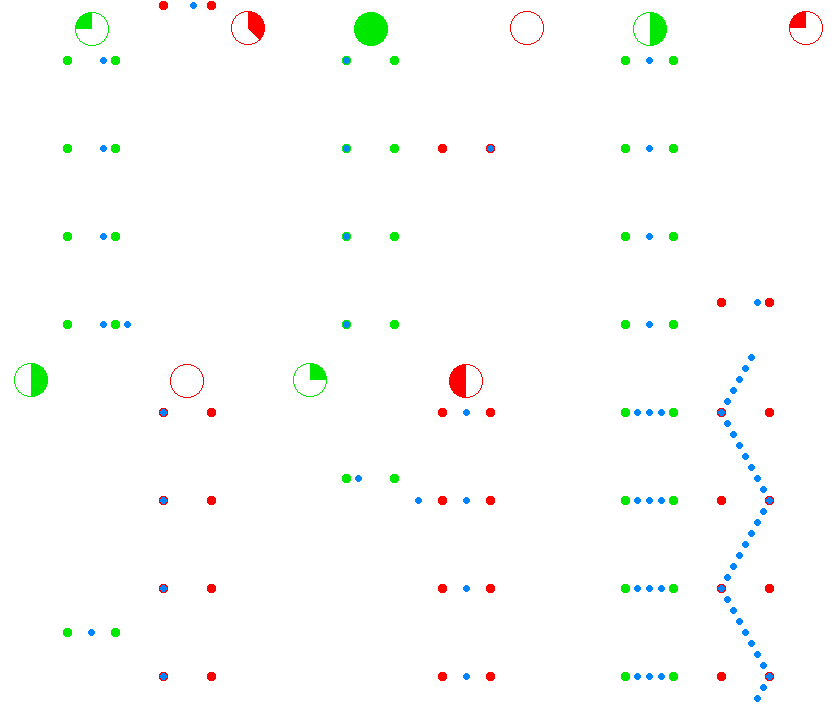
File:Time_dilation02.gif · Wikimedia Commons · See Wikimedia Commons
時間の遅れ
Sign in to saveAlso known as spacetime dilation, space-time dilation
measured time difference as explained by relativity theory
Time dilation is the phenomenon where time passes at different rates depending on factors like gravity and motion, as predicted by Einstein's theory of relativity. This matters because it affects how we measure and understand time in extreme conditions, such as near massive objects or at very high speeds, and has practical applications in technologies like GPS satellites.
AI-generated from the Wikipedia summary — may contain errors.
Wikidata facts
- Subclass of
- physical phenomenon
- Named after
- dilation
Show 3 more facts
- Commons category
- Time dilation
- facet of
- time
- Stack Exchange tag
- physics.stackexchange.com/tags/time-dilation
via Wikidata · CC0
Article · 日本語
時間の遅れ(じかんのおくれ、英語: time dilation)は、相対性理論が予言する現象である。2人のがいるとき、互いの相対的な速度差により、または重力場に対して異なる状態にあることによって、2人が測定した経過時間に差が出る(時間の進み方が異なる)。 時空の性質の結果として、観測者に対して相対的に動いている時計は、観測者自身の基準系内で静止している時計よりも進み方が遅く観測される。また、観測者よりも強い重力場の影響を受けている時計も、観測者自身の時計より遅く観測される。いずれも静止している観測者や重力源から無限遠方の観測者を基準とするので、時計の進み方が「遅い」と表現される。このような時間の遅れは、片方だけを宇宙飛行に送った1組の原子時計の時間のわずかなずれや、スペースシャトルに搭載された時計が地球上の基準時計よりもわずかに遅いこと、GPS衛星やガリレオ衛星の時計が早く動くようになっていること、東京スカイツリーの展望台に置かれた光格子時計が地上のそれよりわずかに進んでいる事で実証されている。時間の遅れは、SF作品において未来への時間旅行の手段を提供するために使われることがある。
Abstract from DBpedia / Wikipedia · CC BY-SA