Encyclopedia of Life · EOL (see source)
Trichomonas
Sign in to saveTrichomonas is a genus of anaerobic excavate parasites of vertebrates. It was first discovered by Alfred François Donné in 1836 when he found these parasites in the vagina of a patient suffering from vaginitis, an inflammation of the vagina. Donné named the genus from its morphological characteristics. The prefix tricho- originates from the Ancient Greek word (thrix) meaning hair, describing Trichomonas's flagella. The suffix -monas ( – single unit), describes its similarity to unicellular organisms from the genus Monas.
Species
GENUS
- KingdomAnimalia
- PhylumMetamonada
- ClassTrichomonadophyceae
- OrderTrichomonadida
- FamilyTrichomonadidae
] Trichomonas adalah genus protista anaerobik yang merupakan parasit pada vertebrata. Mereka termasuk dalam Parabasalids. Spesies Trichomonas mencakup: Trichomonas vaginalis, organisme yang umumnya hidup di dalam saluran urinogenital manusia. Trichomonas gallinae, yang menginfeksi burung, menyebabkan canker pada merpati dan burung dara, dan frounce pada raptor. Lesion seperti-frounce yang ditemukan di fosil rahang dinosaurus tyrannosaurid seperti Tyrannosaurus rex mungkin disebabkan oleh parasit yang mirip dengan Trichomonas gallinae.[1] Trichomonas tenax, organisme yang ditemukan di rongga mulut manusia, kucing, dan anjing Trichomonas termopsidis, ditemukan di usus rayap[2] Restorasi Tyrannosaurus dengan infeksi seperti-Trichomonas. Referensi ^ Wolff, E.D.S., Salisbury, S.W., Horner J.R., & Varricchio D.J. (2009). Hansen, Dennis Marinus, ed. "Common Avian Infection Plagued the Tyrant Dinosaurs". PLoS ONE. 4 (9): e7288. doi:10.1371/journal.pone.0007288. PMC 2748709 . PMID 19789646.Pemeliharaan CS1: Banyak nama: authors list (link) ^ "Kingdom Protista". Biology 1AL Laboratory Manual. UC Berkeley. Fall 2011. hlm. 42. Pranala luar General info Trichomonas gallinae Artikel bertopik
via GBIF
Museum specimens
- Specimen records
- 210
- With media
- 45
- Collections
- USNM, YPM
- Recorded in
- United States, Peru
Research
11,453 papers- Trichomonas vaginalis and trichomoniasis.Advances in parasitology · 1968
- Trichomonas vaginalis infection: the most prevalent nonviral sexually transmitted infection receives the least public health attention.Clinical infectious diseases : an official publication of the Infectious Diseases Society of America · 2007
- [Trichomonas].La Medicina colonial · 1956
- Trichomonas infections.Lancet (London, England) · 1947
- Pulmonary trichomoniasis and Trichomonas tenax.Journal of medical microbiology · 1985
via PubMed
Wikidata facts
- Instance of
- taxon
- Parent taxon
- Trichomonadidae
- Image
- Trichomonas Giemsa DPDx.JPG
Show 5 more facts
- taxon rank
- genus
- taxon name
- Trichomonas
- Commons category
- Trichomonas
- taxonomic type
- Trichomonas vaginalis
via Wikidata · CC0
~7 min read
Encyclopedic overview
9 sectionsContents
- Habitat and ecology
- Morphology
- Genetics
- Life cycle
- Diseases
- In humans
- In birds
- Species
- References
Trichomonas is a genus of anaerobic excavate parasites of vertebrates. It was first discovered by Alfred François Donné in 1836 when he found these parasites in the vagina of a patient suffering from vaginitis, an inflammation of the vagina. Donné named the genus from its morphological characteristics. The prefix tricho- originates from the Ancient Greek word (thrix) meaning hair, describing Trichomonas's flagella. The suffix -monas ( – single unit), describes its similarity to unicellular organisms from the genus Monas.
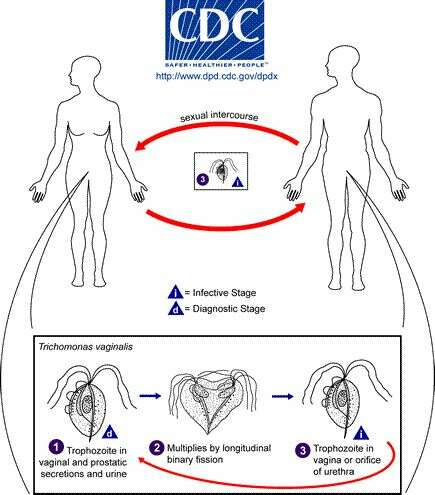
==Habitat and ecology== Trichomonas is typically found in anaerobic environments. It is a known parasite of many different animals including humans, birds, dogs, and cats. In humans, it can be found in the urogenital tract and in the oral cavity. It is estimated that 276 million new cases of urogenital infections occur each year. Depending on the Trichomonas species, it can either be transmitted through direct sexual contact or through contaminated water sources. In birds, it can be found in the upper digestive tract and is transmitted when adult birds regurgitate food to feed their young, when a bird of prey feeds on an infected bird, and through contaminated food or water.
Excerpted from Wikipedia’s “Trichomonas” article, available under the CC BY-SA 4.0 licence.