
Trindade e Tobago
Also known as TRI, Trinidad & Tobago, Republic of Trinidad and Tobago, tt, TTO
país no Caribe
AI overview
Trinidad and Tobago is a Caribbean island nation located south of the Caribbean chain, positioned near South America and comprising two main islands plus several smaller ones, with its capital in Port of Spain. The country is notable for its geographic position as the southernmost Caribbean archipelago and its proximity to the South American continent.
AI-generated from the Wikipedia summary — may contain errors.
Weather now
cached 17h ago25°overcast clouds
93% 3.1 m/s OpenWeatherMap
7-day forecast
via Open-Meteo
Country
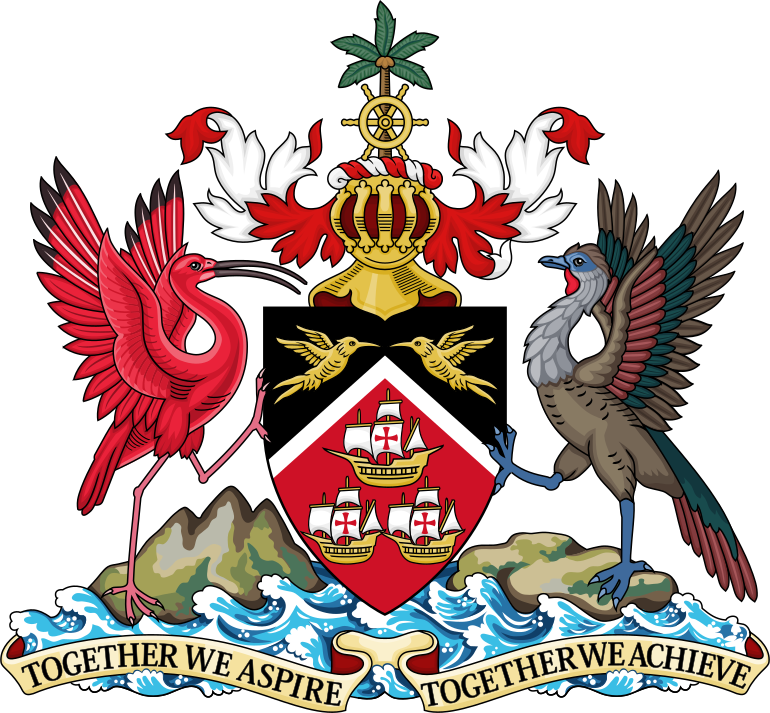
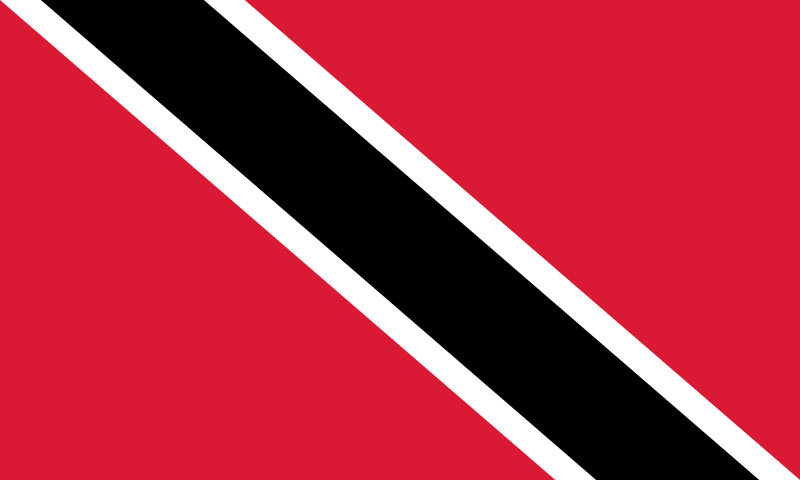
- Capital
- Port of Spain
- Population
- 1,367,764
- Region
Travel guide
See
thumb|Trinidad’s north coast near Maracas Bird watching at Asa Wright Centre near Port-of-Spain.
Bucco Reef is a natural coral reef on the North Coast of Tobago. The Nylon Pool is an area of shallow water on top of the reef. The water is crystal clear and looks like fishing line nylon, hence the name.
Caroni Bird Sanctuary in the Caroni Swamp on Trinidad is a must for bird watchers. Several indigenous species of bird nest in the bird sanctuary, including one of the national birds, the Scarlet Ibis (Eudocimus ruber).
The Hindu festival of lights, Divali, is celebrated in most areas in Trinidad and a few areas in Tobago. Every year during one night in October-November small oil lamps called deyas are lit on the inside and outside of homes and in public places. Additionally, there is a celebration and festival called the Divali Nagar, where Indian song, dance, plays and other cultural items are on display. The Divali Nagar takes place at the Divali Nagar Site in Chaguanas, Trinidad. Divali is a public holiday in Trinidad and Tobago.
thumb|Giant river otters at the Emperor Valley Zoo The Emperor Valley Zoo in Port of Spain is Trinidad and Tobago's only zoo. It features a wide variety of tropical species including lions, tigers, monkeys, birds and fish.
Tobago's Fort George offers a glimpse into Tobago's colonial history and beautiful views of the ocean.
Goat racing in Tobago on Easter Tuesday is a tradition dating back to 1925. Amazingly, it shares many similarities to hor…
Eat
thumb|Doubles Due to its varied background, Trinidad and Tobago has excellent and varied food options. In particular, the Indian roots have added to some of the best foods of any country in the world. If you can't tolerate extremely hot and spicy food, be sure to let the cook or waiter know in advance.
Popular throughout T&T are tasty rotis, which are Indian-style flatbreads stuffed with channa (chickpea curry), usually some meat, and condiments or vegetables such as green beans, pumpkin, or mangoes. There are several types of roti available in Trinidad:
sada, which is similar to pita or naan; bara, which is a fried flat bread; dhalpouri, which is filled with ground yellow split peas; and buss up shut, a heartier bread with a silken texture and a name that refers to a busted shirt.
Article · Português
Trindade e Tobago (pronunciado em português europeu [tɾĩˈdad(ɨ) i tuˈbagu]; pronunciado em português brasileiro: [tɾĩˈdadʒi i toˈbagu]), Trinidade e Tobago ou Trinidad e Tobago (apenas em português brasileiro) (em inglês: Trinidad and Tobago, pronunciado: [ˌtrɪnɨdæd ənd tɵˈbeɪɡoʊ]), oficialmente República de Trindade e Tobago (em inglês: Republic of Trinidad and Tobago), é um Estado soberano insular das Caraíbas (Caribe em português brasileiro) situado ao largo da costa nordeste da Venezuela e a sul de Granada, nas Pequenas Antilhas. Faz fronteira marítima com os Barbados a nordeste, com Granada a noroeste, e com a Venezuela a sul e a oeste. Situa-se na confluência do mar das Caraíbas com o oceano Atlântico. O país tem uma área de 5 128 km² e consiste nas ilhas de Trindade (ou Trinidad), Tobago e numerosos ilhéus. A ilha da Trindade é a maior e mais povoada, representando 94% da área do total e 96% do total de habitantes. As duas ilhas são de clima tropical e terreno montanhoso. A sua localização permite-lhe evitar a chamada "cintura de Furacões", região propensa à ocorrência do fenómeno nas Caraíbas. A principal cidade da ilha de Trindade é a capital do país, Porto da Espanha (ou Port of Spain) enquanto que a cidade principal da ilha de Tobago é Scarborough. Com mais de um milhão de habitantes, Trindade e Tobago é o país com a segunda maior população de língua inglesa na região, depois da Jamaica. A ilha de Trindad foi colônia espanhola desde a chegada de Cristóvão Colombo em 1498 até 1797. Ao longo do século XVI, a Espanha demonstrava pouco interesse por essa região uma vez que, sua prioridade nesse momento era a extração de minerais preciosos como ouro e a prata. Até o século XVIII a economia de Trindade foi marcada pelo cultivo de tabaco, cacau, e mão de obra indígena. A ilha experimentou algumas tentativas ineficazes de implementação de plantações de tabaco e cacau nos séculos XVII E XVIII, que embora abriram certa procura pelo tráfico de africanos escravizados não obteve sucesso no período de domínio espanhol. A configuração de Trindade começa a mudar com a "Cedula de Poblacion" decretada em 1780 pelo rei espanhol. Nesse momento é aberta a imigração para as nações amigas, que é marcada pela intensa chegada de fazendeiros franceses juntamente com escravizados de suas antigas fazendas. É importante destacar, que essa imigração foi fomentada pela Revolução Francesa (1789) e pela revolução do Haiti (1791). Isso explica a existência de uma poderosa classe de proprietários rurais francófonos numa ilha que nunca pertenceu à França. Por conta da sua localização, Trindade despertava o interesse Inglês, dada sua proximidade com as demais colônias espanholas com a qual o império mantinha comércio. Em fevereiro de 1797 o império inglês apodera-se de Trindade. No que se refere a composição demográfica da ilha no período sequente ao domínio britânico, pode-se dizer que a população da colônia é composta majoritariamente por pessoas escravizadas. O censo de 1803 (Hollis Chalkdust) aponta que em poucos anos a colônia recebeu um número acentuado de africanos escravizados e a predominância francesa se dava tanto entre brancos quanto entre “pessoas livres de cor” - essa configuração população terá implicações na Revolta do Canboulay. No inicio do século XIX o número de pessoas “livres de cor” é maior que o número de brancos e a predominância francesa se dava tanto entre brancos quanto entre “pessoas livres de cor”. Na primeira metade do século XIX, Trindade e Tobago esteve mergulhada nos debates que tinham como ponto central a abolição do trafico de africanos e do sistema escravista. A abolição definitiva da escravidão em Trindade foi em 1838. Nesse período que segue a pós-emancipação se fortalecem os debates sobre trabalho livre e cidadania. Dessa maneira, a chegada de milhares de imigrantes em busca de melhores condições de vida e oportunidade de trabalho vindos das demais ilhas caribenhas seguiam das diversas políticas de incentivo da administração colonial. No pós-abolição intensas transformações sociais eclodirão em Trindade e alcançaram principalmente a população negra no que concerne ao enfrentamento desses com as autoridades coloniais. Trindade, e também Tobago, foram cedidas ao Reino Unido em 1802 de acordo com o tratado de Amiens. O país obteve a sua independência em 1962, tornando-se posteriormente uma república em 1976. Ao contrário do que acontece com a maioria dos países anglófonos das Caraíbas, a economia trinitária é principalmente industrial, com ênfase nas indústrias petrolífera e petroquímica. Atualmente, o território atrai investimentos externos e apresenta uma economia florescente, almejando tornar-se um "Tigre do Caribe", a exemplo dos chamados Tigres Asiáticos. A sua capital, Porto da Espanha (ou Port of Spain em inglês), é a favorita para sediar o secretariado-geral da Área de Livre Comércio das Américas (ALCA). Trindade e Tobago é conhecido pelo seu Carnaval e por ser o país de origem do tambor de aço, dos estilos musicais calipso, soca, chutney e da dança do limbo.
Gallery (16)
On the map
2 mapped locations
Connections
Categories
1960s establishments in the Caribbean1962 establishments in Trinidad and TobagoCountries and territories where English is an official languageCountries in the CaribbeanFormer British colonies and protectorates in the AmericasFormer Spanish coloniesFree-content attributionFree content from UNESCO PublishingIsland countriesMember states of the United NationsRepublics in the Commonwealth of Nations