Encyclopedia of Life · EOL (see source)
Tropiduridae
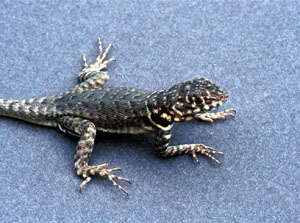
Sign in to saveThe Tropiduridae are a family of iguanid lizards. The family is sometimes considered a subfamily, Tropidurinae. The subfamily is native to South America, including the islands of Trinidad and the Galápagos. Commonly known as Neotropical ground lizards, most are ground-dwelling animals, and the subfamily includes some lizards adapted to relatively cold climates, including those of the Andes mountains and Tierra del Fuego. Several species give birth to live young.
Species
FAMILY
- KingdomAnimalia
- PhylumChordata
- ClassSquamata
- FamilyTropiduridae
Die Kielschwanzleguane (Tropiduridae) sind eine Familie der Leguanartigen (Iguania), die in Mittel- und in Südamerika, einschließlich der Galapagosinseln leben. Es sind kleine Echsen, die Kopf-Rumpf-Längen von vier bis 15 Zentimetern erreichen. Sie kommen in sehr unterschiedlichen Ökosystemen vor, in Regen- und Trockenwäldern, in Savannen, Wüsten und an Meeresküsten.
via GBIF
Museum specimens
- Specimen records
- 4
- With media
- 2
- Family
- Tropiduridae
- Collections
- UAZ, CLO
- Recorded in
- Peru, Venezuela, Suriname
Wikidata facts
Show 4 more facts
- Commons category
- Tropiduridae
- taxon name
- Tropiduridae
- taxon rank
- family
- topic's main category
- Category:Tropiduridae
Sources (1)
via Wikidata · CC0
~2 min read
Encyclopedic overview
4 sectionsContents
- Genera
- References
- Further reading
- External links
The Tropiduridae are a family of iguanid lizards. The family is sometimes considered a subfamily, Tropidurinae. The subfamily is native to South America, including the islands of Trinidad and the Galápagos. Commonly known as Neotropical ground lizards, most are ground-dwelling animals, and the subfamily includes some lizards adapted to relatively cold climates, including those of the Andes mountains and Tierra del Fuego. Several species give birth to live young.
A 2021 study described a novel escutcheon-type generation gland ('α-gland') in tropidurines, found in at least 39 species. This gland is believed to be the main potential source of semiochemicals in this group indicating its importance in chemical signalling, an essential component of the communication system of lizards.
Excerpted from Wikipedia’s “Tropiduridae” article, available under the CC BY-SA 4.0 licence.