vaccine hesitancy
Also known as vaccine skepticism, vaccination hesitancy, immunization hesitancy, anti-vaccination, antivaccination, refusal of vaccination, vaccination refusal, vaccine refusal
reluctance or refusal to be vaccinated or to have one's children vaccinated against contagious diseases despite the availability of immunization service
Research
10,763 papers- Vaccine Hesitancy in Pediatrics.Advances in pediatrics · 2022
- Interventions for vaccine hesitancy.Current opinion in immunology · 2021
- Overcoming Vaccine Hesitancy Using Community-Based Efforts.Pediatric clinics of North America · 2023
- Vaccine Hesitancy: Where Are We Now?Pediatric annals · 2025
- Parental vaccine hesitancy: scope, causes, and potential responses.Current opinion in infectious diseases · 2021
via PubMed
Article
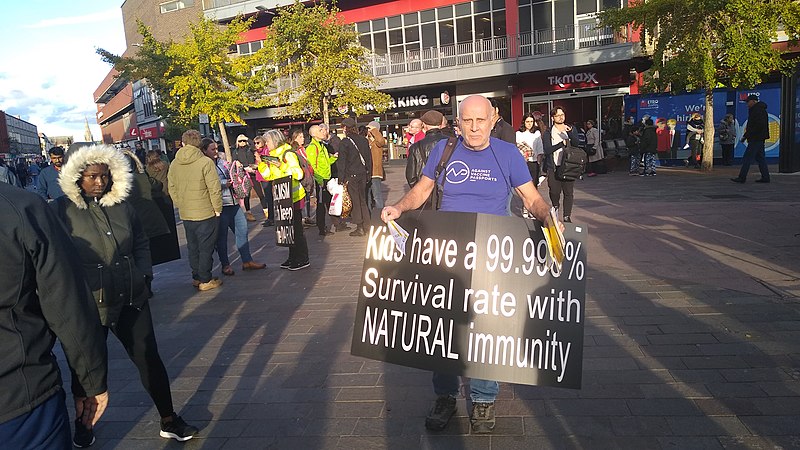
An anti-vaccination activist with a false claim that children can be effectively protected from disease solely by natural immunity Vaccine hesitancy is a delay in acceptance or refusal of vaccines despite availability and supporting evidence of effectivity. The term also includes accepting vaccines but remaining uncertain about their use or using certain vaccines but not others. Although adverse effects associated with vaccines are occasionally observed, the scientific consensus that vaccines are generally safe and effective is overwhelming. Vaccine hesitancy often results in disease outbreaks and deaths from vaccine-preventable diseases. Therefore, the World Health Organization characterizes vaccine hesitancy as one of the top ten global health threats.
Vaccine hesitancy is complex and context-specific, varying across time, place, and specific vaccine. It can be influenced by factors such as lack of proper scientific-based knowledge and understanding about how vaccines are made or work. Other psychological factors including fear of needles and distrust of public authorities, a person's lack of confidence (mistrust of the vaccine and/or healthcare provider), complacency (the person does not see a need for the vaccine or does not see the value of the vaccine), and convenience (access to vaccines). It has existed since the invention of vaccination and pre-dates the coining of the terms "vaccine" and "vaccination" by nearly eighty years.