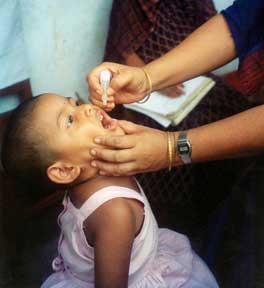
polio vaccine
Also known as poliovirus vaccine, poliomyelitis vaccine, live poliovirus vaccine, poliovirus vaccines, polio vaccines
vaccine to prevent poliomyelitis
Key facts
- Target
- Poliomyelitis
- Vaccine type
- IPV: inactivated, OPV: attenuated, nOPV2: attenuated, genetically stabilised
- Trade names
- Ipol, Poliovax, others
- Ahfs drugs com
- Monograph
- Medlineplus
- a601177
- License data
- United States</span>"}]]}'>US DailyMed : Ipol
- Pregnancy category
- Australia</span>"}]]}'>AU : B2
- Routes of administration
- IPV: parenteral , OPV: oral
- Atc code
- J07BF01 ( WHO ) J07BF02 ( WHO ) J07BF03 ( WHO ) J07BF04 ( WHO )
- Legal status
- United States</span>"}]]}'>US : ℞-only
- Cas number
- 1008119-78-5
- Drugbank
- DB10796 DB10797
Article
Polio vaccine is a vaccine used to prevent poliomyelitis (polio). Two types are used: an inactivated poliovirus given by injection (IPV) and a weakened poliovirus given by mouth (OPV). The World Health Organization (WHO) recommends all children be fully vaccinated against polio. The two vaccines have eliminated polio from most of the world, and reduced the number of cases reported each year from an estimated 350,000 in 1988 to 33 in 2018.
The inactivated polio vaccines are very safe. Mild redness or pain may occur at the site of injection. Oral polio vaccines cause about three cases of vaccine-associated paralytic poliomyelitis per million doses given. This compares with 5,000 cases per million who are paralysed following a polio infection. Both types of vaccine are generally safe to give during pregnancy and in those who have HIV/AIDS, but are otherwise well. However, the emergence of circulating vaccine-derived poliovirus (cVDPV), a form of the vaccine virus that has reverted to causing poliomyelitis, has led to the development of novel oral polio vaccine type 2 (nOPV2), which aims to make the vaccine safer and thus stop further outbreaks of cVDPV.
Gallery (12)
Connections
Categories
1952 in biology1955 introductionsAmerican inventionsChemicals that do not have a ChemSpider ID assignedDrugs that are a vaccineInactivated vaccinesLive vaccinesMultiple chemicals in an infobox that need indexingMultiple chemicals in Infobox drugPolio vaccinesVaccinesWorld Health Organization essential medicines (vaccines)