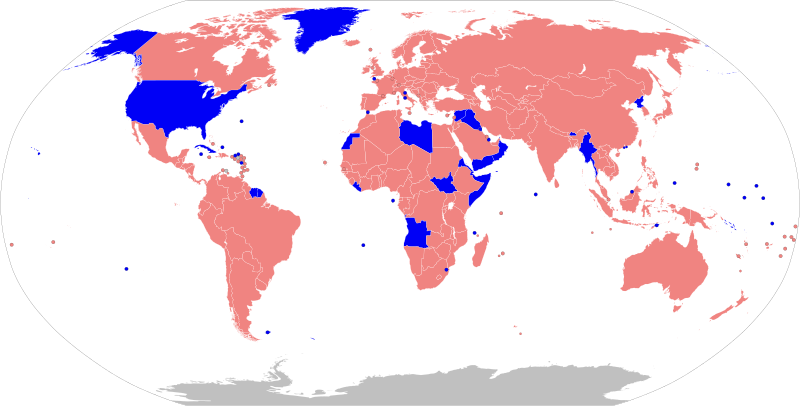
File:Countries_with_VAT.svg · Wikimedia Commons · See Wikimedia Commons
value-added tax
Sign in to saveAlso known as VAT, value added tax, added value tax, added-value tax, goods and services tax, GST, general consumption tax, GCT
form of consumption tax
A value-added tax (VAT) is a consumption tax that is collected in stages as goods or services move through the production and distribution process, with each business paying tax only on the value it adds. It matters because many countries use it as a major source of government revenue, and it can affect prices that consumers pay and how businesses operate.
AI-generated from the Wikipedia summary — may contain errors.
Wikidata facts
- Subclass of
- tax
- Image
- Btw.png
Show 3 more facts
- topic's main category
- Category:Value added taxes
- Commons category
- Value-added tax
- short name
- DPH
via Wikidata · CC0
~39 min read
Encyclopedic overview
A map of countries and territories by their VAT status, 2025 No VAT VAT
A value-added tax (VAT), goods and services tax (GST), or general consumption tax (GCT) is a consumption tax that is levied on the value added at each stage of a product's production and distribution. VAT is similar to, and is often compared with, a sales tax. VAT is an indirect tax because individuals do not pay it directly to the government; instead, suppliers act as intermediaries by collecting the tax from customers at the point of sale and remitting it to the government. Specific goods and services are typically exempted in various jurisdictions.
Excerpted from Wikipedia’s “value-added tax” article, available under the CC BY-SA 4.0 licence.
Gallery (12)
Available in 82 languages
- Español
- Français
- Deutsch
- 中文
- 日本語
- Русский
- Português
- Italiano
- العربية
- हिन्दी
- Afrikaans
- Albanian
- Albanian
- Armenian
- Azerbaijani
- Bahasa Indonesia
- Bangla
- Bashkir
Show 63 more
- Basque
- be_x_old
- Belarusian
- Bosnian
- Breton
- Bulgarian
- Catalan
- Chuvash
- Croatian
- Czech
- Danish
- Esperanto
- Estonian
- Finnish
- Galician
- Georgian
- Greek
- Hebrew
- Hungarian
- Icelandic
- Ido
- Interlingua
- Irish
- Kazakh
- Kyrgyz
- Lao
- Latvian
- Lithuanian
- lld
- Lombard
- Luxembourgish
- Macedonian
- Malay
- Malayalam
- Nederlands
- Nepali
- Norwegian
- Norwegian Nynorsk
- Papiamento
- Pashto
- Polski
- Punjabi
- Romanian
- Sardinian
- Serbian
- simple
- Slovak
- Slovenian
- Sundanese
- Svenska
- Tajik
- Tamil
- Tatar
- Tiếng Việt
- Türkçe
- Ukrainian
- Uzbek
- Walloon
- Welsh
- Wu Chinese
- فارسی
- ไทย
- 한국어
via Wikidata sitelinks · CC0