Encyclopedia of Life · EOL (see source)
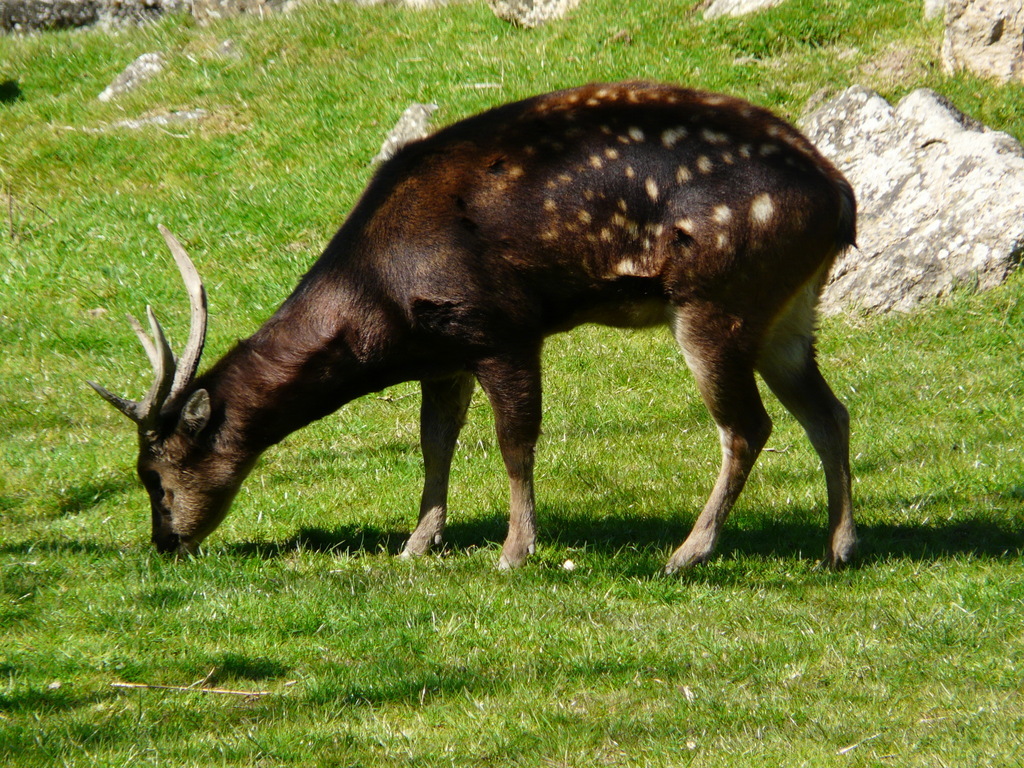
Visayan spotted deer
Sign in to saveAlso known as Rusa alfredi, Cervus alfredi, Philippine Spotted Deer
species of mammal
Species
Царство: Животные Подцарство: Эуметазои Без ранга: Двусторонне-симметричные Без ранга: Вторичноротые Тип: Хордовые Подтип: Позвоночные Инфратип: Челюстноротые Надкласс: Четвероногие Класс: Млекопитающие Подкласс: Звери Инфракласс: Плацентарные Надотряд: Лавразиотерии Отряд: Парнокопытные Подотряд: Жвачные Семейство: Оленевые Подсемейство: Настоящие олени Род: Rusa Вид: Филиппинский пятнистый олень Международное научное название Rusa alfredi (Sclater, 1870) Синонимы Cervus alfredi Sclater, 1870 Охранный статус Вымирающие видыIUCN 3.1 Endangered: 4273 Систематикана ВикивидахИзображенияна Викискладе ITIS 898212NCBI 1088129EOL 308507 Филиппинский пятнистый олень[источник не указан 469 дней] (лат. Rusa alfredi) — крупное млекопитающее семейства оленевых, близкий родственник замбара. Эндемик Западных Висайских островов, входящих в Филиппины, вымирающий вид, фактически сохранился только на островах Негрос и Панай, общая популяция составляет не более 2500 взрослых особей.[1] Таксономия В отдельный вид Cervus alfredi был выделен только в 1983 году, до этого считался региональной разновидностью замбара. В 2004 году в результате филогенетических исследований перемещён из рода Cervus в род Rus
via
Wikidata facts
Show 8 more facts
- taxon rank
- species
- IUCN conservation status
- Endangered status
- taxon name
- Rusa alfredi
- Commons category
- Rusa alfredi
- Commons gallery
- Rusa alfredi
- taxon common name
- Visayan Spotted Deer
- longest observed lifespan
- 18.5
- short name
- R. alfredi
Sources (1)
via Wikidata · CC0
~9 min read
Encyclopedic overview
The Visayan spotted deer (Rusa alfredi), also known as the Visayan deer, the Philippine spotted deer or Prince Alfred's deer, is a small, endangered, primarily nocturnal species of deer found in the rainforests of the Visayan Islands of Panay and Negros. It once was found across other islands, such as Cebu, Guimaras, Leyte, Masbate, and Samar. It is one of three endemic deer species found in the Philippines, although it was not recognized as a separate species until 1983. An estimated 2,500 mature individuals survived worldwide in 1996, according to the IUCN; today's surviving wild number is uncertain. The diet of the deer, which consists of a variety of different types of grasses, leaves, and buds within the forest, is the primary indicator of its habitat. Since 1991, the range of the species has severely decreased and is now almost co-extensive with that of the Visayan warty pig.
In April 2009, an expedition team of British and Filipino mountaineers and scientists discovered evidence of two separate groups of deer in the North Negros Natural Park. These signs (scat and feeding sites) were believed to be the first scientific evidence of the deer's activity for over 25 years. It is estimated that 300 animals survive on the island of Negros. Conservation efforts are currently underway, with the intention of preserving the remaining population, but have been poorly funded and supported.
Excerpted from Wikipedia’s “Visayan spotted deer” article, available under the CC BY-SA 4.0 licence.