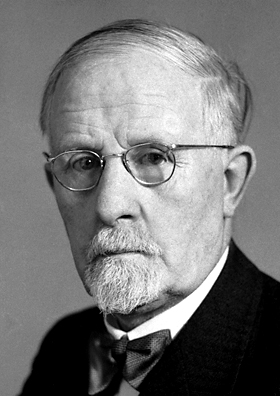
File:Walter_Hess.jpg · Wikimedia Commons · See Wikimedia Commons
Walter Rudolf Hess
Sign in to saveSwiss physiologist (1881-1973)
Walter Rudolf Hess was a Swiss physiologist who won the Nobel Prize in Physiology or Medicine in 1949 for his discoveries about how different brain regions control bodily functions like heart rate and blood pressure. His work was foundational to understanding how the brain regulates the body's internal systems and laid groundwork for modern neuroscience.
AI-generated from the Wikipedia summary — may contain errors.
Nobel Prize
- The Nobel Prize in Physiology or Medicine1949
“for his discovery of the functional organization of the interbrain as a coordinator of the activities of the internal organs”
Shared · 1/2 portion
Wikidata facts
- Instance of
- human
- Given name
- Rudolf
- Family name
- Hess
- Gender
- male
- Citizenship
- Switzerland
- Place of birth
- Frauenfeld
- Place of death
- Muralto
- Occupation
- physiologist
- Educated at
- University of Zurich
- Employer
- University of Zurich
- Languages spoken
- German
- Field of work
- surgery
- Image
- Walter Hess.jpg
Show 10 more facts
- Commons category
- Walter Rudolf Hess
- date of birth
- 1881-03-17
- date of death
- 1973-09-12
- member of
- Royal Academy of Medicine of Belgium
- Commons gallery
- Walter Rudolf Hess
- place of burial
- Berlin
- name in native language
- Walter Hess
- birth name
- Walter Rudolf Hess
- interested in
- physiology
- municipal affiliation of a Swiss national
- Zug
Sources (8)
via Wikidata · CC0
~5 min read
Encyclopedic overview
Walter Rudolf Hess (17 March 1881 – 12 August 1973) was a Swiss physiologist who won the Nobel Prize in Physiology or Medicine in 1949 for mapping the areas of the brain involved in the control of internal organs. He shared the prize with Egas Moniz.
Early life and education
Excerpted from Wikipedia’s “Walter Rudolf Hess” article, available under the CC BY-SA 4.0 licence.