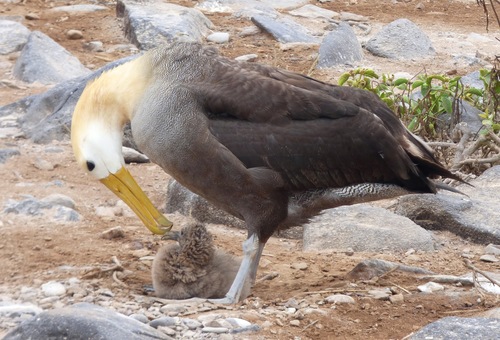
(c) Douglas J. Long, some rights reserved (CC BY-NC), uploaded by Douglas J. Long · cc-by-nc
OverviewAI-generated
The Waved Albatross, scientifically known as *Phoebastria irrorata*, is a species of bird in the family Diomedeidae. It belongs to the order Procellariiformes and the class Aves within the phylum Chordata. The species is also referred to by the common names Galápagos albatross, Albatros de Galápagos, Galápagosalbatros, and Albatros des Galapagos. Its parent taxon is the North Pacific albatross.
This marine organism has a taxon range in South America. The Waved Albatross is classified as Critically Endangered on the IUCN Red List, a status assigned in 2018. The species is accepted by the World Register of Marine Species (WoRMS) with the authority (Salvin, 1883). It has a litter size of 1.
Synthesized by Vinony from 28 facts across 5 sources: Wikidata, iNaturalist, IUCN Red List, WoRMS, Vinony graph. Generated from structured data (not the Wikipedia text) and checked against those facts — may still contain errors.
Species
Critically EndangeredGalápagos albatross
Species
- PhylumChordata
- ClassAves
- OrderProcellariiformes
- FamilyDiomedeidae
via IUCN
Wikidata facts
- Instance of
- taxon
- Parent taxon
- North Pacific albatross
- Image
- Waved Albatross in flight, Española Island 2.jpg
Show 9 more facts
- taxon rank
- species
- IUCN conservation status
- Critically Endangered
- taxon name
- Phoebastria irrorata
- Commons category
- Phoebastria irrorata
- Commons gallery
- Phoebastria irrorata
- litter size
- 1
- short name
- P. irrorata
- taxon common name
- Waved albatross
- taxon range
- South America
via Wikidata · CC0
~9 min read
Encyclopedic overview
The waved albatross (Phoebastria irrorata), also known as Galapagos albatross, is one of three species of the family Diomedeidae that occur in the tropics. When they forage, they follow a straight path to a single site off the coast of Peru, about 1,000 km (620 mi) to the east. During the non-breeding season, these birds reside primarily on the Ecuadorian and Peruvian coasts.
Taxonomy
Excerpted from Wikipedia’s “Waved Albatross” article, available under the CC BY-SA 4.0 licence.