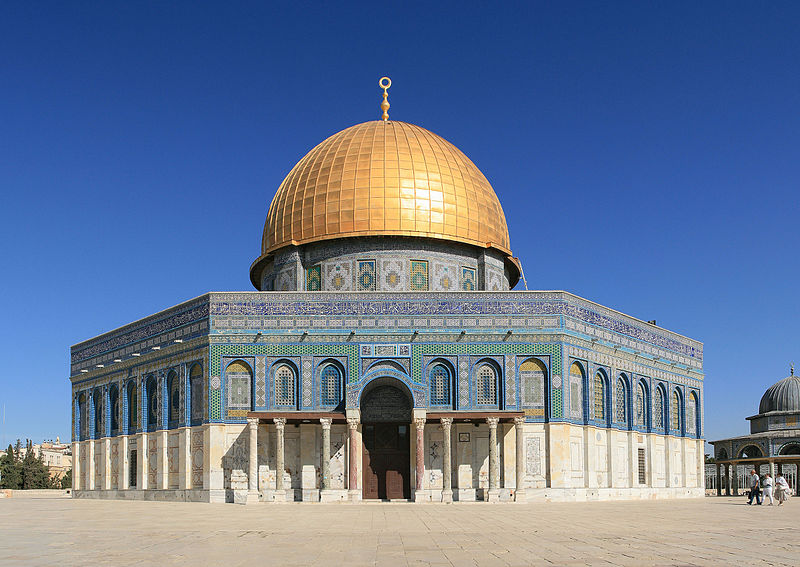
File:Jerusalem_DomeoftheRock_J65.JPG · Wikimedia Commons · See Wikimedia Commons
Islamic architecture refers to the building styles and designs developed across Islamic societies from the 7th century onward, characterized by distinctive features like geometric patterns, domes, and minarets. It matters because it represents a major artistic and cultural achievement that shaped cities and monuments across the Middle East, North Africa, Spain, and Asia, and continues to influence architectural practice today.
AI-generated from the Wikipedia summary — may contain errors.
Wikidata facts
Show 3 more facts
- Commons category
- Islamic architecture
- OpenStreetMap tag
- building:architecture=islamic
Sources (7)
via Wikidata · CC0
~40 min read
Article
Islamic architecture comprises the architectural styles of buildings associated with Islamic civilization. It encompasses both secular and religious styles from the early history of Islam to the present day. The Islamic world encompasses a wide geographic area historically ranging from Western Africa and Europe to Eastern Asia. Certain commonalities are shared by Islamic architectural styles across all these regions, but over time different regions developed their own styles according to local materials and techniques, local dynasties and patrons, different regional centers of artistic production, and sometimes different religious affiliations.
Early Islamic architecture was influenced by Roman, Byzantine, Iranian, and Mesopotamian architecture and all other lands which the early Muslim conquests conquered in the seventh and eighth centuries. Later it developed distinct characteristics in the form of buildings and in the decoration of surfaces with Islamic calligraphy, arabesques, and geometric motifs. New architectural elements like minarets, muqarnas, and multifoil arches were invented. Common or important types of buildings in Islamic architecture include mosques, madrasas, tombs, palaces, hammams (public baths), Sufi hospices (e.g. khanqahs or zawiyas), fountains and sabils, commercial buildings (e.g. caravanserais and bazaars), and military fortifications.
Gallery (12)
Available in 65 languages
- Español
- Français
- Deutsch
- 中文
- 日本語
- Русский
- Português
- Italiano
- العربية
- हिन्दी
- Albanian
- Armenian
- Azerbaijani
- Bahasa Indonesia
- Bangla
- Bashkir
- Basque
- Belarusian
Show 46 more
- Bosnian
- Bulgarian
- Catalan
- Central Kurdish
- Croatian
- Czech
- Danish
- Divehi
- Egyptian Arabic
- Esperanto
- Filipino
- Finnish
- Georgian
- Greek
- Hebrew
- Hungarian
- Irish
- Kazakh
- Macedonian
- Malay
- Malayalam
- Marathi
- Nederlands
- Newari
- Norwegian
- Norwegian Nynorsk
- Polski
- Romanian
- Serbian
- Serbian (Latin)
- simple
- Slovak
- Slovenian
- Svenska
- Tajik
- Tamil
- Türkçe
- Ukrainian
- Urdu
- Uzbek
- Western Panjabi
- Wu Chinese
- zh_yue
- فارسی
- ไทย
- 한국어
via Wikidata sitelinks · CC0