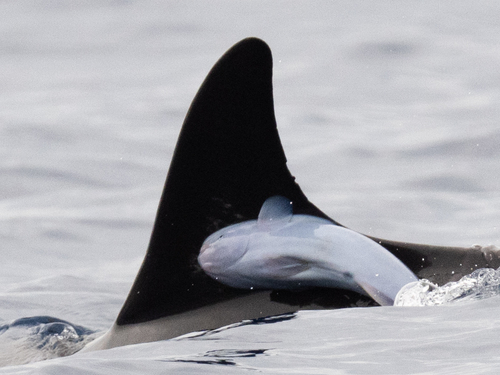
(c) Paul Carter, some rights reserved (CC BY-NC), uploaded by Paul Carter · cc-by-nc
whalesucker
Sign in to saveAlso known as Remora australis
The whalesucker (Remora australis) is a species of remora in the family Echeneidae, so named because it attaches itself exclusively to cetaceans, in a mutualistic interaction. It is found worldwide in tropical and warm waters; in the Gulf of Mexico and western Atlantic Ocean, it occurs from Texas to Brazil, and in the eastern Pacific Ocean, it occurs from Vancouver Island to Chile. It is the rarest member of the remora family, though this may reflect more the uncommon collection of cetaceans in the wild rather than the whalesucker's actual abundance.
Species
Least Concernwhalesucker
Species
- PhylumChordata
- ClassTeleostei
- OrderCarangiformes
- FamilyEcheneidae
via IUCN
Wikidata facts
Show 8 more facts
- Commons category
- Remora australis
- taxon rank
- species
- taxon name
- Remora australis
- IUCN conservation status
- Least Concern
- Commons gallery
- Remora australis
- taxon common name
- 短印仔魚
- taxon range
- Brazil
- short name
- R. australis
Sources (1)
via Wikidata · CC0
~9 min read
Encyclopedic overview
4 sectionsContents
- Morphology
- Mutualism
- Evolution
- References
The whalesucker (Remora australis) is a species of remora in the family Echeneidae, so named because it attaches itself exclusively to cetaceans, in a mutualistic interaction. It is found worldwide in tropical and warm waters; in the Gulf of Mexico and western Atlantic Ocean, it occurs from Texas to Brazil, and in the eastern Pacific Ocean, it occurs from Vancouver Island to Chile. It is the rarest member of the remora family, though this may reflect more the uncommon collection of cetaceans in the wild rather than the whalesucker's actual abundance.
== Morphology == The adhesive disk atop the head of the whalesucker is the largest amongst the remoras, bearing 25–28 lamellae and measuring 47–59% of the standard length. The head itself measures 26–28% of the standard length. The dorsal fin rays number 23–26, the anal fin rays 24–26, and the pectoral fin rays 22–24. The jaws contain numerous large, stout canine teeth; the palatine and lingual patches are absent, and there are 17–20 gill rakers. The coloration is uniform brown, dark brown, or greyish-brown on the head, trunk, and fins. Whalesuckers observed off Fernando de Noronha ranged from light grey to slate grey, with lighter fin margins. The smaller individuals are barred or blotched, while individuals over long have yellowish fins. This species can reach in total length.
Excerpted from Wikipedia’s “whalesucker” article, available under the CC BY-SA 4.0 licence.