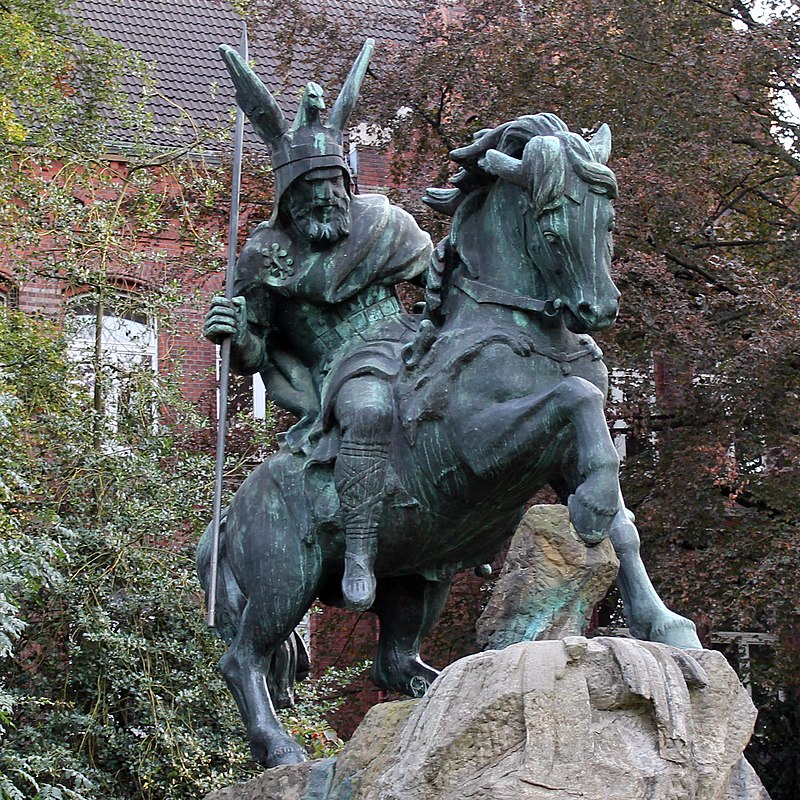
File:Widukind_statue,_Herford.jpg · Wikimedia Commons · See Wikimedia Commons
OverviewAI-generated
Widukind was a male military leader born in Westphalia in 0755. He held the noble title of duke and is described in sources including the Nordisk familjebok, Brockhaus and Efron Encyclopedic Dictionary, Allgemeine Deutsche Biographie, and The Nuttall Encyclopædia.
He died in Enger. Widukind is recognized as a blessed figure with a feast day on January 6.
Synthesized by Vinony from 14 facts across 2 sources: Wikidata, VIAF. Generated from structured data (not the Wikipedia text) and checked against those facts — may still contain errors.
Authority record · VIAF
- Nationality
- DE
- Gender
- Male
Recorded by 4 libraries
via VIAF · OCLC
Key facts
- Noble.name
- Widukind
- Noble.noble family
- House of Odon, possibly progenitor of Immedingians
- Noble.title
- dux Saxonum
- Noble.image
- File:Widukind statue, Herford.jpg
- Noble.caption
- Modern statue of Widukind in Herford, North Rhine-Westphalia
- Noble.reign
- ?–785
- Noble.predecessor
- Theoderic
- Noble.successor
- Egbert
- Noble.birth_date
- Unknown
- Noble.death_date
- 807 or 808
- Noble.death_place
- possibly Enger, near Herford
- Noble.place of burial
- Stiftskirche, Enger
via Wikipedia infobox
Wikidata facts
- Instance of
- human
- Given name
- Widukind
- Gender
- male
- Place of birth
- Westphalia
- Place of death
- Enger
- Occupation
- military leader
- Noble title
- duke
- Image
- Widukind statue, Herford.jpg
Show 5 more facts
via Wikidata · CC0
Article · Français
Widukind, en français Guiteclin, également connu sous le nom Widuking ou Wittekind, est un chef des Saxons et le principal adversaire du roi franc Charlemagne pendant la guerre des Saxons de 777 à 785. Il est l'un des plus fermes opposants à la conquête franque et à la christianisation de son peuple, ce qui fait également de lui l'un des principaux adversaires que Charlemagne rencontre durant ses campagnes. Charlemagne prévaut finalement, organise la Saxe comme une province franque et ordonne la conversion des païens saxons au catholicisme romain. Plus tard, Widukind devient un symbole de l'indépendance saxonne et une figure de légende - le Codex Wittekindeus lui aurait appartenu.
Abstract from DBpedia / Wikipedia · CC BY-SA